



AD
3,3-Difluorocyclobutanecarboxylic acid(CAS: 107496-54-8)
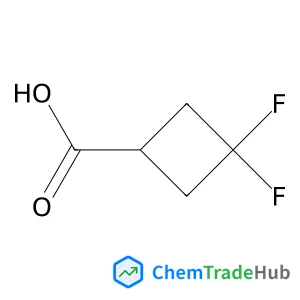
CAS Number
Related Products
![(2R)-1-[(2-Methyl-2-propanyl)oxy]-1-oxo-3-(tritylsulfanyl)-2-propanaminium chloride](https://static.chemtradehub.com/structs/158/158009-03-1-72f2.webp)
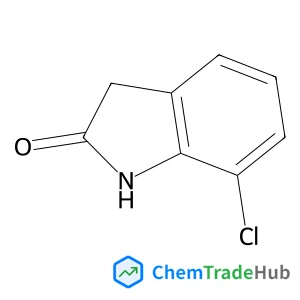
7-Chloro-1,3-dihydro-2H-indol-2-one
CAS Number: 25369-33-9
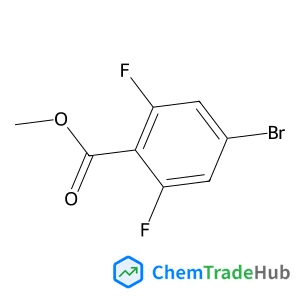
Methyl 4-bromo-2,6-difluorobenzoate
CAS Number: 773134-11-5
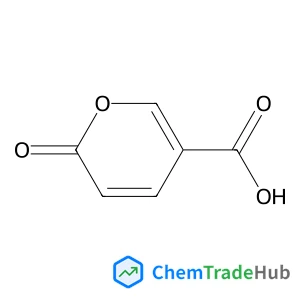
2-Oxo-2H-pyran-5-carboxylic acid
CAS Number: 500-05-0
![5-Bromo-1H-pyrrolo[2,3-b]pyridin-6-amine](https://static.chemtradehub.com/structs/119/1190322-18-9-0a9f.webp)
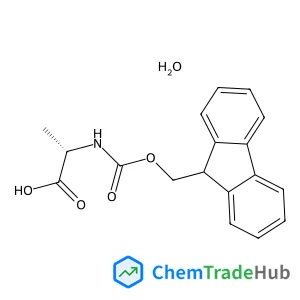
N-Fmoc-L-alanine Hydrate
CAS Number: 207291-76-7
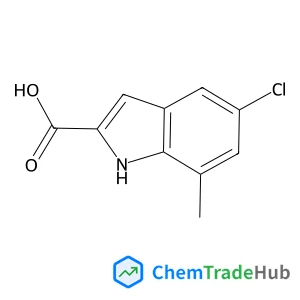
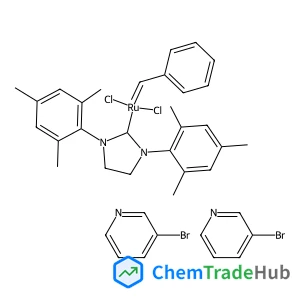
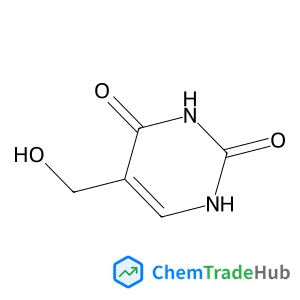
Other Suppliers for 3,3-Difluorocyclobutanecarboxylic acid





Basic Information
Molecular Formula
C5H6F2O2
Molecular Weight
136.1 g/mol
Physical Properties
Melting Point
51.0 to 55.0 deg-C
Boiling Point
205 ºC
Flash Point
78 ºC
Chemical Identifiers
SMILES
C1C(CC1(F)F)C(=O)O
InChIKey
PLRCVBKYFLWAAT-UHFFFAOYSA-N
Database References
MDL Number
MFCD08705857
FAQ
3,3-Difluorocyclobutanecarboxylic acid is a colorless solid with a melting point of 76-77°C. Its molecular weight is 142.06 g/mol. The compound is poorly soluble in water (0.1 g/L at 20°C) but readily soluble in organic solvents like ethanol and acetone. It is relatively stable under normal conditions but can react with strong bases to form the corresponding alkali metal salts. It is also known to undergo esterification and amide formation.
3,3-Difluorocyclobutanecarboxylic acid can be synthesized via the reaction of 3,3-difluorocyclobutanone with a carboxylation reagent such as carbon dioxide in the presence of a catalytic amount of a base like potassium carbonate. The yield is typically around 70-80% with good selectivity for the desired product. This method involves mild conditions and is amenable to preparative scale synthesis.
3,3-Difluorocyclobutanecarboxylic acid is primarily used in the pharmaceutical industry for the synthesis of medicinals. It also finds applications in the polymer industry for the production of high-performance polymers. Additionally, it is used in the sensor industry for the development of gas-sensitive materials and in the semiconductor industry for the fabrication of electronic components.
When handling 3,3-Difluorocyclobutanecarboxylic acid, it is essential to wear appropriate personal protective equipment (PPE), including gloves, safety glasses, and laboratory coat. Work should be conducted in a well-ventilated area or under a fume hood to minimize inhalation risks. Spills should be cleaned up using appropriate absorbents, and the area should be flushed with water. It is crucial to consult the Safety Data Sheet (SDS) for detailed emergency response procedures and storage requirements.
Safety Notice
Please verify product specifications and safety data before use. Contact the supplier for detailed safety information.
Always follow proper handling procedures

Contact Information
Contact Person
Leyan
product@leyan.com
Mobile
13525454349
Visit Website
https://www.leyan.com/Address
No. 3, Block 1999, Zhangheng Road, China (Shanghai) Free Trade Zone