



AD
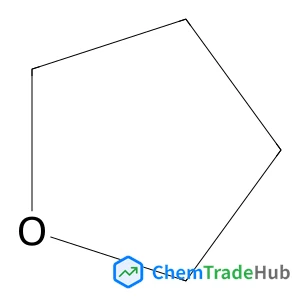
(~2~H_8_)Tetrahydrofuran(CAS: 1693-74-9)
CAS Number
Related Products
![[3-(2-Hydroxyethyl)phenyl]boronic acid](https://static.chemtradehub.com/structs/647/647853-32-5-c363.webp)
![N-(Butylsulfonyl)-O-[4-(4-piperidinyl)butyl]-L-tyrosine hydrochloride hydrate](https://static.chemtradehub.com/structs/150/150915-40-5-1679.webp)
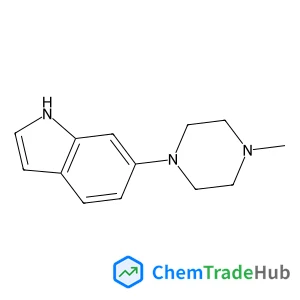
6-(4-methylpiperazin-1-yl)-1H-indole
CAS Number: 321745-04-4
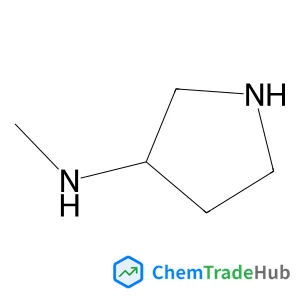
N-Methyl-3-pyrrolidinamine
CAS Number: 83030-08-4
![2-Chloro-N-[4-chloro-3-(2-pyridinyl)phenyl]-4-(methylsulfonyl)benzamide](https://static.chemtradehub.com/structs/879/879085-55-9-5abe.webp)
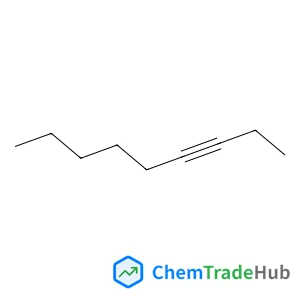
3-Nonyne
CAS Number: 20184-89-8
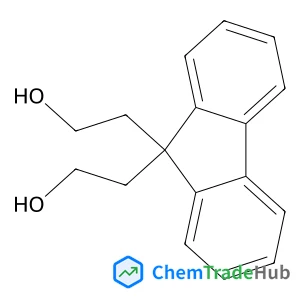
2,2'-(9H-fluorene-9,9-diyl)diethanol
CAS Number: 203070-78-4
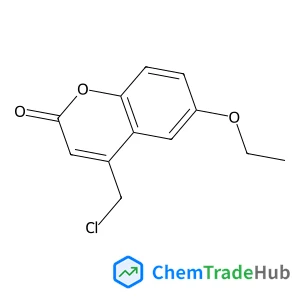
![1,4-Dioxaspiro[4.5]dec-8-ylacetic acid](https://static.chemtradehub.com/structs/134/134136-04-2-8def.webp)
Other Suppliers for (~2~H_8_)Tetrahydrofuran





Basic Information
Molecular Formula
C4D8O
Molecular Weight
80.16 g/mol
Physical Properties
Melting Point
−106 °C (lit.)
Boiling Point
65-66 °C(lit.)
Water Solubility
Soluble in water.
Chemical Identifiers
SMILES
C1CCOC1
InChIKey
WYURNTSHIVDZCO-SVYQBANQSA-N
Database References
MDL Number
MFCD00044238
FAQ
Tetrahydrofuran (CAS: 1693-74-9) is classified as a flammable liquid under the Globally Harmonized System of Classification and Labeling of Chemicals (GHS). It is subject to regulations such as REACH in the European Union, which requires registration for substances above 1 tonne per year. In the United States, the EPA and FDA have specific requirements for the handling and disposal of this compound due to its flammability and potential for skin irritation.
There are several alternatives to (~2~H_8_)Tetrahydrofuran (CAS: 1693-74-9) in synthesis, including 1,4-dioxane and 1,3-dioxolane. These compounds offer similar ring structures and can be used in various reactions such as ring-opening polymerizations and as solvents. However, it's important to consider the specific application and any regulatory or environmental concerns associated with each alternative.
The market for (~2~H_8_)Tetrahydrofuran (CAS: 1693-74-9) is driven by its use as a solvent in the production of pharmaceuticals, polymers, and coatings. Recent research trends focus on its use in green chemistry processes and as a more sustainable alternative to some traditional solvents. However, there is ongoing interest in developing safer and more environmentally friendly compounds to replace (~2~H_8_)Tetrahydrofuran due to its flammability and potential health risks.
Waste containing (~2~H_8_)Tetrahydrofuran (CAS: 1693-74-9) should be collected in appropriate containers and stored in a well-ventilated area away from ignition sources. Incineration is a common method for disposal, but professional waste disposal services should be used to ensure compliance with local regulations. Environmental protection precautions include ensuring that waste does not enter waterways and that proper personal protective equipment is used during handling and disposal operations.
Safety Notice
Please verify product specifications and safety data before use. Contact the supplier for detailed safety information.
Always follow proper handling procedures

Contact Information
Contact Person
Miss Xu
1986399151@qq.com
Mobile
15221998634
Telephone
021-59178156
Visit Website
https://www.yingxinbio.com/Address
Yugang Town Yiling Road 258 Lane C Zone