



AD
2-Amino-1,3-thiazole-5-carboxylic acid(CAS: 40283-46-3)
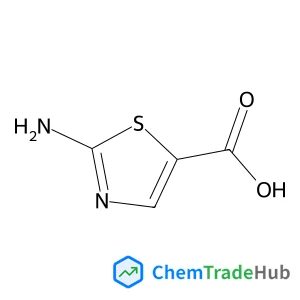
CAS Number
Related Products
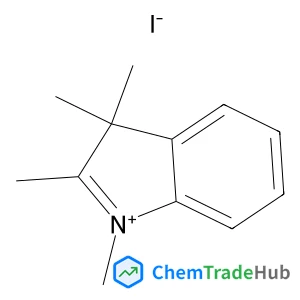
1,2,3,3-Tetramethyl-3H-indolium iodide
CAS Number: 5418-63-3
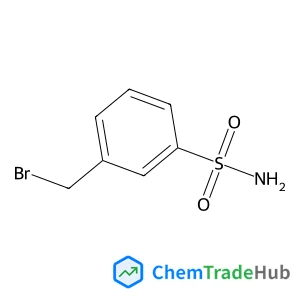
3-(Bromomethyl)benzenesulfonamide
CAS Number: 220798-52-7
![3,3'-(1,1,1,3,3,3-Hexafluoro-2,2-propanediyl)bis[6-(allyloxy)aniline]](https://static.chemtradehub.com/structs/257/2573217-07-7-f3dd.webp)
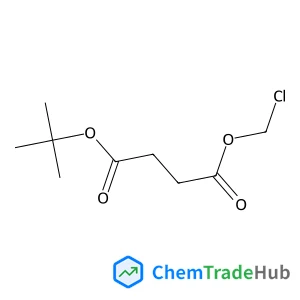
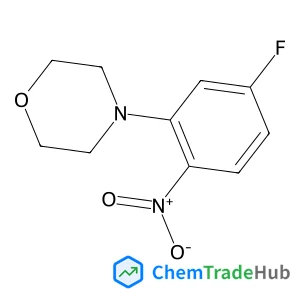
4-(5-Fluoro-2-nitrophenyl)morpholine
CAS Number: 536977-34-1
Other Suppliers for 2-Amino-1,3-thiazole-5-carboxylic acid





Basic Information
Molecular Formula
C4H4N2O2S
Molecular Weight
144.16 g/mol
Physical Properties
Melting Point
196-202°C
Boiling Point
415°C at 760 mmHg
Flash Point
204.8℃
Chemical Identifiers
SMILES
C1=C(SC(=N1)N)C(=O)O
InChIKey
ZFMRDDYYJJCBKC-UHFFFAOYSA-N
Database References
MDL Number
MFCD06203554
FAQ
2-Amino-1,3-thiazole-5-carboxylic acid (CAS: 40283-46-3) is a solid with a white or off-white crystalline form. Its molecular weight is approximately 154.19 g/mol. It is slightly soluble in water and has good solubility in organic solvents like acetone and dimethylformamide. Chemically, it is reactive towards nucleophiles and can participate in condensation reactions. It is also known for its ability to form hydrogen bonds.
2-Amino-1,3-thiazole-5-carboxylic acid can be synthesized by reacting thioacetic acid with hydrazine hydrate, followed by acylation of the hydrazide with an appropriate carboxylic acid chloride. This process involves the formation of a thiazolidine-2,4-dione intermediate, which then cyclizes to the final product. The reaction typically proceeds with good yield and selectivity.
2-Amino-1,3-thiazole-5-carboxylic acid finds applications in various industries. It is used in the pharmaceutical sector for the synthesis of antibiotics and antifungal agents. In the polymer industry, it serves as a precursor for the production of functionalized polymers. It also finds applications in the development of sensors and semiconductors due to its unique chemical properties.
When handling 2-Amino-1,3-thiazole-5-carboxylic acid (CAS: 40283-46-3), it is important to wear appropriate personal protective equipment (PPE) such as gloves, goggles, and a lab coat. Work should be conducted in a well-ventilated area or under a fume hood. Spills should be cleaned up using an appropriate absorbent material and disposed of according to local regulations. Always refer to the Safety Data Sheet (SDS) for detailed handling and storage instructions.
Safety Notice
Please verify product specifications and safety data before use. Contact the supplier for detailed safety information.
Always follow proper handling procedures
Contact Information
Contact Person
Zhang Manager
angela@labgogo.com