



AD
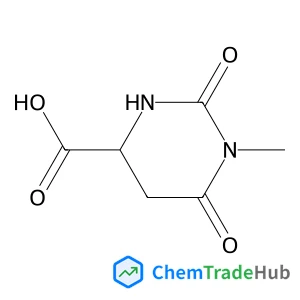
(4S)-1-Methyl-2,6-dioxohexahydro-4-pyrimidinecarboxylic acid(CAS: 103365-69-1)
CAS Number
Related Products
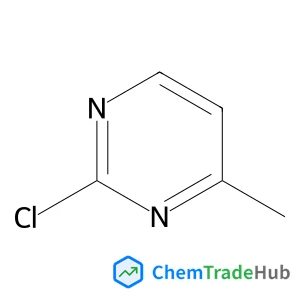
2-Chloro-4-methylpyrimidine
CAS Number: 13036-57-2
![2-{2-Ethoxy-5-[(4-ethyl-1-piperazinyl)sulfonyl]phenyl}-5-methyl-7-propylimidazo[5,1-f][1,2,4]triazin-4(3H)-one](https://static.chemtradehub.com/structs/224/224785-90-4-f9d4.webp)


2,6-Difluorobenzenesulfonyl chloride
CAS Number: 60230-36-6

Letermovir
CAS Number: 917389-32-3
![ethyl 2-chloro-2-[(4-methoxyphenyl)hydrazono]acetate](https://static.chemtradehub.com/structs/271/27143-07-3-e25b.webp)
![8-Chloro-1-methyl-2,3,4,5-tetrahydro-1H-benzo[d]azepine hydrochloride](https://static.chemtradehub.com/structs/143/1431697-94-7-856d.webp)
![Propanoic acid - 1,3-bis[3-(4,5-dihydro-1H-imidazol-2-yl)phenyl]urea (2:1)](https://static.chemtradehub.com/structs/557/55750-06-6-09c3.webp)
Other Suppliers for (4S)-1-Methyl-2,6-dioxohexahydro-4-pyrimidinecarboxylic acid




Basic Information
Molecular Formula
C6H8N2O4
Molecular Weight
172.14 g/mol
Physical State
Powder
Physical Properties
Melting Point
212-214 ºC
Chemical Identifiers
SMILES
CN1C(=O)CC(NC1=O)C(=O)O
InChIKey
GWHDGNNXTNENIF-VKHMYHEASA-N
Database References
MDL Number
MFCD08460215
FAQ
The compound (4S)-1-Methyl-2,6-dioxohexahydro-4-pyrimidinecarboxylic acid (CAS: 103365-69-1) is a crystalline solid with a molecular weight of approximately 214.22 g/mol. It has a high solubility in water and organic solvents. Chemically, it exhibits moderate reactivity, particularly in acid and base catalyzed reactions. It is stable under normal conditions but should be handled with care to avoid prolonged exposure to extreme temperatures or strong reagents.
(4S)-1-Methyl-2,6-dioxohexahydro-4-pyrimidinecarboxylic acid (CAS: 103365-69-1) is often synthesized through a multistep process involving the condensation of 1,6-diaminohexane with 4-chloropyrimidine, followed by oxidation and methylation reactions. Common catalysts include palladium or platinum-based catalysts, and the overall yield is typically 70-80%.
What industries use (4S)-1-Methyl-2,6-dioxohexahydro-4-pyrimidinecarboxylic acid (CAS: 103365-69-1)?
(4S)-1-Methyl-2,6-dioxohexahydro-4-pyrimidinecarboxylic acid (CAS: 103365-69-1) is used in a variety of industries, including pharmaceuticals for the development of novel drugs, polymers as a precursor for functional materials, and sensors for detecting specific chemical or biological species. It also finds applications in the synthesis of semiconductors and as a building block for other organic compounds.
When handling (4S)-1-Methyl-2,6-dioxohexahydro-4-pyrimidinecarboxylic acid (CAS: 103365-69-1), it is essential to wear appropriate personal protective equipment (PPE), including gloves, goggles, and a lab coat. Work should be conducted in a well-ventilated area or fume hood to minimize inhalation risks. Spills should be cleaned up using appropriate absorbent materials, and the area should be thoroughly washed down with water. Consult the Safety Data Sheet (SDS) for more detailed emergency procedures and storage guidelines.
Safety Notice
Please verify product specifications and safety data before use. Contact the supplier for detailed safety information.
Always follow proper handling procedures
Contact Information
Contact Person
Manager Sun
1720760574@qq.com