



AD
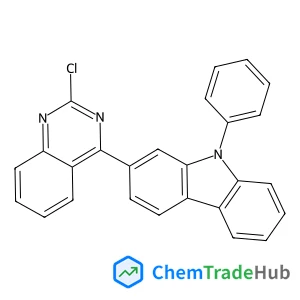
2-(2-Chloroquinazolin-4-yl)-9-phenyl-9H-carbazole(CAS: 1616499-37-6)
CAS Number
Related Products
amino}butanoic acid](https://static.chemtradehub.com/structs/221/221124-57-8-c784.webp)
![1-Cyclopropyl-8-methyl-7-[5-methyl-6-(methylamino)-3-pyridinyl]-4-oxo-1,4-dihydro-3-quinolinecarboxylic acid](https://static.chemtradehub.com/structs/245/245765-41-7-85ad.webp)
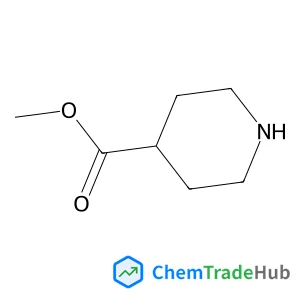
Methyl 4-piperidinecarboxylate
CAS Number: 2971-79-1
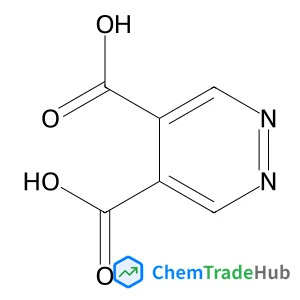
4,5-Pyridazinedicarboxylic acid
CAS Number: 59648-14-5
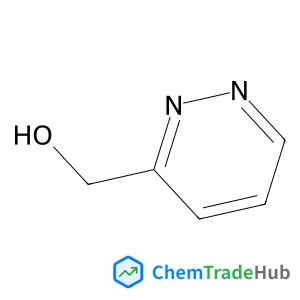
pyridazin-3-ylmethanol
CAS Number: 37444-46-5
![N-[4-(Trifluoromethoxy)phenyl]acetamide](https://static.chemtradehub.com/structs/173/1737-06-0-69aa.webp)
N-[4-(Trifluoromethoxy)phenyl]acetamide
CAS Number: 1737-06-0
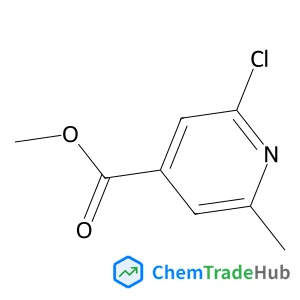
Methyl 2-chloro-6-methylisonicotinate
CAS Number: 3998-90-1
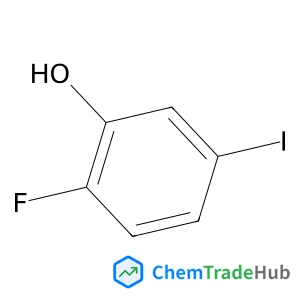
2-Fluoro-5-iodophenol
CAS Number: 186589-89-9
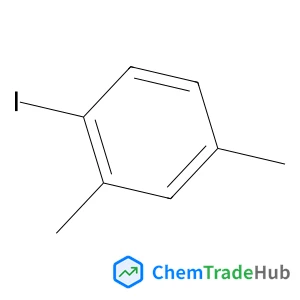
1-Iodo-2,4-dimethylbenzene
CAS Number: 4214-28-2
Other Suppliers for 2-(2-Chloroquinazolin-4-yl)-9-phenyl-9H-carbazole




Basic Information
Molecular Formula
C26H16ClN3
Molecular Weight
405.89 g/mol
Physical State
NA
Physical Properties
Boiling Point
528.9±50.0°C at 760 mmHg
Density
1.3±0.1 g/cm3
Chemical Identifiers
SMILES
ClC1=NC(C2=CC(N(C3=CC=CC=C3)C4=C5C=CC=C4)=C5C=C2)=C6C=CC=CC6=N1
InChIKey
XCNYSGLGEPGIPV-UHFFFAOYSA-N
Database References
MDL Number
MFCD30187278
FAQ
2-(2-Chloroquinazolin-4-yl)-9-phenyl-9H-carbazole (CAS: 1616499-37-6) is a crystalline solid with a melting point of approximately 240°C. Its molecular weight is around 432.3 g/mol. The compound is poorly soluble in water but soluble in organic solvents like DMF and DMSO. It shows good thermal stability and exhibits strong fluorescence, which makes it useful in optoelectronic applications. Reaction with nucleophiles is possible but requires careful handling due to its aromatic nature.
2-(2-Chloroquinazolin-4-yl)-9-phenyl-9H-carbazole (CAS: 1616499-37-6) can be synthesized through a multi-step procedure involving the condensation of 4-chloroquinazoline with phenyl carbazone followed by cyclization. The reaction typically uses a mild base like triethylamine and is carried out in a suitable solvent like DMF. The yield is usually around 70-80%, and the product can be isolated by recrystallization from ethanol.
2-(2-Chloroquinazolin-4-yl)-9-phenyl-9H-carbazole (CAS: 1616499-37-6) is primarily used in the pharmaceutical and optoelectronic industries. It serves as a key intermediate in the development of new drugs and is also employed in the production of organic light-emitting diodes (OLEDs) due to its excellent photoluminescent properties. The compound may also find applications in polymer sensing and semiconductor devices.
When handling 2-(2-Chloroquinazolin-4-yl)-9-phenyl-9H-carbazole (CAS: 1616499-37-6), it is important to wear appropriate personal protective equipment (PPE), including gloves, goggles, and a lab coat. Fume hood use is recommended during synthesis and handling to minimize inhalation risks. Spills should be cleaned up using absorbent materials and proper waste disposal procedures followed. Always refer to the Safety Data Sheet (SDS) for detailed information on safe handling and storage.
Safety Notice
Please verify product specifications and safety data before use. Contact the supplier for detailed safety information.
Always follow proper handling procedures

Contact Information
3007522982@qq.com
Mobile
18117592386
Telephone
021-57481218
Fax
无
Visit Website
https://www.acmec-e.com