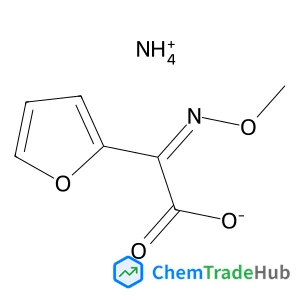
Ammonium (Z)-2-(furan-2-yl)-2-(methoxyimino)acetate
CAS Number:
97148-39-5
Molecular Formula:
C7H10N2O4
A previously described positive interference in the determination of chromium in urine was ascribed to the failure of the deuterium arc background correction system to correct fully for background absorption. In this work, it is shown that the interference is dependent on the gain setting of the photomultiplier and on the atomisation temperature. At temperatures below 2400 °C the interference is absent, but on increasing the atomisation temperature from 2400 to 2700 °C the interference increases in severity. The interference is thought to be emission caused by chromium together with potassium and sodium in the matrix. Lowering the atomisation temperature to 2400 °C allows the determination of chromium in urine without significant interference using conventional deuterium arc background correction.
Luca Banetta, Giuseppe Storti, George Hoggard, Gareth Simpson
DOI: 10.1039/D0PY01138J
Duc Dung Nguyen
DOI: 10.1039/D0PY00919A
Keita Fuchise, Toshiaki Kobayashi, Kazuhiko Sato, Masayasu Igarashi
DOI: 10.1039/D0PY01251C
Rashmi, Abhishek K. Singh, Katharina Achazi, Christoph Böttcher, Rainer Haag, Sunil K. Sharma
DOI: 10.1039/D0PY01040E
Enjie He, Kai Tu, Jiannan Cheng, Huanjun Lu, Lifen Zhang, Zhenping Cheng, Xiulin Zhu
DOI: 10.1039/D0PY01644F
Jincheng Dong, Huining Ding, Junbin Shi, Ning Liu, Bin Dai, Il Kim
DOI: 10.1039/D0PY01249A
Jiawei Li, Xia Yu, Yiran Zhao, Hao Zhang, Jun Hu
DOI: 10.1039/D0PY00966K
Shan-Qing Peng, Butian Zhang, Wenhao Fan, Shuifeng Wang, Zhi-Hao Zhang, Yan Liu, Shi-Lu Chen, Mu-Hua Huang
DOI: 10.1039/D0PY00994F
Seishi Ohashi, Eric Rachita, Sean Baxley, Jessica Zhou, Adam Erlichman, Hatsuo Ishida
DOI: 10.1039/D0PY01521K
1H-Indazole-6-carbonitrile finds applications in pharmaceuticals, where it serve...
Waste containing Dioctyl (2E)-2-butenedioate (CAS: 2997-85-5) should be collecte...
Sodium [(1,2-benzoxazol-3-ylmethyl)sulfonyl]azanide is primarily used in pharmac...
Dimethyl 4-(4,4,5,5-tetramethyl-1,3,2-dioxaborolan-2-yl)-2,6-pyridinedicarboxyla...
Waste containing 2-Fluoro-6-hydrazinopyridine (CAS: 80714-39-2) should be manage...
6-Formyl-2-pyridinecarboxylic acid is an organic compound with the molecular for...
Research trends for this compound indicate a focus on its potential applications...
9H-Tribenzo[b,d,f]azepine is typically synthesized via a multi-step process invo...
1-Cyclopropyl-7-ethoxy-6-fluoro-8-methoxy-4-oxo-1,4-dihydro-3-quinolinecarboxyli...
Waste containing Methyl 3-oxo-1,2,3,4-tetrahydro-6-quinoxalinecarboxylate (CAS: ...

The Journal of Analytical Atomic Spectrometry (JAAS) is the central journal for publishing innovative research on fundamentals, instrumentation, and methods in the determination, speciation and isotopic analysis of (trace) elements within all fields of application. This includes, but is not restricted to, the most recent progress, developments and achievements in all forms of atomic and elemental detection, isotope ratio determination, molecular analysis, plasma-based analysis and X-ray techniques. The journal welcomes full papers, communications, technical notes, critical and tutorial review articles, editorials, and comments, in addition to the Atomic Spectrometry Updates (ASU) literature reviews that are prepared by an expert panel. Submissions are welcome in the following areas, but note this list reflects the current scope and authors are strongly encouraged to contact the Editorial team if they believe that their work offers potentially new and emerging research relevant to the journal remit: Fundamental studies in the following. New and existing sources for atomic emission, absorption, fluorescence and mass spectrometry and those that provide both atomic and molecular information Sample introduction techniques for solids, liquids, gases Improvements in sensitivity, selectivity, precision, accuracy and/or robustness Isotope ratio measurements, including techniques for improving precision and mass bias correction Single channel and multichannel simultaneous detection systems Chemometrics, statistics, calibration techniques and internal standardisation Theoretical and numerical modelling of fundamental processes related to all of the above methodologies Novel or improved methodologies in areas of application including, but not limited to the following. Biosciences, including elemental, speciation and isotopic analysis in biological systems, immunoassays based on metal-labeled antibodies, bio-imaging, and nanoparticle toxicology Geochemistry Environmental science Materials science, including engineered nanoparticles and quantum dots Metrology, including reference materials Forensic analysis Food and agricultural sciences Energy Archaeometry Molecular analysis. Molecular sources for elemental and isotopic analysis Atomic sources for molecular analysis Atomic and molecular techniques simultaneously used for complementary chemical information All contributions are judged on originality and quality of scientific content, and appropriateness of length to content of new science.