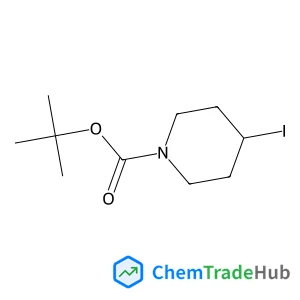
2-Methyl-2-propanyl 4-iodo-1-piperidinecarboxylate
CAS Number:
301673-14-3
Molecular Formula:
C10H18INO2
Bingpeng Guo, Mengyu Li, Guiwen Hao, Liangchen Wei, Honghan Sa, Jianbin Chen, Wei Shu, Changxiang Shao
Endoplasmic reticulum (ER) stress is closely associated with cell apoptosis, autophagy, DNA damage, metabolism, and migration. When ER stress occurs, a large number of reactive oxygen species, including hypobromous acid (HOBr), are generated. The degree of ER stress can be understood by accurately detecting the HOBr concentration in the ER. Unfortunately, no ER-targetable probes for detecting HOBr have been reported to date. To solve this problem, we developed a naphthalimide-based fluorescent probe (ER-NABr) for imaging HOBr in the ER. Upon reaction with HOBr, a red shift in the fluorescence spectrum occurs due to the difference in the molecular conjugation between the original ER-NABr and the reaction product. ER-NABr showed a fast response (within 30 s) and high selectivity towards HOBr, with a ratiometric quantitative response (5–40 μM) and high sensitivity (138 nM). With its excellent biocompatibility and remarkable ER-targetable ability, ER-NABr was successfully utilized to ratiometrically image intracellular HOBr, particularly during ER stress, which is beneficial for revealing the role of HOBr in ER-associated diseases.
Ting Wang, Wei Huang, Jia-Xing Jiang, Zhengkun Du, Fa-Kuen Shieh, Renqiang Yang
DOI: 10.1039/C5PY01767J
Manjun Xiao, Weiguo Zhu, Ning Wang, Xichang Bao, Renqiang Yang
DOI: 10.1039/C4PY01061B
K. Arimitsu, H. Kobayashi, M. Furutani, T. Gunji, Y. Abe
DOI: 10.1039/C4PY01096E
Q. Fu, J. Xu, K. Ladewig, T. M. A. Henderson, G. G. Qiao
DOI: 10.1039/C4PY01123F
Johan V. Olsson, Daniel Hult, Yanling Cai, Sandra García-Gallego, Michael Malkoch
DOI: 10.1039/C4PY00911H
T. J. Farmer, J. H. Clark, D. J. Macquarrie, J. K. Ogunjobi, R. L. Castle
DOI: 10.1039/C5PY01729G
Shaojia Zhu, Yongsheng Li, Ping Shi, Zhong Huang, Xiaoyu Huang
DOI: 10.1039/C4PY00903G
Xiaodong Liu, Lifen Zhang, Zhenping Cheng, Xiulin Zhu
DOI: 10.1039/C5PY01765C
Waste containing (6-Bromo-2-naphthyl)oxy](dimethyl)(2-methyl-2-propanyl)silane (...
7-Fluoro-4-isoquinolinecarboxylic acid can be synthesized via a multi-step proce...
2,3,5,6-Tetrabromothieno[3,2-b]thiophene is a crystalline compound with a high m...
1-[4-(Benzylamino)-7,8-dihydro-5H-pyrano[4,3-d]pyrimidin-2-yl]-2-methyl-1H-indol...
The market for imidazo[5,1-d]-1,2,3,5-tetrazine-8-carboxylic acid, 3,4-dihydro-3...
3-(Triisopropylsilyl)propiolaldehyde is a synthetic organic compound with the CA...
6-Nitro-2H-1,4-benzoxazin-3(4H)-one (CAS: 81721-87-1) is subject to various regu...
Waste containing (3-Fluorophenyl)(4-{[(2-methyl-2-propanyl)oxy]carbonyl}-1-piper...
N,N'-4,4'-Biphenyldiyldiisonicotinamide is a white crystalline solid with a mole...
6-Bromo-8-fluoro-2-quinazolinol is primarily used in the pharmaceutical industry...
Journal of Materials Chemistry A, B & C cover high quality studies across all fields of materials chemistry. The journals focus on those theoretical or experimental studies that report new understanding, applications, properties and synthesis of materials. The journals have a strong history of publishing quality reports of interest to interdisciplinary communities and providing an efficient and rigorous service through peer review and publication. The journals are led by an international team of Editors-in-Chief and Associate Editors who are all active researchers in their fields. Journal of Materials Chemistry A, B & C are separated by the intended application of the material studied. Broadly, applications in energy and sustainability are of interest to Journal of Materials Chemistry A, applications in biology and medicine are of interest to Journal of Materials Chemistry B, and applications in optical, magnetic and electronic devices are of interest to Journal of Materials Chemistry C. More than one Journal of Materials Chemistry journal may be suitable for certain fields and researchers are encouraged to submit their paper to the journal that they feel best fits for their particular article. Example topic areas within the scope of Journal of Materials Chemistry B are listed below. This list is neither exhaustive nor exclusive. Antifouling coatings Biocompatible materials Bioelectronics Bioimaging Biomimetics Biomineralisation Bionics Biosensors Diagnostics Drug delivery Gene delivery Immunobiology Nanomedicine Regenerative medicine & Tissue engineering Scaffolds Soft robotics Stem cells Therapeutic devices image block All articles published in Journal of Materials Chemistry B from 2019 onwards will be indexed in MEDLINE®. Articles that primarily focus on providing insight into the underlying science and performance of biomaterials within a biological environment are more suited to our companion journal, Biomaterials Science.
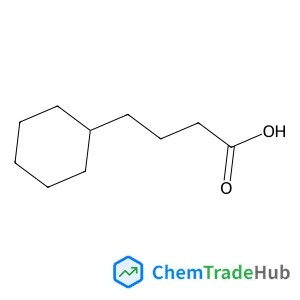
![2-{[4-(2-Methoxyethyl)phenoxy]methyl}oxirane structure](https://static.chemtradehub.com/structs/567/56718-70-8-f037.webp "2-{[4-(2-Methoxyethyl)phenoxy]methyl}oxirane structure")