













A DFT analysis of the ground and charge-transfer excited states of Sc3N@Ih–C80 fullerene coupled with metal-free and zinc-phthalocyanine
Literature Information
Publication Date
2018-09-14
DOI
10.1039/C8CP03849J
Impact Factor
3.676
Authors
Carlos Diaz, Neetha Mohan
View Original
Abstract
Endohedral metallofullerenes and phthalocyanine derivatives are recognized as excellent active materials in organic photovoltaics (OPVs). The tri-metallic nitride endohedral C80 fullerenes have greater absorption coefficients in the visible region and electron-accepting abilities similar to C60, which can allow for higher efficiencies in OPV devices. In this work, we have investigated the ground and charge transfer excited states of two co-facial donor–acceptor (D–A) molecular conjugates formed by the non-covalent coupling of trimetallic nitride endohedral fullerene (Sc3N@Ih–C80) with metal-free (H2Pc) and zinc-phthalocyanine (ZnPc) chromophores using DFT calculations. The charge transfer (CT) excitation energies are calculated using the perturbative delta-SCF method that enforces orthogonality between the ground and excited states. The binding energies calculated using the PBE and DFT-D3 methods indicate that the dispersion effects play an important role in the stabilization of these complexes. The ground state dipole moment of the Sc3N@C80–H2Pc dyad is much larger than that of Sc3N@C80–ZnPc, but this is reversed in the excited state where the dipole moment of Sc3N@C80–ZnPc increases significantly. The lowest few excitation energies in the gas phase for the two complexes are very close, in the range of 1.51–2.66 eV for Sc3N@C80–ZnPc and 1.51–2.71 eV for the Sc3N@C80–H2Pc complex. However, the lower ionization potential and lower exciton binding energy make the Sc3N@C80–ZnPc dyad a better candidate for OPVs as compared to the Sc3N@C80–H2Pc dyad.
Recommended Journals
Related Literature
Rapid and improved characterization of therapeutic antibodies and antibody related products using IdeS digestion and subunit analysis
Jonathan Sjögren, Fredrik Olsson, Alain Beck
2016-05-04
Minireview
DOI: 10.1039/C6AN00071A
Voltammetric detection of glutathione: an adsorptive stripping voltammetry approach
Madalena C. C. Areias, Kenichi Shimizu, Richard G. Compton
2016-04-01
Paper
DOI: 10.1039/C6AN00550K
Mass spectrometric analysis of PTM dynamics using stable isotope labeled metabolic precursors in cell culture
Alienke van Pijkeren, Rainer Bischoff
2019-10-25
Critical Review
DOI: 10.1039/C9AN01258C
Sensitive detection of polycyclic aromatic hydrocarbons with gold colloid coupled chloride ion SERS sensor
Xiaoyong Liao, You Li, Hongying Cao, Yishu Zhao, Daniel P. Cassidy
2019-10-04
Paper
DOI: 10.1039/C9AN01540J
Molecularly imprinted polymers for the analysis and removal of polychlorinated aromatic compounds in the environment: a review
Elizabeth N. Ndunda, Boris Mizaikoff
2016-03-31
Critical Review
DOI: 10.1039/C6AN00293E
Enzyme-linked immunosorbent assay utilizing thin-layered microfluidics
Tatsuro Nakao, Yutaka Kazoe, Emi Mori, Hisashi Shimizu
2019-09-18
Paper
DOI: 10.1039/C9AN01491H
Green synthesis of up- and down-conversion photoluminescent carbon dots from coffee beans for Fe3+ detection and cell imaging
Wanyu Zhang, Lihua Jia, Rui Yang, Yu Zhang, Zhenlong Zhao
2019-10-28
Paper
DOI: 10.1039/C9AN01953G
A fluorescent probe based on aggregation-induced emission for hydrogen sulfide-specific assaying in food and biological systems
Lingfeng Xu, Ling Ni, Lihe Sun, Fang Zeng, Shuizhu Wu
2019-09-27
Paper
DOI: 10.1039/C9AN01582E
You might also like
Compound Q&A
What precautions should be taken when handling 4-(2-Furylmethyl)thiomorpholine 1,1-dioxide (CAS: 79206-94-3)?
When handling 4-(2-Furylmethyl)thiomorpholine 1,1-dioxide (CAS: 79206-94-3), it ...
79206-94-34-(2-Furylmethyl)thi...
Compound Q&A
What precautions should be taken when handling 4-Chloro-N-[2-(4-morpholinyl)ethyl]benzamide (CAS: 71320-77-9)?
When handling 4-Chloro-N-[2-(4-morpholinyl)ethyl]benzamide (CAS: 71320-77-9), it...
71320-77-94-Chloro-N-[2-(4-mor...
Compound Q&A
How should waste containing 2-[2-(2-Methoxyethoxy)ethoxy]ethyl 4-methylbenzenesulfonate (CAS: 62921-74-8) be handled?
Waste containing this compound (CAS: 62921-74-8) should be handled according to ...
62921-74-82-[2-(2-Methoxyethox...
Compound Q&A
How should waste containing (S)-Methyl 2-amino-3-cyclohexylpropanoate be handled?
Waste containing (S)-Methyl 2-amino-3-cyclohexylpropanoate should be collected i...
40056-18-6(S)-Methyl 2-amino-3...
Compound Q&A
How is 5-({4-[(2S,4R)-4-Hydroxy-2-methyltetrahydro-2H-pyran-4-yl]-2-thienyl}sulfanyl)-1-methyl-1,3-dihydro-2H-indol-2-one (CAS: 166882-70-8) typically synthesized?
This compound can be synthesized using a multi-step process involving the conjug...
166882-70-85-({4-[(2S,4R)-4-Hyd...
Compound Q&A
Are there alternatives to (2E)-3-(3,4-Dichlorophenyl)acrylic acid (CAS: 7312-27-8) in synthesis?
There are several alternatives to (2E)-3-(3,4-Dichlorophenyl)acrylic acid in syn...
7312-27-8(2E)-3-(3,4-Dichloro...
Compound Q&A
How should Ethyl 6-(2-nitrophenyl)imidazo[2,1-b][1,3]thiazole-3-carboxylate (CAS: 925437-84-9) be stored?
Ethyl 6-(2-nitrophenyl)imidazo[2,1-b][1,3]thiazole-3-carboxylate (CAS: 925437-84...
925437-84-9Ethyl 6-(2-nitrophen...
Compound Q&A
How should waste containing 2-(1,3-Thiazol-2-yl)ethanamine (CAS: 18453-07-1) be handled?
Waste containing 2-(1,3-Thiazol-2-yl)ethanamine (CAS: 18453-07-1) should be coll...
18453-07-12-(1,3-Thiazol-2-yl)...
Compound Q&A
How is Methyl 5-iodo-2-methylbenzoate (CAS: 103440-54-6) typically synthesized?
Methyl 5-iodo-2-methylbenzoate can be synthesized through the iodination of meth...
103440-54-6Methyl 5-iodo-2-meth...
Compound Q&A
How is 5-Chloro[1,2,4]triazolo[1,5-a]pyridine (CAS: 1427399-34-5) typically synthesized?
5-Chloro[1,2,4]triazolo[1,5-a]pyridine is commonly synthesized via the condensat...
1427399-34-55-Chloro[1,2,4]triaz...
Source Journal
Physical Chemistry Chemical Physics

CiteScore:
5.5
Self-citation Rate:
10.3%
Articles per Year:
3036
Physical Chemistry Chemical Physics (PCCP) is an international journal co-owned by 19 physical chemistry and physics societies from around the world. This journal publishes original, cutting-edge research in physical chemistry, chemical physics and biophysical chemistry. To be suitable for publication in PCCP, articles must include significant innovation and/or insight into physical chemistry; this is the most important criterion that reviewers and Editors will judge against when evaluating submissions. The journal has a broad scope and welcomes contributions spanning experiment, theory, computation and data science. Topical coverage includes spectroscopy, dynamics, kinetics, statistical mechanics, thermodynamics, electrochemistry, catalysis, surface science, quantum mechanics, quantum computing and machine learning. Interdisciplinary research areas such as polymers and soft matter, materials, nanoscience, energy, surfaces/interfaces, and biophysical chemistry are welcomed if they demonstrate significant innovation and/or insight into physical chemistry. Joined experimental/theoretical studies are particularly appreciated when complementary and based on up-to-date approaches.
Recommended Compounds

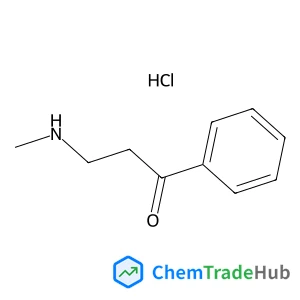
3-(Methylamino)-1-phenyl-1-propanone hydrochloride (1:1)
CAS Number:
2538-50-3
Molecular Formula:
C10H14ClNO
![N-[(Benzyloxy)carbonyl]serine structure](https://static.chemtradehub.com/structs/276/2768-56-1-77f7.webp "N-[(Benzyloxy)carbonyl]serine structure")
Recommended Suppliers





Disclaimer
This page provides academic journal information for reference and research purposes only. We are not affiliated with any journal publishers and do not handle publication submissions. For publication-related inquiries, please contact the respective journal publishers directly.
If you notice any inaccuracies in the information displayed, please contact us at support@chemtradehub.com. We will promptly review and address your concerns.