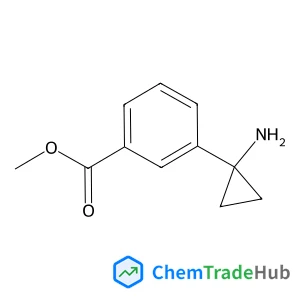
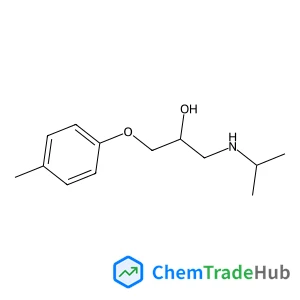
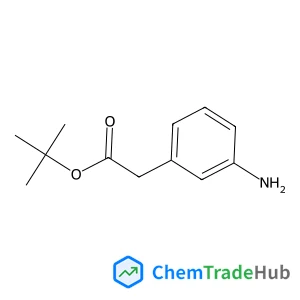
![6-[2-(Trifluoromethoxy)phenyl]-2-pyridinecarboxylic acid structure](https://static.chemtradehub.com/structs/887/887983-48-4-f6ac.webp "6-[2-(Trifluoromethoxy)phenyl]-2-pyridinecarboxylic acid structure")
6-[2-(Trifluoromethoxy)phenyl]-2-pyridinecarboxylic acid
CAS Number:
887983-48-4
Molecular Formula:
C13H8F3NO3
Mengmeng Zhang, Tianze Wu, Hui Zhang, Zhenxia Chen, Yannan Yang, Yun Ling, Yaming Zhou
Asymmetric carbon has emerged as an important material to enrich morphologies as well as enhance functions for bioapplications. Here, asymmetric mesoporous carbon hemispheres (CHS) integrated with γ-Fe2O3 and GdPO4 (Fe–Gd) nanoparticles are proposed and prepared for potential imaging-guided photothermal therapy (PTT). Interestingly, Fe–Gd/CHS contributes to an almost 1.5 times enhancement in light harvesting and photothermal conversion efficiency as compared with its corresponding spherical analogue. The possible underlying mechanism is discussed in view of the unique asymmetric structure-featured carbon. Further identification of the inherited photoacoustic (PA) and magnetic resonance (MR) imaging properties leads to the consequent in vivo evaluation of its imaging and PTT performances, which demonstrates its capability as a function-integrated system for potential theranostics.

Proceedings of the National Academy of Sciences of the United States of America

Journal of Medicinal Chemistry

Science Progress

Journal of Organometallic Chemistry

Pure and Applied Chemistry

Russian Chemical Reviews

Journal of Physics and Chemistry of Solids

Pharmacological Reviews

Fibre Chemistry

Helvetica Chimica Acta
Cheng Liu, Xiuping Li, Jinyan Wang, Xigao Jian, Chunyue Pan
DOI: 10.1039/C2PY00417H
Aymeric Guinaudeau, Stéphane Mazières, D. James Wilson, Mathias Destarac
DOI: 10.1039/C1PY00373A
Pınar Tatar Güner, Annamária Mikó, Florian F. Schweinberger
DOI: 10.1039/C1PY00463H
Kotaro Satoh, Masami Kamigaito
DOI: 10.1039/C1PY00433F
Dugang Chen, Yan Zhao, Cheng Zhong, Gui Yu, Yunqi Liu, Jingui Qin
DOI: 10.1039/C1PY00331C
Ke Wang, Qiang Fu, WeiFeng Li, Yang Gao, JiYe Zhang
DOI: 10.1039/C2PY20086D
Mahadeo R. Halhalli, Carla S. A. Aureliano, Eric Schillinger, Claudia Sulitzky, M. Magdalena Titirici, Börje Sellergren
DOI: 10.1039/C2PY00544A
Junpeng Zhao, Helmut Schlaad, Steffen Weidner, Markus Antonietti
DOI: 10.1039/C1PY00388G
4-(4-tert-Butylphenyl)-1H-pyrazol-3-amine finds applications in various industri...
H3TATAB is used in the pharmaceutical industry for the synthesis of certain orga...
1-Ethyl-3-fluorobenzene (CAS: 696-39-9) is primarily used as a precursor in the ...
1-(tert-Butoxycarbonyl)-4-(4-methoxyphenyl)pyrrolidine-3-carboxylic acid is prim...
1-Cyclobutyl-4-piperidinone (CAS: 359880-05-0) is a colorless or white crystalli...
Pyridine-2,6-dicarboxylic acid mono-tert-butyl ester (CAS: 575433-76-0) is a che...
The market for 2,3-Difluorophenylalanine (CAS: 236754-62-4) is growing with incr...
(2-Hydroxy-1-naphthyl)boronic acid can be synthesized through the reduction of 2...
This compound is a crystalline solid with a molecular weight of approximately 52...
While 5,7-Dihydroxy-4-oxo-2-(3,4,5-trihydroxyphenyl)-4H-chromen-3-yl beta-D-gluc...
Journal of Materials Chemistry A, B & C cover high quality studies across all fields of materials chemistry. The journals focus on those theoretical or experimental studies that report new understanding, applications, properties and synthesis of materials. The journals have a strong history of publishing quality reports of interest to interdisciplinary communities and providing an efficient and rigorous service through peer review and publication. The journals are led by an international team of Editors-in-Chief and Associate Editors who are all active researchers in their fields. Journal of Materials Chemistry A, B & C are separated by the intended application of the material studied. Broadly, applications in energy and sustainability are of interest to Journal of Materials Chemistry A, applications in biology and medicine are of interest to Journal of Materials Chemistry B, and applications in optical, magnetic and electronic devices are of interest to Journal of Materials Chemistry C. More than one Journal of Materials Chemistry journal may be suitable for certain fields and researchers are encouraged to submit their paper to the journal that they feel best fits for their particular article. Example topic areas within the scope of Journal of Materials Chemistry B are listed below. This list is neither exhaustive nor exclusive. Antifouling coatings Biocompatible materials Bioelectronics Bioimaging Biomimetics Biomineralisation Bionics Biosensors Diagnostics Drug delivery Gene delivery Immunobiology Nanomedicine Regenerative medicine & Tissue engineering Scaffolds Soft robotics Stem cells Therapeutic devices image block All articles published in Journal of Materials Chemistry B from 2019 onwards will be indexed in MEDLINE®. Articles that primarily focus on providing insight into the underlying science and performance of biomaterials within a biological environment are more suited to our companion journal, Biomaterials Science.
![7-Amino-5-methyl-5,7-dihydro-6H-dibenzo[b,d]azepin-6-one hydrochloride (1:1) structure](https://static.chemtradehub.com/structs/209/209984-32-7-9912.webp "7-Amino-5-methyl-5,7-dihydro-6H-dibenzo[b,d]azepin-6-one hydrochloride (1:1) structure")