












![5-Bromoimidazo[1,2-a]pyridine structure](https://static.chemtradehub.com/structs/692/69214-09-1-d8e2.webp "5-Bromoimidazo[1,2-a]pyridine structure")
The Curie temperature: a key playmaker in self-regulated temperature hyperthermia
Literature Information
Publication Date
2023-11-13
DOI
10.1039/D3TB01437A
Impact Factor
6.331
Authors
Gopal Niraula, Chengwei Wu, Xiaogang Yu, Sonia Malik, Dalip Singh Verma, Rengpeng Yang, Boxiong Zhao, Shuaiwen Ding, Wei Zhang
View Original
Abstract
The Curie temperature is an important thermo-characteristic of magnetic materials, which causes a phase transition from ferromagnetic to paramagnetic by changing the spontaneous re-arrangement of their spins (intrinsic magnetic mechanism) due to an increase in temperature. The self-control-temperature (SCT) leads to the conversion of ferro/ferrimagnetic materials to paramagnetic materials, which can extend the temperature-based applications of these materials from industrial nanotechnology to the biomedical field. In this case, magnetic induction hyperthermia (MIH) with self-control-temperature has been proposed as a physical thermo-therapeutic method for killing cancer tumors in a biologically safe environment. Specifically, the thermal source of MIH is magnetic nanoparticles (MNPs), and thus their biocompatibility and Curie temperature are two important properties, where the former is required for their clinical application, while the latter acts as a switch to automatically control the temperature of MIH. In this review, we focus on the Curie temperature of magnetic materials and provide a complete overview beginning with basic magnetism and its inevitable relation with Curie's law, theoretical prediction and experimental measurement of the Curie temperature. Furthermore, we discuss the significance, evolution from different types of alloys to ferrites and impact of the shape, size, and concentration of particles on the Curie temperature considering the proposed SCT-based MIH together with their biocompatibility. Also, we highlight the thermal efficiency of MNPs in destroying tumor cells and the significance of a low Curie temperature. Finally, the challenges, concluding remarks, and future perspectives in promoting self-control-temperature based MIH to clinical application are discussed.
Related Literature
Efficient synthesis and photovoltaic properties of highly rigid perylene-embedded benzothiazolyls
Runfeng Chen, Chunhua Zheng, Cong Li, Huanhuan Li, Zhixiang Wang, Yuting Tang, Hongji Jiang, Zhanao Tan
2015-12-09
Communication
DOI: 10.1039/C5PY01791B
pH dependent thermoresponsive behavior of acrylamide–acrylonitrile UCST-type copolymers in aqueous media
Beatriz A. Pineda-Contreras, Holger Schmalz, Seema Agarwal
2016-02-12
Paper
DOI: 10.1039/C6PY00162A
Branched polythiophenes by Ni-catalyzed Kumada coupling
Martin Scheuble, Thomas V. Richter, Miriam Goll, Steffen Link, Juan T. López Navarrete, Adrian Ruff, M. Carmen Ruiz Delgado, Sabine Ludwigs
2014-09-01
Paper
DOI: 10.1039/C4PY00899E
Facile preparation of electrochromic poly(amine–imide) films from diimide compounds with terminal triphenylamino groups via electrochemical oxidative coupling reactions
Sheng-Huei Hsiao, Jun-Wen Lin
2014-08-11
Paper
DOI: 10.1039/C4PY00610K
Thiol–bromo click polymerization for multifunctional polymers: synthesis, light refraction, aggregation-induced emission and explosive detection
Yiren Zhang, Gan Chen, Yiliu Lin, Lifang Zhao, Wang Zhang Yuan, Ping Lu, Cathy K. W. Jim, Yongming Zhang
2014-09-08
Paper
DOI: 10.1039/C4PY01164C
Synthesis of 9,9′-spirobifluorene-based conjugated microporous polymers by FeCl3-mediated polymerization
Arindam Modak, Yoshifumi Maegawa, Yasutomo Goto, Shinji Inagaki
2015-12-28
Paper
DOI: 10.1039/C5PY01900A
Studies on homologous random and alternating segmented conjugated polymers with and without silicon synthesized by ADMET‡
Hamid Ardolic
2015-11-20
Paper
DOI: 10.1039/C5PY01455G
Optimization of the RAFT polymerization conditions for the in situ formation of nano-objects via dispersion polymerization in alcoholic medium
Wei Zhao, Guillaume Gody, Siming Dong, Per B. Zetterlund
2014-08-28
Paper
DOI: 10.1039/C4PY00855C
You might also like
Compound Q&A
How should waste containing (6-Bromo-2-naphthyl)oxy](dimethyl)(2-methyl-2-propanyl)silane be handled?
Waste containing (6-Bromo-2-naphthyl)oxy](dimethyl)(2-methyl-2-propanyl)silane (...
100751-65-3[(6-Bromo-2-naphthyl...
Compound Q&A
How is 7-Fluoro-4-isoquinolinecarboxylic acid (CAS: 1841081-40-0) typically synthesized?
7-Fluoro-4-isoquinolinecarboxylic acid can be synthesized via a multi-step proce...
1841081-40-07-Fluoro-4-isoquinol...
Compound Q&A
What are the physical and chemical properties of 2,3,5,6-Tetrabromothieno[3,2-b]thiophene (CAS: 124638-53-5)?
2,3,5,6-Tetrabromothieno[3,2-b]thiophene is a crystalline compound with a high m...
124638-53-52,3,5,6-Tetrabromoth...
Compound Q&A
Is 1-[4-(Benzylamino)-7,8-dihydro-5H-pyrano[4,3-d]pyrimidin-2-yl]-2-methyl-1H-indole-4-carboxamide (CAS: 1542705-92-9) safe?
1-[4-(Benzylamino)-7,8-dihydro-5H-pyrano[4,3-d]pyrimidin-2-yl]-2-methyl-1H-indol...
1542705-92-91-[4-(Benzylamino)-7...
Compound Q&A
What is the market or research trend for imidazo[5,1-d]-1,2,3,5-tetrazine-8-carboxylic acid, 3,4-dihydro-3-methyl-4-oxo- (CAS: 113942-30-6)?
The market for imidazo[5,1-d]-1,2,3,5-tetrazine-8-carboxylic acid, 3,4-dihydro-3...
113942-30-6Imidazo[5,1-d]-1,2,3...
Compound Q&A
What is 3-(Triisopropylsilyl)propiolaldehyde (CAS: 163271-80-5)?
3-(Triisopropylsilyl)propiolaldehyde is a synthetic organic compound with the CA...
163271-80-53-(Triisopropylsilyl...
Compound Q&A
What regulatory guidelines apply to 6-Nitro-2H-1,4-benzoxazin-3(4H)-one (CAS: 81721-87-1)?
6-Nitro-2H-1,4-benzoxazin-3(4H)-one (CAS: 81721-87-1) is subject to various regu...
81721-87-16-Nitro-2H-1,4-benzo...
Compound Q&A
How should waste containing (3-Fluorophenyl)(4-{[(2-methyl-2-propanyl)oxy]carbonyl}-1-piperazinyl)acetic acid (CAS: 885272-91-3) be handled?
Waste containing (3-Fluorophenyl)(4-{[(2-methyl-2-propanyl)oxy]carbonyl}-1-piper...
885272-91-3(3-Fluorophenyl)(4-{...
Compound Q&A
What are the physical and chemical properties of N,N'-4,4'-Biphenyldiyldiisonicotinamide (CAS: 55119-40-9)?
N,N'-4,4'-Biphenyldiyldiisonicotinamide is a white crystalline solid with a mole...
55119-40-9N,N'-4,4'-Biphenyldi...
Compound Q&A
What industries use 6-Bromo-8-fluoro-2-quinazolinol (CAS: 1036756-15-6)?
6-Bromo-8-fluoro-2-quinazolinol is primarily used in the pharmaceutical industry...
1036756-15-66-Bromo-8-fluoro-2-q...
Source Journal
Journal of Materials Chemistry B
CiteScore:
12
Self-citation Rate:
4.9%
Articles per Year:
831
Journal of Materials Chemistry A, B & C cover high quality studies across all fields of materials chemistry. The journals focus on those theoretical or experimental studies that report new understanding, applications, properties and synthesis of materials. The journals have a strong history of publishing quality reports of interest to interdisciplinary communities and providing an efficient and rigorous service through peer review and publication. The journals are led by an international team of Editors-in-Chief and Associate Editors who are all active researchers in their fields. Journal of Materials Chemistry A, B & C are separated by the intended application of the material studied. Broadly, applications in energy and sustainability are of interest to Journal of Materials Chemistry A, applications in biology and medicine are of interest to Journal of Materials Chemistry B, and applications in optical, magnetic and electronic devices are of interest to Journal of Materials Chemistry C. More than one Journal of Materials Chemistry journal may be suitable for certain fields and researchers are encouraged to submit their paper to the journal that they feel best fits for their particular article. Example topic areas within the scope of Journal of Materials Chemistry B are listed below. This list is neither exhaustive nor exclusive. Antifouling coatings Biocompatible materials Bioelectronics Bioimaging Biomimetics Biomineralisation Bionics Biosensors Diagnostics Drug delivery Gene delivery Immunobiology Nanomedicine Regenerative medicine & Tissue engineering Scaffolds Soft robotics Stem cells Therapeutic devices image block All articles published in Journal of Materials Chemistry B from 2019 onwards will be indexed in MEDLINE®. Articles that primarily focus on providing insight into the underlying science and performance of biomaterials within a biological environment are more suited to our companion journal, Biomaterials Science.
Recommended Compounds
![10-(1-Azabicyclo[2.2.2]oct-3-ylmethyl)-10H-phenothiazine structure](https://static.chemtradehub.com/structs/292/29216-28-2-1d81.webp "10-(1-Azabicyclo[2.2.2]oct-3-ylmethyl)-10H-phenothiazine structure")
10-(1-Azabicyclo[2.2.2]oct-3-ylmethyl)-10H-phenothiazine
CAS Number:
29216-28-2
Molecular Formula:
C20H22N2S
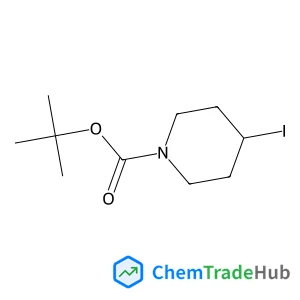
2-Methyl-2-propanyl 4-iodo-1-piperidinecarboxylate
CAS Number:
301673-14-3
Molecular Formula:
C10H18INO2
![2,9-Dichloro-5,12-dihydroquinolino[2,3-b]acridine-7,14-dione structure](https://static.chemtradehub.com/structs/308/3089-17-6-750b.webp "2,9-Dichloro-5,12-dihydroquinolino[2,3-b]acridine-7,14-dione structure")
2,9-Dichloro-5,12-dihydroquinolino[2,3-b]acridine-7,14-dione
CAS Number:
3089-17-6
Molecular Formula:
C20H10Cl2N2O2
Recommended Suppliers




Disclaimer
This page provides academic journal information for reference and research purposes only. We are not affiliated with any journal publishers and do not handle publication submissions. For publication-related inquiries, please contact the respective journal publishers directly.
If you notice any inaccuracies in the information displayed, please contact us at support@chemtradehub.com. We will promptly review and address your concerns.