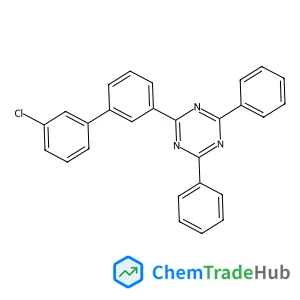
2-(3'-Chlorobiphenyl-3-yl)-4,6-diphenyl-1,3,5-triazine
CAS Number:
1443049-83-9
Molecular Formula:
C27H18ClN3
Ting-Yu Shuai, Qi-Ni Zhan, Hui-Min Xu, Chen-Jin Huang, Zhi-Jie Zhang, Hong-Rui Zhu, Gao-Ren Li
The design of efficient, environment-friendly, stable, and low-cost oxygen evolution electrocatalysts is a technical difficulty in realizing the commercial application of water electrolysis. Herein, we developed a novel three-dimensional (3D) electrocatalyst to grow Ni3Se4/Fe(PO3)2 composites on nickel foam (NF) in a short time of 80 s by a simple electrodeposition method, which not only effectively prevents the agglomeration of Ni3Se4, but also reduces the size of Fe(PO3)2 particles from micron level to nanometer level, exposing more electroactive sites. Fe(PO3)2 with a low crystalline structure and crystalline Ni3Se4 can form a unique heterostructure to produce a strong electron coupling and synergistic effect for the oxygen evolution reaction (OER) in alkaline media, which effectively improves the intrinsic activity of Ni/FeOOH active sites. The Ni3Se4/Fe(PO3)2/NF composites as catalysts can achieve a low overpotential of 185 mV in alkaline media at a current density of 10 mA cm−2 and a small Tafel slope of 30.4 mV dec−1, exhibiting excellent OER catalytic activity and stability.
Bangbo Yan, Cynthia S. Day, Abdessadek Lachgar
DOI: 10.1039/B408000A
Christian Dubs, Akiko Inagaki, Munetaka Akita
DOI: 10.1039/B409514F
Hemant K. Sharma, Keith H. Pannell
DOI: 10.1039/B410822A
Adam F. Lee, Paul A. Carr, Karen Wilson
DOI: 10.1039/B408745C
Koji Nakayama, Masayuki Endo, Tetsuro Majima
DOI: 10.1039/B409844G
Hideki Hayashi, Seiji Ogo, Shunichi Fukuzumi
DOI: 10.1039/B411633J
Dirk Schwaebisch, Kirill Tchabanenko, Robert M. Adlington, Andrew M. Cowley, Jack E. Baldwin
DOI: 10.1039/B412300J
Helena Almer, Tomas Szabo
DOI: 10.1039/B311912B
Evgueni Gribov
DOI: 10.1039/B411053F
Masao Aoki, Motomu Kaneko, Sawa Izumi, Kazutoshi Ukai, Nobuharu Iwasawa
DOI: 10.1039/B411802B
When handling 2-Chloro-1,2-bis(4-methylphenyl)ethanone (CAS: 71193-32-3), it is ...
4-Ethoxy-3-(5-methyl-4-oxo-7-propyl-1,4-dihydroimidazo[5,1-f][1,2,4]triazin-2-yl...
Methyl 3-Oxo-4-Androsten-17-Carboxylate (CAS: 2681-55-2) should be stored in a c...
(R)-3-Amino-4-(3-hexylphenylamino)-4-oxobutylphosphonic acid is primarily used i...
2-Methyl-2-propanyl 3-amino-3-carbamoyl-1-azetidinecarboxylate (CAS: 1254120-14-...
There are alternative reagents that can be used in synthesis instead of (E)-4-(t...
[2-(3-Chlorophenyl)-1,3-thiazol-4-yl]methanol (CAS: 121202-20-8) is a crystallin...
The market and research trends for Methyl (2S)-[(4S)-2,2-dimethyl-1,3-dioxolan-4...
The market for 1-Bromo-2-isocyanatoethane (CAS: 42865-19-0) is driven by its use...
4-Nitro-D-phenylalanine hydrochloride (CAS: 147065-06-3) is primarily used in re...
Journal of Materials Chemistry A, B & C cover high quality studies across all fields of materials chemistry. The journals focus on those theoretical or experimental studies that report new understanding, applications, properties and synthesis of materials. The journals have a strong history of publishing quality reports of interest to interdisciplinary communities and providing an efficient and rigorous service through peer review and publication. The journals are led by an international team of Editors-in-Chief and Associate Editors who are all active researchers in their fields. Journal of Materials Chemistry A, B & C are separated by the intended application of the material studied. Broadly, applications in energy and sustainability are of interest to Journal of Materials Chemistry A, applications in biology and medicine are of interest to Journal of Materials Chemistry B, and applications in optical, magnetic and electronic devices are of interest to Journal of Materials Chemistry C. More than one Journal of Materials Chemistry journal may be suitable for certain fields and researchers are encouraged to submit their paper to the journal that they feel best fits for their particular article. Example topic areas within the scope of Journal of Materials Chemistry A are listed below. This list is neither exhaustive nor exclusive. Artificial photosynthesis Batteries Carbon dioxide conversion Catalysis Fuel cells Gas capture/separation/storage Green/sustainable materials Hydrogen generation Hydrogen storage Photocatalysis Photovoltaics Self-cleaning materials Self-healing materials Sensors Supercapacitors Thermoelectrics Water splitting Water treatment
![(1R)-3-Bromo-1,7,7-trimethylbicyclo[2.2.1]heptan-2-one structure](https://static.chemtradehub.com/structs/102/10293-06-8-dd8a.webp "(1R)-3-Bromo-1,7,7-trimethylbicyclo[2.2.1]heptan-2-one structure")
![2-Hydroxy-4-[({[(4-methylphenyl)sulfonyl]oxy}acetyl)amino]benzoic acid structure](https://static.chemtradehub.com/structs/501/501919-59-1-579f.webp "2-Hydroxy-4-[({[(4-methylphenyl)sulfonyl]oxy}acetyl)amino]benzoic acid structure")