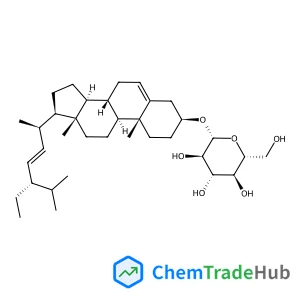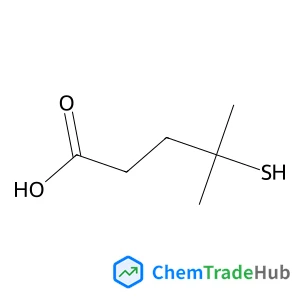
3,5-Dihydroxy-4-(3-methylbutanoyl)-2,6,6-tris(3-methyl-2-buten-1-yl)-2,4-cyclohexadien-1-one
CAS Number:
468-28-0
Molecular Formula:
C26H38O4
Jun Liu
Layered vanadium oxides with highly open crystal structures and high theoretical capacity are regarded as the most promising cathode materials for high-performance aqueous zinc-ion batteries (ZIBs). However, the low specific surface area and almost nonporous features of commercial V2O5 inevitably lead to limited active sites and sluggish ion transport rate, and also the inherent poor conductivity and narrow interlayer spacing of V2O5 significantly affect the electrode kinetics and hinder its practical application. Herein, to address these issues, a novel “three-in-one” strategy was proposed by co-intercalating Ce ions and polyaniline (PANI) into V-MOF-derived porous V2O5 (denoted as CPVO) through a simple one-step hydrothermal method. The high specific surface area and nanosheet-like porous structure endowed CPVO with more Zn2+ diffusion channels and electrochemical active sites, leading to a fast Zn2+ migration rate and high specific capacity (498.5 mA h g−1 at 0.1 A g−1 and 98.9% capacity retention after 100 cycles). Furthermore, the co-intercalated Ce ions and PANI acting as pillars led to the synergistic energy storage mechanism of “interlayer engineering” and “structural deformation confinement”, which enormously expanded the interlayer spacing and weakened the electrostatic interaction between Zn2+ and the host material, ultimately resulting in superior rate capability (385.6 mA h g−1 at 5.0 A g−1) and remarkable cycling stability (93.8% capacity retention after 2000 cycles at 10.0 A g−1). Kinetics analysis and DFT calculations further verified the enhanced Zn2+ storage performance. The proposed co-intercalation strategy of rare earth ions and conductive polymers with a synergistic effect opens up a new avenue for the development of advanced cathode materials for aqueous ZIBs.

Cement and Concrete Research

Canadian Metallurgical Quarterly

Accounts of Chemical Research

Journal of the American Chemical Society

Australian Journal of Chemistry

Bulletin of the Chemical Society of Japan

Chemical & Pharmaceutical Bulletin

Chemical Reviews

Anti-Corrosion Methods and Materials

Corrosion Science
Xiaohao Yang, Ahmad S. Masadeh, James R. McBride, Emil S. Božin, Sandra J. Rosenthal
DOI: 10.1039/C3CP00111C
U. Hoppe, L. Delevoye, L. Montagne, M. v. Zimmermann, A. C. Hannon
DOI: 10.1039/C2CP42772A
Ying Dai, Baibiao Huang, Timo Jacob
DOI: 10.1039/C3CP51078F
Vinay Sharma, Fabian Böhm, Michael Seitz, Gerhard Schwaab, Martina Havenith
DOI: 10.1039/C3CP50865J
S. Sasanka Kumar, Manoj Komath, Manoj Raama Varma, M. K. Jayaraj, K. Rajeev Kumar
DOI: 10.1039/C3CP42648C
Alexander J. Cowan, Wenhua Leng, Piers R. F. Barnes, David R. Klug, James R. Durrant
DOI: 10.1039/C3CP50318F
Chen-Wei Tsai, Yu-Chuan Su, Guan-De Li
DOI: 10.1039/C3CP50441G
Maria Baias, Cory M. Widdifield, Jean-Nicolas Dumez, Hugh P. G. Thompson, Timothy G. Cooper, Elodie Salager, Sirena Bassil, Robin S. Stein, Anne Lesage, Graeme M. Day, Lyndon Emsley
DOI: 10.1039/C3CP41095A
Andrew J. Atkins, Matthias Bauer, Christoph R. Jacob
DOI: 10.1039/C3CP50999K
Yuriy I. Prylutskyy, Anatoly S. Buchelnikov, Dmitry P. Voronin, Viktor V. Kostjukov, Uwe Ritter, John A. Parkinson, Maxim P. Evstigneev
DOI: 10.1039/C3CP50187F
When handling 2-Chloro-1,2-bis(4-methylphenyl)ethanone (CAS: 71193-32-3), it is ...
4-Ethoxy-3-(5-methyl-4-oxo-7-propyl-1,4-dihydroimidazo[5,1-f][1,2,4]triazin-2-yl...
Methyl 3-Oxo-4-Androsten-17-Carboxylate (CAS: 2681-55-2) should be stored in a c...
(R)-3-Amino-4-(3-hexylphenylamino)-4-oxobutylphosphonic acid is primarily used i...
2-Methyl-2-propanyl 3-amino-3-carbamoyl-1-azetidinecarboxylate (CAS: 1254120-14-...
There are alternative reagents that can be used in synthesis instead of (E)-4-(t...
[2-(3-Chlorophenyl)-1,3-thiazol-4-yl]methanol (CAS: 121202-20-8) is a crystallin...
The market and research trends for Methyl (2S)-[(4S)-2,2-dimethyl-1,3-dioxolan-4...
The market for 1-Bromo-2-isocyanatoethane (CAS: 42865-19-0) is driven by its use...
4-Nitro-D-phenylalanine hydrochloride (CAS: 147065-06-3) is primarily used in re...

Journal of Materials Chemistry A, B & C cover high quality studies across all fields of materials chemistry. The journals focus on those theoretical or experimental studies that report new understanding, applications, properties and synthesis of materials. The journals have a strong history of publishing quality reports of interest to interdisciplinary communities and providing an efficient and rigorous service through peer review and publication. The journals are led by an international team of Editors-in-Chief and Associate Editors who are all active researchers in their fields. Journal of Materials Chemistry A, B & C are separated by the intended application of the material studied. Broadly, applications in energy and sustainability are of interest to Journal of Materials Chemistry A, applications in biology and medicine are of interest to Journal of Materials Chemistry B, and applications in optical, magnetic and electronic devices are of interest to Journal of Materials Chemistry C. More than one Journal of Materials Chemistry journal may be suitable for certain fields and researchers are encouraged to submit their paper to the journal that they feel best fits for their particular article. Example topic areas within the scope of Journal of Materials Chemistry A are listed below. This list is neither exhaustive nor exclusive. Artificial photosynthesis Batteries Carbon dioxide conversion Catalysis Fuel cells Gas capture/separation/storage Green/sustainable materials Hydrogen generation Hydrogen storage Photocatalysis Photovoltaics Self-cleaning materials Self-healing materials Sensors Supercapacitors Thermoelectrics Water splitting Water treatment