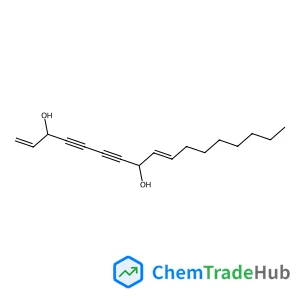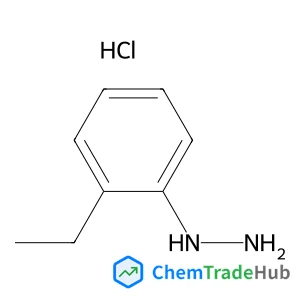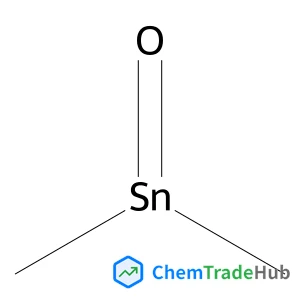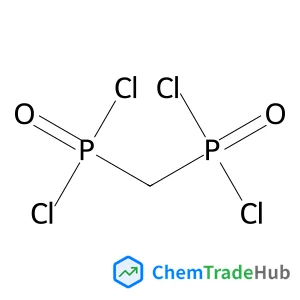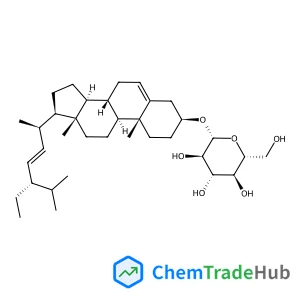
(3beta,22E)-Stigmasta-5,22-dien-3-yl beta-D-glucopyranoside
CAS Number:
19716-26-8
Molecular Formula:
C35H58O6
Yuhan Xiao, Yanfeng Ge, Degong Gao, Yunge Zhang, Zepeng Li
Mechanically stable air cathodes with exceptional oxygen reduction reaction (ORR) activities serve as a highly significant component of metal–air batteries. Herein, we have proposed and prepared a porous air electrode consisting of well-dispersed Fe nanoparticles (Zn assisted formation) embedded in nitrogen-rich 3D carbon nanofibers (called Fe(Zn)–N–C) derived from Fe, Zn–metal–organic frameworks (MOFs) by a facile and scalable approach. The obtained Fe(Zn)–N–C with a distinctly continuous porous structure presented a comparable or even better performance than the commercial 20 wt% Pt/C and previously reported non-noble electrocatalysts for Zn–air batteries, which includes (1) effective in the universal-pH range (E1/2 = 0.86, 0.74, and 0.67 V in alkaline, acidic, and neutral media, respectively), (2) extremely high stability (∼85%, 80%, and 82% activity retention for 86 400 s in alkaline, acidic, and neutral media, respectively), (3) a high power density (193 and 48 mW cm−2 in alkaline and neutral media, respectively), and (4) an excellent specific capacity (800 and 688 mA h g−1 in alkaline and neutral media, respectively). This design strategy of porous non-precious metal-doped pH-universal ORR electrocatalysts could also be extended to fabricate other novel, stable, and easy-to-use multi-functional electrocatalysts for clean-energy technology.
Naoufel Haddour, Chantal Gondran, Serge Cosnier
DOI: 10.1039/B311566F
Dirk Schwaebisch, Kirill Tchabanenko, Robert M. Adlington, Andrew M. Cowley, Jack E. Baldwin
DOI: 10.1039/B412300J
Yasushi Nishihara, Hiroyuki Onodera, Kohtaro Osakada
DOI: 10.1039/B308741G
Wenzhen Li, Zhenhua Zhou, Shaohua Yang, Gongquan Sun
DOI: 10.1039/B409539A
Ram K. R. Jetti, Roland Boese, Tejender S. Thakur, Venu R. Vangala, Gautam R. Desiraju
DOI: 10.1039/B407319C
Nanna K. Christensen, Torsten Bryld, Mads D. Sørensen, Khalil Arar, Jesper Wengel, Poul Nielsen
DOI: 10.1039/B312321A
Marjan Jereb, Stojan Stavber
DOI: 10.1039/B409919B
Geun Seok Chai, Suk Bon Yoon, Jung Ho Kim, Jong-Sung Yu
DOI: 10.1039/B412747C
Helena Almer, Tomas Szabo
DOI: 10.1039/B311912B
Katarína Krascsenicsová, Peter Walla, Peter Kasák, Georg Uray, C. Oliver Kappe, Martin Putala
DOI: 10.1039/B410185E
When handling 2-Chloro-1,2-bis(4-methylphenyl)ethanone (CAS: 71193-32-3), it is ...
4-Ethoxy-3-(5-methyl-4-oxo-7-propyl-1,4-dihydroimidazo[5,1-f][1,2,4]triazin-2-yl...
Methyl 3-Oxo-4-Androsten-17-Carboxylate (CAS: 2681-55-2) should be stored in a c...
(R)-3-Amino-4-(3-hexylphenylamino)-4-oxobutylphosphonic acid is primarily used i...
2-Methyl-2-propanyl 3-amino-3-carbamoyl-1-azetidinecarboxylate (CAS: 1254120-14-...
There are alternative reagents that can be used in synthesis instead of (E)-4-(t...
[2-(3-Chlorophenyl)-1,3-thiazol-4-yl]methanol (CAS: 121202-20-8) is a crystallin...
The market and research trends for Methyl (2S)-[(4S)-2,2-dimethyl-1,3-dioxolan-4...
The market for 1-Bromo-2-isocyanatoethane (CAS: 42865-19-0) is driven by its use...
4-Nitro-D-phenylalanine hydrochloride (CAS: 147065-06-3) is primarily used in re...
Journal of Materials Chemistry A, B & C cover high quality studies across all fields of materials chemistry. The journals focus on those theoretical or experimental studies that report new understanding, applications, properties and synthesis of materials. The journals have a strong history of publishing quality reports of interest to interdisciplinary communities and providing an efficient and rigorous service through peer review and publication. The journals are led by an international team of Editors-in-Chief and Associate Editors who are all active researchers in their fields. Journal of Materials Chemistry A, B & C are separated by the intended application of the material studied. Broadly, applications in energy and sustainability are of interest to Journal of Materials Chemistry A, applications in biology and medicine are of interest to Journal of Materials Chemistry B, and applications in optical, magnetic and electronic devices are of interest to Journal of Materials Chemistry C. More than one Journal of Materials Chemistry journal may be suitable for certain fields and researchers are encouraged to submit their paper to the journal that they feel best fits for their particular article. Example topic areas within the scope of Journal of Materials Chemistry A are listed below. This list is neither exhaustive nor exclusive. Artificial photosynthesis Batteries Carbon dioxide conversion Catalysis Fuel cells Gas capture/separation/storage Green/sustainable materials Hydrogen generation Hydrogen storage Photocatalysis Photovoltaics Self-cleaning materials Self-healing materials Sensors Supercapacitors Thermoelectrics Water splitting Water treatment