


A highly selective, efficient hydrogen gas sensor based on bimetallic (Pd–Au) alloy nanoparticle (NP)-decorated SnO2 nanorods
Literature Information
Publication Date
2023-11-17
DOI
10.1039/D3TA05878F
Impact Factor
12.732
Authors
Gaurav Pandey, Shiv Dutta Lawaniya, Sanjay Kumar, Prabhat K. Dwivedi, Kamlendra Awasthi
View Original
Abstract
The surging worldwide demand for hydrogen highlights the crucial need for advanced detection technologies, essential for enhancing safety and optimizing utilization across various applications. In this context, we have constructed a highly sensitive hydrogen gas sensor based on SnO2 nanorods decorated with bimetallic (Pd–Au) alloy nanoparticles (NPs) (Pd–Au@SnO2). The material synthesis (Pd–Au@SnO2) was achieved through a hybrid approach involving a hydrothermal treatment and an in situ ascorbic acid reduction process. Various compositions of SnO2 nanorods were prepared by tailoring the bimetallic content of Pd and Au, which was accomplished by adding different volume ratios of their respective precursor solutions. Among the various synthesized combinations, the composition of SnO2 (S1-0.5) with bimetallic decoration (Pd–Au) in a volume ratio of 1 : 0.5 demonstrates superior gas sensing capabilities towards hydrogen (25–500 ppm) within the temperature range 100–200 °C. The S1-0.5 sensor shows a response (Ra/Rg) of 46.4 towards 100 ppm of hydrogen at 175 °C, which is 42.7 fold higher than the bare SnO2 (S0-0) and 2.7 fold higher than Pd decorated SnO2 (S1-0). The excellent gas sensing performance of the S1-0.5 sensor is due to the strong catalytic effect and the synergetic effect of both Pd and Au. The response and recovery times of the S1-0.5 sensor were measured to be 19 s and 302 s, respectively. Furthermore, the S1-0.5 sensor also showed a high selectivity toward gaseous NH3, CO2, CO, and ethanol with a high stability and repeatability.
Recommended Journals

Journal of Catalysis

Proceedings of the National Academy of Sciences of the United States of America

European Journal of Wood and Wood Products

Helvetica Chimica Acta

Journal of Heterocyclic Chemistry

Israel Journal of Chemistry

Planta Medica

Science

Journal of Physics and Chemistry of Solids

Journal of Medicinal Chemistry
Related Literature
Polymer defect engineering – conductive 2D organic platelets from precise thiophene-doped polyethylene
Oksana Suraeva, Beomjin Jeong, Kamal Asadi, Katharina Landfester, Ingo Lieberwirth
2021-03-02
Paper
DOI: 10.1039/D1PY00117E
Synthesis of fully degradable cationic polymers with various topological structures via postpolymerization modification by using thio-bromo “click” reaction
Yunkai Dai, Zhitao Hu, Xiaoying Wang, Xingliang Liu, Yuanchao Li, Yi Shi, Yongming Chen
2021-04-05
Paper
DOI: 10.1039/D1PY00106J
NMR investigations of polytrifluoroethylene (PTrFE) synthesized by RAFT
Vincent Bouad, Marc Guerre, Sami Zeliouche, Bruno Améduri, Cédric Totée, Gilles Silly, Rinaldo Poli, Vincent Ladmiral
2021-03-15
Paper
DOI: 10.1039/D0PY01753A
Synthesis of thermo-sensitive polymers with super narrow molecular weight distributions: PET-RAFT polymerization of N-isopropyl acrylamide mediated by cross-linked zinc porphyrins with high active site loadings
Fanfan Li, Yi Yu, Hanyu Lv, Guiting Cai, Yanwu Zhang
2021-03-22
Paper
DOI: 10.1039/D0PY01643H
Morphological modulation of azobenzene-containing tubular polymersomes
Lishan Li, Yiwen Li, Shuyuan Wang, Liandong Ye, Wei Zhang, Nianchen Zhou, Zhengbiao Zhang, Xiulin Zhu
2021-04-26
Paper
DOI: 10.1039/D1PY00099C
Initiator-dependent kinetics of lyotropic liquid crystal-templated thermal polymerization
Younes Saadat, Kyungtae Kim, Reza Foudazi
2021-03-11
Paper
DOI: 10.1039/D1PY00127B
One-shot synthesis of star gradient copolymers with controllable graft density
2021-04-06
Paper
DOI: 10.1039/D1PY00313E
High molar mass poly(ricinoleic acid) via entropy-driven ring-opening metathesis polymerization
Marc A. Hillmyer
2021-03-23
Paper
DOI: 10.1039/D1PY00185J
Polymerizability of exomethylene monomers based on adamantyl frameworks
Raita Goseki, Shogo Miyai, Satoshi Uchida, Takashi Ishizone
2021-06-02
Paper
DOI: 10.1039/D1PY00500F
You might also like
Compound Q&A
How should waste containing 2-Ethyl-4-Methyl-1H-Imidazole-5-Carbaldehyde (CAS: 88634-80-4) be handled?
Waste containing 2-Ethyl-4-Methyl-1H-Imidazole-5-Carbaldehyde (CAS: 88634-80-4) ...
88634-80-42-Ethyl-4-Methyl-1H-...
Compound Q&A
What industries use Triethoxy(octyl)silane (CAS: 1385031-14-0)?
Triethoxy(octyl)silane (CAS: 1385031-14-0) is widely used in the pharmaceuticals...
1385031-14-0Triethoxy(octyl)sila...
Compound Q&A
Are there alternatives to 3-iodo-7-nitro-1H-indazole (CAS: 864724-64-1) in synthesis?
Several alternatives to 3-iodo-7-nitro-1H-indazole (CAS: 864724-64-1) exist in t...
864724-64-13-iodo-7-nitro-1H-in...
Compound Q&A
Are there alternatives to Benzene, bis[(trimethoxysilyl)ethyl] (CAS: 266317-71-9) in synthesis?
Yes, there are alternatives to Benzene, bis[(trimethoxysilyl)ethyl] (CAS: 266317...
266317-71-9Benzene, bis[(trimet...
Compound Q&A
Is Isothiazole-3-carbonitrile (CAS: 1452-17-1) safe?
Isothiazole-3-carbonitrile (CAS: 1452-17-1) is generally considered safe when us...
1452-17-1Isothiazole-3-carbon...
Compound Q&A
Is (3-Chlorophenyl)methanol (CAS: 873-63-2) safe?
(3-Chlorophenyl)methanol (CAS: 873-63-2) is considered low to moderately toxic. ...
873-63-2(3-Chlorophenyl)meth...
Compound Q&A
How is (2S,3S)-2-Hydroxy-3-({[(2-methyl-2-propanyl)oxy]carbonyl}amino)-3-(2-naphthyl)propanoic acid (CAS: 959583-98-3) typically synthesized?
(2S,3S)-2-Hydroxy-3-({[(2-methyl-2-propanyl)oxy]carbonyl}amino)-3-(2-naphthyl)pr...
959583-98-3(2S,3S)-2-Hydroxy-3-...
Compound Q&A
What precautions should be taken when handling Methyl 2-(bromomethyl)-5-methoxybenzoate (CAS: 788081-99-2)?
Proper handling of methyl 2-(bromomethyl)-5-methoxybenzoate requires the use of ...
788081-99-2Methyl 2-(bromomethy...
Compound Q&A
What is 6,8-Dibromoimidazo[1,2-a]pyridine-2-carboxylic acid (CAS: 904805-36-3)?
6,8-Dibromoimidazo[1,2-a]pyridine-2-carboxylic acid (CAS: 904805-36-3) is an aro...
904805-36-36,8-Dibromoimidazo[1...
Compound Q&A
Is 3-Amino-5-bromo-2-pyridinecarbonitrile (CAS: 573675-27-1) safe?
3-Amino-5-bromo-2-pyridinecarbonitrile is considered safe when handled under pro...
573675-27-13-Amino-5-bromo-2-py...
Source Journal
Journal of Materials Chemistry A

CiteScore:
19.5
Self-citation Rate:
4.7%
Articles per Year:
2211
Journal of Materials Chemistry A, B & C cover high quality studies across all fields of materials chemistry. The journals focus on those theoretical or experimental studies that report new understanding, applications, properties and synthesis of materials. The journals have a strong history of publishing quality reports of interest to interdisciplinary communities and providing an efficient and rigorous service through peer review and publication. The journals are led by an international team of Editors-in-Chief and Associate Editors who are all active researchers in their fields. Journal of Materials Chemistry A, B & C are separated by the intended application of the material studied. Broadly, applications in energy and sustainability are of interest to Journal of Materials Chemistry A, applications in biology and medicine are of interest to Journal of Materials Chemistry B, and applications in optical, magnetic and electronic devices are of interest to Journal of Materials Chemistry C. More than one Journal of Materials Chemistry journal may be suitable for certain fields and researchers are encouraged to submit their paper to the journal that they feel best fits for their particular article. Example topic areas within the scope of Journal of Materials Chemistry A are listed below. This list is neither exhaustive nor exclusive. Artificial photosynthesis Batteries Carbon dioxide conversion Catalysis Fuel cells Gas capture/separation/storage Green/sustainable materials Hydrogen generation Hydrogen storage Photocatalysis Photovoltaics Self-cleaning materials Self-healing materials Sensors Supercapacitors Thermoelectrics Water splitting Water treatment
Recommended Compounds
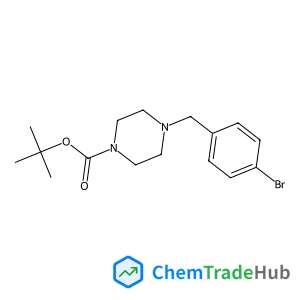
2-Methyl-2-propanyl 4-(4-bromobenzyl)-1-piperazinecarboxylate
CAS Number:
844891-10-7
Molecular Formula:
C16H23BrN2O2

Recommended Suppliers





Disclaimer
This page provides academic journal information for reference and research purposes only. We are not affiliated with any journal publishers and do not handle publication submissions. For publication-related inquiries, please contact the respective journal publishers directly.
If you notice any inaccuracies in the information displayed, please contact us at support@chemtradehub.com. We will promptly review and address your concerns.