












![6-(Benzyloxy)-8-(2-bromoacetyl)-2H-benzo[b][1,4]oxazin-3(4H)-one structure](https://static.chemtradehub.com/structs/926/926319-53-1-2287.webp "6-(Benzyloxy)-8-(2-bromoacetyl)-2H-benzo[b][1,4]oxazin-3(4H)-one structure")
6-(Benzyloxy)-8-(2-bromoacetyl)-2H-benzo[b][1,4]oxazin-3(4H)-one
CAS Number:
926319-53-1
Molecular Formula:
C17H14BrNO4
Dongrun Xu, Weiye Qu, Junhong Liu, Junxiao Chen, Xue Fang, Liwei Chen, Xi Liu, Yaxin Chen
Selective catalytic reduction (SCR) is the most effective technology to control NO emission using commercial V2O5–WO3/TiO2 catalysts, but the nature of active catalytic sites remains under debate. Here we provide evidence demonstrating that dinuclear vanadium–tungsten sites are the most active catalytic sites of conventional V2O5–WO3/TiO2 catalysts, inconsistent with a prevailing view that dimeric vanadium sites are the active sites. The dinuclear vanadium–tungsten sites have inherently stronger acidity than the dimeric vanadium sites, favoring NH3 adsorption. Meanwhile, the vanadium 3d electrons of the dinuclear vanadium–tungsten sites are richer than those of the dimeric vanadium sites, facilitating O2 activation in SCR. Hence, the dinuclear vanadium–tungsten sites have higher SCR activity than the dimeric vanadium sites under identical reaction conditions. This work settles a long dispute on the identification of active sites of conventional V2O5–WO3/TiO2 SCR catalysts, thus having implications for a unified explanation of disparate SCR reaction mechanisms and rational design of improved SCR catalysts.
Piotr Kowalczyk, Piotr A. Gauden, Artur P. Terzyk, Sylwester Furmaniak
DOI: 10.1039/B926206G
Anita Lagutschenkov, Judith Langer, Giel Berden, Otto Dopfer
DOI: 10.1039/C0CP02133D
Andrei V. Naumov, Aleksey A. Gorshelev, Yury G. Vainer, Lothar Kador, Jürgen Köhler
DOI: 10.1039/C0CP01689F
Richard Hildner, Daan Brinks, Fernando D. Stefani
DOI: 10.1039/C0CP02231D
Kuo Meng, Jianping Wang
DOI: 10.1039/C0CP01177K
Hynek Němec, Irena Kratochvílová, Petr Kužel, Anna Kochalska, Juraj Nožár, Stanislav Nešpůrek
DOI: 10.1039/C0CP00774A
Guillaume Berionni, Anne-Marie Gonçalves, Charles Mathieu, Thomas Devic, Arnaud Etchéberry, Régis Goumont
DOI: 10.1039/C0CP01282C
Yigang Fang, Andrew Bennett, Jianbo Liu
DOI: 10.1039/C0CP00823K
Yunlan Su, Baoquan Xie, Haijin Zhu, Dujin Wang
DOI: 10.1039/C0CP01173H
When handling lithium chloride hydrate (1:1:1) (CAS: 16712-20-2), it is importan...
4-(4H-1,2,4-Triazol-4-yl)piperidine is generally considered safe for use in phar...
Waste containing 1,3-Thiazole-2-carboxamide (CAS: 16733-85-0) should be collecte...
5-(Difluoromethyl)-2-fluorobenzonitrile (CAS: 934175-58-3) is subject to regulat...
Methyl 3-acetamido-2-thiophenecarboxylate can be synthesized by the reaction of ...
4-Isoquinolinecarbonitrile is a chemical compound with the CAS number 34846-65-6...
Store Methyl 1H-1,2,3-triazole-4-carboxylate (CAS: 877309-59-6) in a cool, dry p...
6-Bromo[1,3]thiazolo[5,4-b]pyridin-2-amine (CAS: 1160791-13-8) is subject to the...
(2S,3S)-2-Ammonio-3-(3,4-dihydroxyphenyl)-3-hydroxypropanoate (CAS: 23651-95-8) ...
7-Bromo-3-methyl-3,4-dihydroquinazolin-4-one is a solid with a crystalline form....
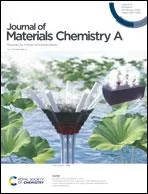
Journal of Materials Chemistry A, B & C cover high quality studies across all fields of materials chemistry. The journals focus on those theoretical or experimental studies that report new understanding, applications, properties and synthesis of materials. The journals have a strong history of publishing quality reports of interest to interdisciplinary communities and providing an efficient and rigorous service through peer review and publication. The journals are led by an international team of Editors-in-Chief and Associate Editors who are all active researchers in their fields. Journal of Materials Chemistry A, B & C are separated by the intended application of the material studied. Broadly, applications in energy and sustainability are of interest to Journal of Materials Chemistry A, applications in biology and medicine are of interest to Journal of Materials Chemistry B, and applications in optical, magnetic and electronic devices are of interest to Journal of Materials Chemistry C. More than one Journal of Materials Chemistry journal may be suitable for certain fields and researchers are encouraged to submit their paper to the journal that they feel best fits for their particular article. Example topic areas within the scope of Journal of Materials Chemistry A are listed below. This list is neither exhaustive nor exclusive. Artificial photosynthesis Batteries Carbon dioxide conversion Catalysis Fuel cells Gas capture/separation/storage Green/sustainable materials Hydrogen generation Hydrogen storage Photocatalysis Photovoltaics Self-cleaning materials Self-healing materials Sensors Supercapacitors Thermoelectrics Water splitting Water treatment
![N-[2-(2-Pyridinyl)ethyl]-1-propanamine structure](https://static.chemtradehub.com/structs/554/55496-57-6-22b4.webp "N-[2-(2-Pyridinyl)ethyl]-1-propanamine structure")
![5,10-Dihydroindeno[2,1-a]indene structure](https://static.chemtradehub.com/structs/654/6543-29-9-71ca.webp "5,10-Dihydroindeno[2,1-a]indene structure")




