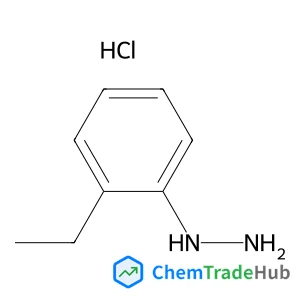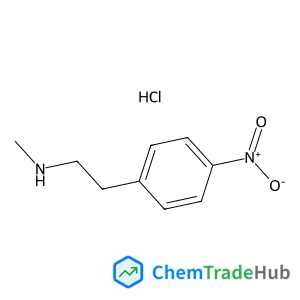
N-Methyl-2-(4-nitrophenyl)ethanamine hydrochloride (1:1)
CAS Number:
166943-39-1
Molecular Formula:
C9H13ClN2O2
Junjie Fu, Haonan Zhu, Yusen Wang, Jianchao Hao, Jinhu Wu, Rongzhi Wang, Dandan Zhao, Yange Zhang, Zhi Zheng
The Cu2ZnSn(S,Se)4 (CZTSSe) material is considered a promising semiconductor material for commercial photovoltaic applications due to its high theoretical efficiency, high absorption coefficient, tunable direct bandgap, high element abundance, and low production cost. However, the efficiency of solution-processed CZTSSe thin-film solar cells still falls short of their theoretical efficiency limit (∼31.0%) and that of their predecessor copper indium gallium selenide (CIGS) cells. The relatively low device efficiency is mainly due to bulk and interface defects generated during the preparation of the absorber layer. For achieving a high-quality CZTSSe absorber layer via solution processing, the properties of the solvent are essential. To further improve the efficiency of CZTSSe cells prepared by solution methods, this review provides a detailed summary of the current research status on the selection of solvents and solutes or precursor materials, regulation of bulk and interface defects, optimization of various functional layers, and design of device structures in the preparation of high-efficiency CZTSSe by six solution methods based on different solvent systems (hydrazine, 1,2-ethylenediamine and 1,2-ethanedithiol, dimethyl sulfoxide, N,N-dimethylformamide, 2-methoxyethanol, and thioglycolic acid–ammonia systems). Finally, this article discusses new insights and perspectives for achieving high-efficiency CZTSSe thin-film solar cells.
Evgueni Gribov
DOI: 10.1039/B411053F
DOI: 10.1039/B409497M
Weon-Sik Chae, Sang-Wook Lee, Sung-Jae Im, Sik-Won Moon, Wang-Cheol Zin, Jin-Kyu Lee, Yong-Rok Kim
DOI: 10.1039/B410631H
Christophe Pichon, Barbara Odell, John M. Brown
DOI: 10.1039/B314641C
Gergely Juhász, Makoto Seto, Yoshitaka Yoda, Shinya Hayami, Yonezo Maeda
DOI: 10.1039/B409025J
Chen-Min Liu, Rong-Ming Wang, Yuan Deng, Hui-Bin Xu, Shihe Yang
DOI: 10.1039/B411311J
Hemant K. Sharma, Keith H. Pannell
DOI: 10.1039/B410822A
Christian Dubs, Akiko Inagaki, Munetaka Akita
DOI: 10.1039/B409514F
Zhaoping Liu, Jianbo Liang, Dan Xu, Jun Lu, Yitai Qian
DOI: 10.1039/B409825K
James E. Beddow, Stephen G. Davies, Andrew D. Smith, Angela J. Russell
DOI: 10.1039/B410938D
When handling 2-Chloro-1,2-bis(4-methylphenyl)ethanone (CAS: 71193-32-3), it is ...
4-Ethoxy-3-(5-methyl-4-oxo-7-propyl-1,4-dihydroimidazo[5,1-f][1,2,4]triazin-2-yl...
Methyl 3-Oxo-4-Androsten-17-Carboxylate (CAS: 2681-55-2) should be stored in a c...
(R)-3-Amino-4-(3-hexylphenylamino)-4-oxobutylphosphonic acid is primarily used i...
2-Methyl-2-propanyl 3-amino-3-carbamoyl-1-azetidinecarboxylate (CAS: 1254120-14-...
There are alternative reagents that can be used in synthesis instead of (E)-4-(t...
[2-(3-Chlorophenyl)-1,3-thiazol-4-yl]methanol (CAS: 121202-20-8) is a crystallin...
The market and research trends for Methyl (2S)-[(4S)-2,2-dimethyl-1,3-dioxolan-4...
The market for 1-Bromo-2-isocyanatoethane (CAS: 42865-19-0) is driven by its use...
4-Nitro-D-phenylalanine hydrochloride (CAS: 147065-06-3) is primarily used in re...
Journal of Materials Chemistry A, B & C cover high quality studies across all fields of materials chemistry. The journals focus on those theoretical or experimental studies that report new understanding, applications, properties and synthesis of materials. The journals have a strong history of publishing quality reports of interest to interdisciplinary communities and providing an efficient and rigorous service through peer review and publication. The journals are led by an international team of Editors-in-Chief and Associate Editors who are all active researchers in their fields. Journal of Materials Chemistry A, B & C are separated by the intended application of the material studied. Broadly, applications in energy and sustainability are of interest to Journal of Materials Chemistry A, applications in biology and medicine are of interest to Journal of Materials Chemistry B, and applications in optical, magnetic and electronic devices are of interest to Journal of Materials Chemistry C. More than one Journal of Materials Chemistry journal may be suitable for certain fields and researchers are encouraged to submit their paper to the journal that they feel best fits for their particular article. Example topic areas within the scope of Journal of Materials Chemistry A are listed below. This list is neither exhaustive nor exclusive. Artificial photosynthesis Batteries Carbon dioxide conversion Catalysis Fuel cells Gas capture/separation/storage Green/sustainable materials Hydrogen generation Hydrogen storage Photocatalysis Photovoltaics Self-cleaning materials Self-healing materials Sensors Supercapacitors Thermoelectrics Water splitting Water treatment