


The intrinsic activity descriptor of TM-N3-C single-atom catalysts for electrochemical CO2 reduction: a DFT study
Literature Information
Publication Date
2023-10-27
DOI
10.1039/D3TA04806C
Impact Factor
12.732
Authors
Linmeng Wang, Zhiyuan Liu, Rushuo Li, Ping Yang, Wei Wang, Xiangdong Xue, Shihao Feng, Lingjing Yu, Ge Wang
View Original
Abstract
Developing catalysts for the high efficiency of CO2 utilization and conversion is a hot topic and has attracted significant interest. Using systematic density functional theory (DFT) calculations, the stability and catalytic performance of TM-N3-C catalysts are determined by the element of the metal site and influenced by the local environment around TM atoms during CO2RR, which is mainly attributed to tailoring the electronic structure of the active center and its coordinated atoms. The influence of inherent features of the catalyst on properties was clarified. It is worth noting that an intrinsic descriptor (Ψ) of activity and selectivity for CO2-to-CH4 was assembled by inherent characteristics of electrocatalysts, such as the number of valence electrons (V), electronegativity (χ), and Hirshfeld charges (Q); the elevation altitude (H) from TM center to N3-C substrate; average bond length (d) of the TM atom and the nearest neighbor atoms; and metal-coordinated number (N). The volcano-shaped physical curves were established between Ψ and the limiting potential, and three promising TM-N3-C (Ru-II, Rh-II, and Pd-II) with moderate VM, QM, d, and H, and larger χM are distributed close to the summit of the volcano curve. This study is meaningful for understanding the mechanism of electrocatalytic CO2 reduction and the design of efficient electrocatalysts for CO2RR.
Recommended Journals

Critical Reviews in Solid State and Materials Sciences

Journal of Chemical Sciences

Atomization and Sprays

NDT & E International

Biocatalysis and Biotransformation

Colloid Journal

Herald of the Russian Academy of Sciences

Medicinal Chemistry Research

Acta Metallurgica Sinica-English Letters

Polycyclic Aromatic Compounds
Related Literature
Impact of chain length, temperature, and humidity on the growth of long alkyltrichlorosilane self-assembled monolayers
David Guérin, Dominique Vuillaume
2010-12-16
Paper
DOI: 10.1039/C0CP01382J
Phase change materials of n-alkane-containing microcapsules: observation of coexistence of ordered and rotator phases
Yunlan Su, Baoquan Xie, Haijin Zhu, Dujin Wang
2011-01-11
Paper
DOI: 10.1039/C0CP01173H
Charge carrier mobility in poly[methyl(phenyl)silylene] studied by time-resolved terahertz spectroscopy and molecular modelling
Hynek Němec, Irena Kratochvílová, Petr Kužel, Anna Kochalska, Juraj Nožár, Stanislav Nešpůrek
2010-12-15
Paper
DOI: 10.1039/C0CP00774A
Fluorescence spectra of organic dyes in solution: a time dependent multilevel approach
Susanna Monti, Alfonso Pedone, Giacomo Prampolini
2010-12-02
Paper
DOI: 10.1039/C0CP01320J
Reentrant behavior of grafted poly(sodium styrenesulfonate) chains investigated with a quartz crystal microbalance
Yi Hou, Guangming Liu, Ying Wu
2010-12-16
Paper
DOI: 10.1039/C0CP01994A
Amorphization and recrystallization study of lithium insertion into manganese dioxide
Rapela R. Maphanga, Dean C. Sayle, Thi X. T. Sayle, Phuti E. Ngoepe
2010-11-29
Paper
DOI: 10.1039/C0CP00274G
Rules for selectivity in oxidation processes on RuO2(110)
Núria López, Gerard Novell-Leruth
2010-08-18
Paper
DOI: 10.1039/C0CP00176G
Diblock copolymer membranes investigated by single-particle tracking
Chandrashekara R. Haramagatti, Felix H. Schacher, Axel H. E. Müller, Jürgen Köhler
2010-11-29
Paper
DOI: 10.1039/C0CP01658F
Freezing single molecule dynamics on interfaces and in polymers
Stefan Krause, Pedro F. Aramendia, Daniela Täuber, Christian von Borczyskowski
2010-12-08
Paper
DOI: 10.1039/C0CP01713B
Effect of the surface on the secondary structure of soft landed peptide ions
Qichi Hu, Peng Wang, Julia Laskin
2010-08-27
Paper
DOI: 10.1039/C0CP00825G
You might also like
Compound Q&A
What precautions should be taken when handling lithium chloride hydrate (1:1:1) (CAS: 16712-20-2)?
When handling lithium chloride hydrate (1:1:1) (CAS: 16712-20-2), it is importan...
16712-20-2Lithium chloride hyd...
Compound Q&A
Is 4-(4H-1,2,4-Triazol-4-yl)piperidine (CAS: 690261-92-8) safe?
4-(4H-1,2,4-Triazol-4-yl)piperidine is generally considered safe for use in phar...
690261-92-84-(4H-1,2,4-Triazol-...
Compound Q&A
How should waste containing 1,3-Thiazole-2-carboxamide (CAS: 16733-85-0) be handled?
Waste containing 1,3-Thiazole-2-carboxamide (CAS: 16733-85-0) should be collecte...
16733-85-01,3-Thiazole-2-carbo...
Compound Q&A
What regulatory guidelines apply to 5-(Difluoromethyl)-2-fluorobenzonitrile (CAS: 934175-58-3)?
5-(Difluoromethyl)-2-fluorobenzonitrile (CAS: 934175-58-3) is subject to regulat...
934175-58-35-(Difluoromethyl)-2...
Compound Q&A
How is Methyl 3-acetamido-2-thiophenecarboxylate (CAS: 22288-79-5) typically synthesized?
Methyl 3-acetamido-2-thiophenecarboxylate can be synthesized by the reaction of ...
22288-79-5Methyl 3-acetamido-2...
Compound Q&A
What is 4-Isoquinolinecarbonitrile (CAS: 34846-65-6)?
4-Isoquinolinecarbonitrile is a chemical compound with the CAS number 34846-65-6...
34846-65-64-Isoquinolinecarbon...
Compound Q&A
How should Methyl 1H-1,2,3-triazole-4-carboxylate (CAS: 877309-59-6) be stored?
Store Methyl 1H-1,2,3-triazole-4-carboxylate (CAS: 877309-59-6) in a cool, dry p...
877309-59-6Methyl 1H-1,2,3-tria...
Compound Q&A
What regulatory guidelines apply to 6-Bromo[1,3]thiazolo[5,4-b]pyridin-2-amine (CAS: 1160791-13-8)?
6-Bromo[1,3]thiazolo[5,4-b]pyridin-2-amine (CAS: 1160791-13-8) is subject to the...
1160791-13-86-Bromo[1,3]thiazolo...
Compound Q&A
Is (2S,3S)-2-Ammonio-3-(3,4-dihydroxyphenyl)-3-hydroxypropanoate (CAS: 23651-95-8) safe?
(2S,3S)-2-Ammonio-3-(3,4-dihydroxyphenyl)-3-hydroxypropanoate (CAS: 23651-95-8) ...
23651-95-8(2S,3S)-2-Ammonio-3-...
Compound Q&A
What are the physical and chemical properties of 7-bromo-3-methyl-3,4-dihydroquinazolin-4-one (CAS: 1293987-84-4)?
7-Bromo-3-methyl-3,4-dihydroquinazolin-4-one is a solid with a crystalline form....
1293987-84-47-bromo-3-methyl-3,4...
Source Journal
Journal of Materials Chemistry A

CiteScore:
19.5
Self-citation Rate:
4.7%
Articles per Year:
2211
Journal of Materials Chemistry A, B & C cover high quality studies across all fields of materials chemistry. The journals focus on those theoretical or experimental studies that report new understanding, applications, properties and synthesis of materials. The journals have a strong history of publishing quality reports of interest to interdisciplinary communities and providing an efficient and rigorous service through peer review and publication. The journals are led by an international team of Editors-in-Chief and Associate Editors who are all active researchers in their fields. Journal of Materials Chemistry A, B & C are separated by the intended application of the material studied. Broadly, applications in energy and sustainability are of interest to Journal of Materials Chemistry A, applications in biology and medicine are of interest to Journal of Materials Chemistry B, and applications in optical, magnetic and electronic devices are of interest to Journal of Materials Chemistry C. More than one Journal of Materials Chemistry journal may be suitable for certain fields and researchers are encouraged to submit their paper to the journal that they feel best fits for their particular article. Example topic areas within the scope of Journal of Materials Chemistry A are listed below. This list is neither exhaustive nor exclusive. Artificial photosynthesis Batteries Carbon dioxide conversion Catalysis Fuel cells Gas capture/separation/storage Green/sustainable materials Hydrogen generation Hydrogen storage Photocatalysis Photovoltaics Self-cleaning materials Self-healing materials Sensors Supercapacitors Thermoelectrics Water splitting Water treatment
Recommended Compounds
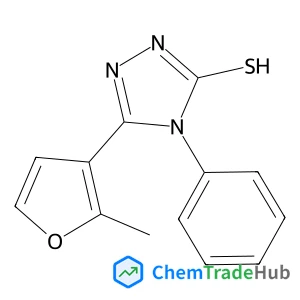
5-(2-Methyl-3-furyl)-4-phenyl-2,4-dihydro-3H-1,2,4-triazole-3-thione
CAS Number:
346464-59-3
Molecular Formula:
C13H11N3OS
![1-[4-(4-Methyl-1H-imidazol-1-yl)phenyl]ethanone structure](https://static.chemtradehub.com/structs/142/142161-53-3-7f55.webp "1-[4-(4-Methyl-1H-imidazol-1-yl)phenyl]ethanone structure")
![(1R,5R)-3-{[(2-Methyl-2-propanyl)oxy]carbonyl}-3-azabicyclo[3.1.0]hexane-1-carboxylic acid structure](https://static.chemtradehub.com/structs/116/1165450-63-4-bfe1.webp "(1R,5R)-3-{[(2-Methyl-2-propanyl)oxy]carbonyl}-3-azabicyclo[3.1.0]hexane-1-carboxylic acid structure")
(1R,5R)-3-{[(2-Methyl-2-propanyl)oxy]carbonyl}-3-azabicyclo[3.1.0]hexane-1-carboxylic acid
CAS Number:
1165450-63-4
Molecular Formula:
C11H17NO4
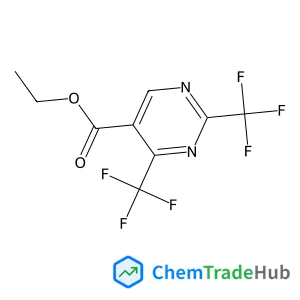
Ethyl 2,4-bis(trifluoromethyl)-5-pyrimidinecarboxylate
CAS Number:
188781-15-9
Molecular Formula:
C9H6F6N2O2
Recommended Suppliers




Disclaimer
This page provides academic journal information for reference and research purposes only. We are not affiliated with any journal publishers and do not handle publication submissions. For publication-related inquiries, please contact the respective journal publishers directly.
If you notice any inaccuracies in the information displayed, please contact us at support@chemtradehub.com. We will promptly review and address your concerns.