













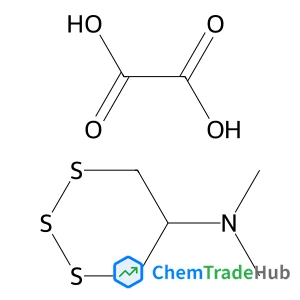
Oxalic acid compound with cyclohexylsulfamothioic O-acid (11)
CAS Number:
31895-22-4
Molecular Formula:
C7H13NO4S3
Rahul Patil, Nitish Kumar, Babasahab Matsagar, Rahul R. Salunkhe, Saikat Dutta
Heterostructure materials are intriguing because they may combine two or more building blocks that produce novel heterointerfaces with exceptional features. By exposing more interfaces and active sites, their utility in electrochemical applications is further expanded when they are used to form large-scale 3D frameworks. This study uses improved graphene oxide (IGO) and GO to form a heterojunction (ZIF-8/IGO). The interface between ZIF-8 and IGO accelerated the transfer of thermally obtained electrons from ZIF-8-NC to IGO. We focus on developing a 2D heterostructure mixed porous system based on differences in the density of oxygen-containing functional groups of improved graphene oxide (IGO) and commercially accessed graphene oxide (GO) while forming a composite with ZIF-8. IGO@ZIF-8-NC exhibited a very high capacitance of 352.8 F g−1 as compared to 287.5 F g−1 for GO@ZIF-8-NC at a scan rate of 5 mV s−1 confirming that the former is an excellent supercapacitor electrode owing to the synergistic behaviour at the heterojunction interface. The results on IGO-based electrodes pave the way forward for sustainable capacitive devices.
Tingting Zhang, Frédéric Peruch, Anne-Laure Wirotius, Emmanuel Ibarboure, Frédéric Rosu, Christophe Schatz, Bertrand Garbay
DOI: 10.1039/D1PY00969A
Xun Zhang, Yu Jiang, Junqiang Lin, Siping Hu
DOI: 10.1039/D1PY01431E
Xiandeng Qiu, Hua Xue, Lin Xu, Ran Wang, Shengchao Qiu, Qun He
DOI: 10.1039/D1PY00835H
Mobina Khakbaz, Ahad Ghaemi, Gity Mir Mohamad Sadeghi
DOI: 10.1039/D1PY01145F
Chun-Wei Chang, Yu-Yu Jen, Shan-Cheng Tang, Pan Zhang, Changle Chen, Chi-How Peng
DOI: 10.1039/D1PY00904D
Huishan Huang, Wenyi Luo, Linlin Zhu, Ying Wang
DOI: 10.1039/D1PY00890K
Tilman Grüger
DOI: 10.1039/D1PY00536G
Waste containing (6-Bromo-2-naphthyl)oxy](dimethyl)(2-methyl-2-propanyl)silane (...
7-Fluoro-4-isoquinolinecarboxylic acid can be synthesized via a multi-step proce...
2,3,5,6-Tetrabromothieno[3,2-b]thiophene is a crystalline compound with a high m...
1-[4-(Benzylamino)-7,8-dihydro-5H-pyrano[4,3-d]pyrimidin-2-yl]-2-methyl-1H-indol...
The market for imidazo[5,1-d]-1,2,3,5-tetrazine-8-carboxylic acid, 3,4-dihydro-3...
3-(Triisopropylsilyl)propiolaldehyde is a synthetic organic compound with the CA...
6-Nitro-2H-1,4-benzoxazin-3(4H)-one (CAS: 81721-87-1) is subject to various regu...
Waste containing (3-Fluorophenyl)(4-{[(2-methyl-2-propanyl)oxy]carbonyl}-1-piper...
N,N'-4,4'-Biphenyldiyldiisonicotinamide is a white crystalline solid with a mole...
6-Bromo-8-fluoro-2-quinazolinol is primarily used in the pharmaceutical industry...
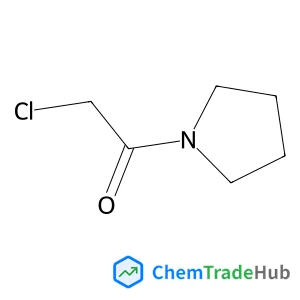
![10-(1-Azabicyclo[2.2.2]oct-3-ylmethyl)-10H-phenothiazine structure](https://static.chemtradehub.com/structs/292/29216-28-2-1d81.webp "10-(1-Azabicyclo[2.2.2]oct-3-ylmethyl)-10H-phenothiazine structure")
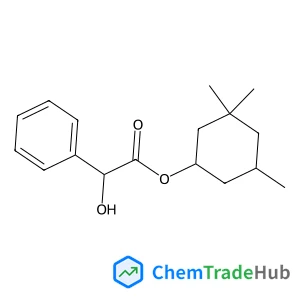
![2-{[4-(2-Methoxyethyl)phenoxy]methyl}oxirane structure](https://static.chemtradehub.com/structs/567/56718-70-8-f037.webp "2-{[4-(2-Methoxyethyl)phenoxy]methyl}oxirane structure")



