













A recombinant approach for stapled peptide discovery yields inhibitors of the RAD51 recombinase
Literature Information
Publication Date
2023-11-21
DOI
10.1039/D3SC03331G
Impact Factor
9.825
Authors
Pedro Zuazua-Villar, Oliwia Koczy, Andrew J. Counsell, Stephen J. Walsh, Naomi S. Robertson, David R. Spring, Jessica A. Downs, Marko Hyvönen
View Original
Abstract
Stapling is a macrocyclisation method that connects amino acid side chains of a peptide to improve its pharmacological properties. We describe an approach for stapled peptide preparation and biochemical evaluation that combines recombinant expression of fusion constructs of target peptides and cysteine-reactive divinyl-heteroaryl chemistry as an alternative to solid-phase synthesis. We then employ this workflow to prepare and evaluate BRC-repeat-derived inhibitors of the RAD51 recombinase, showing that a diverse range of secondary structure elements in the BRC repeat can be stapled without compromising binding and function. Using X-ray crystallography, we elucidate the atomic-level features of the staple moieties. We then demonstrate that BRC-repeat-derived stapled peptides can disrupt RAD51 function in cells following ionising radiation treatment.
Related Literature
A facile approach to fabricate functionalized superparamagnetic copolymer-silica nanocomposite spheres
Dechao Niu, Yongsheng Li, Xiaoli Qiao, Liang Li, Wenru Zhao, Hangrong Chen, Qiaoling Zhao, Zhi Ma
2008-07-29
Communication
DOI: 10.1039/B807781A
Hierarchical carbon nanotube assemblies created by sugar–boric or boronic acid interactions
Shingo Tamesue, Munenori Numata, Kenji Kaneko, Tony D. James, Seiji Shinkai
2008-07-30
Communication
DOI: 10.1039/B808599D
Nanostructured polymers with embedded self-assembled reactive gel networks
Jamie R. Moffat, Gordon J. Seeley, Jeff T. Carter, Andrew Burgess, David K. Smith
2008-08-01
Communication
DOI: 10.1039/B809077G
Unusual temperature dependence of salt effects for “on water” Wittig reaction: hydrophobicity at the interface
Shraeddha Tiwari, Anil Kumar
2008-07-28
Communication
DOI: 10.1039/B809127G
Improved oxygen mobility in nanosized mixed-oxide particles synthesized using a simple nanocasting route
Magali Bonne, Nicolas Bion, Frédéric Pailloux, Sabine Valange, Sébastien Royer, Jean-Michel Tatibouët, Daniel Duprez
2008-08-01
Communication
DOI: 10.1039/B808699K
B-Alkyl Suzuki couplings for the stereoselective synthesis of substituted pyrans
Gregory W. O’Neil, Alois Fürstner
2008-07-16
Communication
DOI: 10.1039/B806898D
Ni(ii)-catalyzed enantioselective Nazarov cyclizations
Irene Walz, Antonio Togni
2008-07-17
Communication
DOI: 10.1039/B806870D
Controlled generation of acentric and homochiral coordination compounds from a versatile asymmetric ligand 4-(1H-1,2,4-triazol-3-yl)-4H-1,2,4-triazole
Jian Zhang, Zhao-Ji Li, Ye-Yan Qin, Jian-Kai Cheng, Yuan-Gen Yao
2008-07-15
Communication
DOI: 10.1039/B807320A
QM/MM simulations predict a covalent intermediate in the hen egg white lysozyme reaction with its natural substrate
Anna L. Bowman, Ian M. Grant, Adrian J. Mulholland
2008-08-05
Communication
DOI: 10.1039/B810099C
Borenium cations derived from BODIPY dyes
Catherine Bonnier, Warren E. Piers, Masood Parvez, Ted S. Sorensen
2008-07-31
Communication
DOI: 10.1039/B808739C
You might also like
Compound Q&A
What precautions should be taken when handling 4-(2-Furylmethyl)thiomorpholine 1,1-dioxide (CAS: 79206-94-3)?
When handling 4-(2-Furylmethyl)thiomorpholine 1,1-dioxide (CAS: 79206-94-3), it ...
79206-94-34-(2-Furylmethyl)thi...
Compound Q&A
What precautions should be taken when handling 4-Chloro-N-[2-(4-morpholinyl)ethyl]benzamide (CAS: 71320-77-9)?
When handling 4-Chloro-N-[2-(4-morpholinyl)ethyl]benzamide (CAS: 71320-77-9), it...
71320-77-94-Chloro-N-[2-(4-mor...
Compound Q&A
How should waste containing 2-[2-(2-Methoxyethoxy)ethoxy]ethyl 4-methylbenzenesulfonate (CAS: 62921-74-8) be handled?
Waste containing this compound (CAS: 62921-74-8) should be handled according to ...
62921-74-82-[2-(2-Methoxyethox...
Compound Q&A
How should waste containing (S)-Methyl 2-amino-3-cyclohexylpropanoate be handled?
Waste containing (S)-Methyl 2-amino-3-cyclohexylpropanoate should be collected i...
40056-18-6(S)-Methyl 2-amino-3...
Compound Q&A
How is 5-({4-[(2S,4R)-4-Hydroxy-2-methyltetrahydro-2H-pyran-4-yl]-2-thienyl}sulfanyl)-1-methyl-1,3-dihydro-2H-indol-2-one (CAS: 166882-70-8) typically synthesized?
This compound can be synthesized using a multi-step process involving the conjug...
166882-70-85-({4-[(2S,4R)-4-Hyd...
Compound Q&A
Are there alternatives to (2E)-3-(3,4-Dichlorophenyl)acrylic acid (CAS: 7312-27-8) in synthesis?
There are several alternatives to (2E)-3-(3,4-Dichlorophenyl)acrylic acid in syn...
7312-27-8(2E)-3-(3,4-Dichloro...
Compound Q&A
How should Ethyl 6-(2-nitrophenyl)imidazo[2,1-b][1,3]thiazole-3-carboxylate (CAS: 925437-84-9) be stored?
Ethyl 6-(2-nitrophenyl)imidazo[2,1-b][1,3]thiazole-3-carboxylate (CAS: 925437-84...
925437-84-9Ethyl 6-(2-nitrophen...
Compound Q&A
How should waste containing 2-(1,3-Thiazol-2-yl)ethanamine (CAS: 18453-07-1) be handled?
Waste containing 2-(1,3-Thiazol-2-yl)ethanamine (CAS: 18453-07-1) should be coll...
18453-07-12-(1,3-Thiazol-2-yl)...
Compound Q&A
How is Methyl 5-iodo-2-methylbenzoate (CAS: 103440-54-6) typically synthesized?
Methyl 5-iodo-2-methylbenzoate can be synthesized through the iodination of meth...
103440-54-6Methyl 5-iodo-2-meth...
Compound Q&A
How is 5-Chloro[1,2,4]triazolo[1,5-a]pyridine (CAS: 1427399-34-5) typically synthesized?
5-Chloro[1,2,4]triazolo[1,5-a]pyridine is commonly synthesized via the condensat...
1427399-34-55-Chloro[1,2,4]triaz...
Source Journal
Chemical Science

CiteScore:
14.4
Self-citation Rate:
3.9%
Articles per Year:
1413
Our journal has a wide-ranging scope which covers the full breadth of the chemical sciences. The research we publish contains the sorts of novel ideas, challenging questions and progressive thinking that bring undiscovered breakthroughs within reach. Your paper could focus on a single area, or cross many. It could be beyond the accepted bounds of the chemical sciences. It might address an immediate challenge, contribute to a future breakthrough or be wholly conceptual. We’re a team from every field of the chemical sciences, and know from experience that breakthroughs that drive the solutions to global challenges can come from anywhere, at any time. You could even start an entirely new area of research. Too bold? Too progressive? No such thing
Recommended Compounds


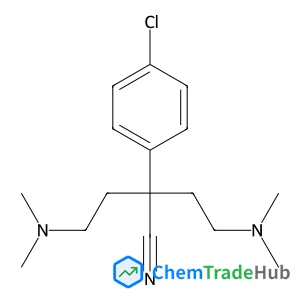
2-(4-Chlorophenyl)-4-(dimethylamino)-2-(2-(dimethylamino)ethyl)butanenitrile
CAS Number:
1246816-57-8
Molecular Formula:
C16H24ClN3
Recommended Suppliers




Disclaimer
This page provides academic journal information for reference and research purposes only. We are not affiliated with any journal publishers and do not handle publication submissions. For publication-related inquiries, please contact the respective journal publishers directly.
If you notice any inaccuracies in the information displayed, please contact us at support@chemtradehub.com. We will promptly review and address your concerns.