












Hydrogen spillover and substrate–support hydrogen bonding mediate hydrogenation of phenol catalyzed by palladium on reducible metal oxides
Literature Information
Publication Date
2023-11-24
DOI
10.1039/D3SC02913A
Impact Factor
9.825
Authors
Yeongseo An, Sayak Banerjee
View Original
Abstract
Substrate–support interactions play an important role in the catalytic hydrogenation of phenolic compounds by ceria-supported palladium (Pd/CeO2). Here, we combine surface contrast solution NMR methods and reaction kinetic assays to investigate the role of substrate–support interactions in phenol (PhOH) hydrogenation catalyzed by titania-supported palladium (Pd/TiO2). We show that PhOH adsorbs on the catalyst via a weak hydrogen-bonding interaction between the –OH group of the substrate and one oxygen atom on the support. Interestingly, we observe that the addition of 20 mM inorganic phosphate results in a ∼2-fold destabilization of the PhOH–support interaction and a corresponding ∼2-fold inhibition of the catalytic reaction, suggesting an active role of the PhOH–TiO2 hydrogen bond in catalysis. A comparison of the data measured here with the results previously reported for a Pd/CeO2 catalyst indicates that the efficiency of the Pd-supported catalysts is correlated to the amount of PhOH hydrogen bonded to the metal oxide support. Since CeO2 and TiO2 have similar ability to uptake activated hydrogen from a noble metal site, these data suggest that hydrogen spillover is the main mechanism by which Pd-activated hydrogens are shuttled to the PhOH adsorbed on the surface of the support. Consistent with this hypothesis, Pd supported on a non-reducible metal oxide (silica) displays negligible hydrogenation activity. Therefore, we conclude that basic and reducible metal oxides are active supports for the efficient hydrogenation of phenolic compounds due to their ability to hydrogen bond to the substrate and mediate the addition of the activated hydrogens to the adsorbed aromatic ring.
Related Literature
Controlled generation of acentric and homochiral coordination compounds from a versatile asymmetric ligand 4-(1H-1,2,4-triazol-3-yl)-4H-1,2,4-triazole
Jian Zhang, Zhao-Ji Li, Ye-Yan Qin, Jian-Kai Cheng, Yuan-Gen Yao
2008-07-15
Communication
DOI: 10.1039/B807320A
Trapping Pd(0) in nanoparticle-assembled microcapsules: an efficient and reusable catalyst
Arlin Jose Amali, Rohit Kumar Rana
2008-07-15
Communication
DOI: 10.1039/B807736C
In tube determination of the absolute configuration of α- and β-hydroxy acids by NMR via chiral BINOL borates
Félix Freire, Emilio Quiñoá, Ricardo Riguera
2008-07-14
Communication
DOI: 10.1039/B806529B
Fine control over the morphology and structure of mesoporous silica nanomaterials by a dual-templating approach
Junhui He
2008-07-28
Communication
DOI: 10.1039/B807787H
A simple route for fabricating poly(para-phenylene vinylene) (PPV) particles by using ionic liquids and a solvent evaporation process
Hiroshi Yabu, Atsunori Tajima, Takeshi Higuchi
2008-08-06
Communication
DOI: 10.1039/B809765H
Enhanced long-wavelength transient photoresponsiveness of WO3 induced by tellurium doping
2008-07-29
Communication
DOI: 10.1039/B807629D
Selective mono reduction of bis-phosphine oxides under mild conditions
Maria J. Petersson, Wendy A. Loughlin, Ian D. Jenkins
2008-07-30
Communication
DOI: 10.1039/B807695B
Sequence-specifically platinum metal deposition on enzymatically synthesized DNA block copolymer
Aya Tanaka, Yasutaka Matsuo, Yuichi Hashimoto, Kuniharu Ijiro
2008-07-17
Communication
DOI: 10.1039/B805989F
You might also like
Compound Q&A
What precautions should be taken when handling 4-(2-Furylmethyl)thiomorpholine 1,1-dioxide (CAS: 79206-94-3)?
When handling 4-(2-Furylmethyl)thiomorpholine 1,1-dioxide (CAS: 79206-94-3), it ...
79206-94-34-(2-Furylmethyl)thi...
Compound Q&A
What precautions should be taken when handling 4-Chloro-N-[2-(4-morpholinyl)ethyl]benzamide (CAS: 71320-77-9)?
When handling 4-Chloro-N-[2-(4-morpholinyl)ethyl]benzamide (CAS: 71320-77-9), it...
71320-77-94-Chloro-N-[2-(4-mor...
Compound Q&A
How should waste containing 2-[2-(2-Methoxyethoxy)ethoxy]ethyl 4-methylbenzenesulfonate (CAS: 62921-74-8) be handled?
Waste containing this compound (CAS: 62921-74-8) should be handled according to ...
62921-74-82-[2-(2-Methoxyethox...
Compound Q&A
How should waste containing (S)-Methyl 2-amino-3-cyclohexylpropanoate be handled?
Waste containing (S)-Methyl 2-amino-3-cyclohexylpropanoate should be collected i...
40056-18-6(S)-Methyl 2-amino-3...
Compound Q&A
How is 5-({4-[(2S,4R)-4-Hydroxy-2-methyltetrahydro-2H-pyran-4-yl]-2-thienyl}sulfanyl)-1-methyl-1,3-dihydro-2H-indol-2-one (CAS: 166882-70-8) typically synthesized?
This compound can be synthesized using a multi-step process involving the conjug...
166882-70-85-({4-[(2S,4R)-4-Hyd...
Compound Q&A
Are there alternatives to (2E)-3-(3,4-Dichlorophenyl)acrylic acid (CAS: 7312-27-8) in synthesis?
There are several alternatives to (2E)-3-(3,4-Dichlorophenyl)acrylic acid in syn...
7312-27-8(2E)-3-(3,4-Dichloro...
Compound Q&A
How should Ethyl 6-(2-nitrophenyl)imidazo[2,1-b][1,3]thiazole-3-carboxylate (CAS: 925437-84-9) be stored?
Ethyl 6-(2-nitrophenyl)imidazo[2,1-b][1,3]thiazole-3-carboxylate (CAS: 925437-84...
925437-84-9Ethyl 6-(2-nitrophen...
Compound Q&A
How should waste containing 2-(1,3-Thiazol-2-yl)ethanamine (CAS: 18453-07-1) be handled?
Waste containing 2-(1,3-Thiazol-2-yl)ethanamine (CAS: 18453-07-1) should be coll...
18453-07-12-(1,3-Thiazol-2-yl)...
Compound Q&A
How is Methyl 5-iodo-2-methylbenzoate (CAS: 103440-54-6) typically synthesized?
Methyl 5-iodo-2-methylbenzoate can be synthesized through the iodination of meth...
103440-54-6Methyl 5-iodo-2-meth...
Compound Q&A
How is 5-Chloro[1,2,4]triazolo[1,5-a]pyridine (CAS: 1427399-34-5) typically synthesized?
5-Chloro[1,2,4]triazolo[1,5-a]pyridine is commonly synthesized via the condensat...
1427399-34-55-Chloro[1,2,4]triaz...
Source Journal
Chemical Science

CiteScore:
14.4
Self-citation Rate:
3.9%
Articles per Year:
1413
Our journal has a wide-ranging scope which covers the full breadth of the chemical sciences. The research we publish contains the sorts of novel ideas, challenging questions and progressive thinking that bring undiscovered breakthroughs within reach. Your paper could focus on a single area, or cross many. It could be beyond the accepted bounds of the chemical sciences. It might address an immediate challenge, contribute to a future breakthrough or be wholly conceptual. We’re a team from every field of the chemical sciences, and know from experience that breakthroughs that drive the solutions to global challenges can come from anywhere, at any time. You could even start an entirely new area of research. Too bold? Too progressive? No such thing
Recommended Compounds
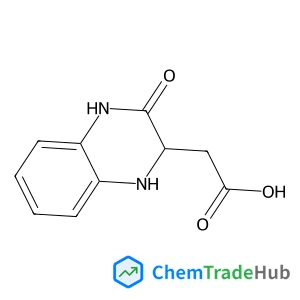
(3-Oxo-1,2,3,4-tetrahydro-2-quinoxalinyl)acetic acid
CAS Number:
136584-14-0
Molecular Formula:
C10H10N2O3
![tert-Butyl N-[(2-chloropyridin-4-yl)methyl]carbamate structure](https://static.chemtradehub.com/structs/916/916210-27-0-9f95.webp "tert-Butyl N-[(2-chloropyridin-4-yl)methyl]carbamate structure")
tert-Butyl N-[(2-chloropyridin-4-yl)methyl]carbamate
CAS Number:
916210-27-0
Molecular Formula:
C11H15ClN2O2
Recommended Suppliers





Disclaimer
This page provides academic journal information for reference and research purposes only. We are not affiliated with any journal publishers and do not handle publication submissions. For publication-related inquiries, please contact the respective journal publishers directly.
If you notice any inaccuracies in the information displayed, please contact us at support@chemtradehub.com. We will promptly review and address your concerns.