












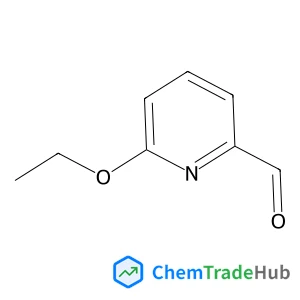
Visible-light-driven selective difluoroalkylation of α-CF3 alkenes to access CF2-containing gem-difluoroalkenes and trifluoromethylalkanes
Literature Information
Publication Date
2023-11-23
DOI
10.1039/D3QO01551C
Impact Factor
5.281
Authors
Panpan Lei, Bingran Chen, Tonghui Zhang, Qinlin Chen, Liangming Xuan, Haifeng Wang, Qiongjiao Yan, Wei Wang, Jie Zeng
View Original
Abstract
An efficient visible-light-promoted selective difluoroalkylation of α-trifluoromethyl alkenes with difluoroalkylating reagents has been achieved via intermolecular difluoroalkyl radical addition mediated by photoredox catalysis under metal-free conditions. This transformation proceeded smoothly in the presence of the organic dye 4CzIPN, affording a series of gem-difluoroalkene difluoroacetates and trifluoromethylated difluoroacetamides in moderate to excellent yields. The chemoselectivity of the process (β-F elimination or protonation) is controlled by adjusting the bromodifluoro substrates. This protocol is distinguished by its mild conditions, wide scope, and exquisite chemoselectivity. Moreover, theoretical calculations revealed the important role of the N–H bond of bromodifluoroacetates in the control of the selectivity.
Recommended Journals
Related Literature
Modeling and simulation of the water gradient within a Nafion membrane
Masoumeh Ozmaian
2014-01-09
Paper
DOI: 10.1039/C3CP54015D
Plasmon-enhanced water splitting on TiO2-passivated GaP photocatalysts
Jing Qiu, Guangtong Zeng, Prathamesh Pavaskar, Zhen Li
2013-12-20
Paper
DOI: 10.1039/C3CP54674H
Reactions of HOCO radicals through hydrogen-atom hopping utilizing clathrate hydrates as an observational matrix
Motoi Oshima, Atsushi Tani, Takeshi Sugahara, Katsuhisa Kitano, Kazunari Ohgaki
2013-12-18
Paper
DOI: 10.1039/C3CP54680B
The molecular and magnetic structure of carbon-enclosed and partially covered Fe55 particles
Stefan Taubert, Kari Laasonen
2013-12-20
Paper
DOI: 10.1039/C3CP54491E
Theoretical investigation of the effects of doping on the electronic structure and thermoelectric properties of ZnO nanowires
Chao Wang, Yuanxu Wang, Guangbiao Zhang, Chengxiao Peng, Gui Yang
2013-12-17
Paper
DOI: 10.1039/C3CP54289K
Improving O2 production of WO3 photoanodes with IrO2 in acidic aqueous electrolyte
Joshua M. Spurgeon, Jesus M. Velazquez, Matthew T. McDowell
2014-01-10
Paper
DOI: 10.1039/C3CP55527E
Tuning photocatalytic performance of the near-infrared-driven photocatalyst Cu2(OH)PO4 based on effective mass and dipole moment
Zhujie Li, Ying Dai, Xiangchao Ma, Yingtao Zhu, Baibiao Huang
2013-11-11
Paper
DOI: 10.1039/C3CP53381F
You might also like
Compound Q&A
What is the market or research trend for N-(4-Methoxybenzyl)-2-pyridinamine (CAS: 52818-63-0)?
N-(4-Methoxybenzyl)-2-pyridinamine (CAS: 52818-63-0) is increasingly being used ...
52818-63-0N-(4-Methoxybenzyl)-...
Compound Q&A
What precautions should be taken when handling Ethyl 4-(2-chlorophenyl)-1,3-thiazole-2-carboxylate (CAS: 1050507-06-6)?
When handling Ethyl 4-(2-chlorophenyl)-1,3-thiazole-2-carboxylate, appropriate p...
1050507-06-6Ethyl 4-(2-chlorophe...
Compound Q&A
What regulatory guidelines apply to diethyldiselane (CAS: 628-39-7)?
Diethyldiselane (CAS: 628-39-7) is classified under the Globally Harmonized Syst...
628-39-7Diethyldiselane
Compound Q&A
What is the market or research trend for oxocopper (CAS: 12053-18-8)?
The market for oxocopper (CAS: 12053-18-8) is primarily driven by its use in cat...
12053-18-8oxocopper; oxo-(oxoc...
Compound Q&A
What is the market or research trend for 5-{[(2-Methyl-2-propanyl)oxy]carbonyl}-5-azaspiro[2.4]heptane-7-carboxylic acid?
The market for 5-{[(2-Methyl-2-propanyl)oxy]carbonyl}-5-azaspiro[2.4]heptane-7-c...
1268519-54-55-{[(2-Methyl-2-prop...
Compound Q&A
What is 2-(1-Pyrrolidinyl)-4-pyridinamine (CAS: 35981-63-6)?
2-(1-Pyrrolidinyl)-4-pyridinamine is a chemical compound with the CAS number 359...
35981-63-62-(1-Pyrrolidinyl)-4...
Compound Q&A
What are the physical and chemical properties of 2-(3-Pyridinyl)-1-azabicyclo[2.2.2]octane (CAS: 91556-75-1)?
2-(3-Pyridinyl)-1-azabicyclo[2.2.2]octane (CAS: 91556-75-1) is a crystalline sol...
91556-75-12-(3-Pyridinyl)-1-az...
Compound Q&A
How is (S)-Alpha-allyl-proline hydrochloride (CAS: 129704-91-2) typically synthesized?
(S)-Alpha-allyl-proline hydrochloride is usually synthesized via a Wittig reacti...
129704-91-2(S)-Alpha-allyl-prol...
Compound Q&A
What is 3-Methyl-1,2-oxazole-5-carboxylic acid (CAS: 4857-42-5)?
3-Methyl-1,2-oxazole-5-carboxylic acid (CAS: 4857-42-5) is an organic compound w...
4857-42-53-Methyl-1,2-oxazole...
Compound Q&A
How is Lys-SMCC-DM1 (CAS: 1281816-04-3) typically synthesized?
Lys-SMCC-DM1 is synthesized via a multi-step process involving the coupling of S...
1281816-04-3Lys-SMCC-DM1
Source Journal
Organic Chemistry Frontiers

CiteScore:
7.8
Self-citation Rate:
8.7%
Articles per Year:
724
Organic Chemistry Frontiers publishes high-quality research from across organic chemistry. Emphases are placed on studies that make significant contributions to the field of organic chemistry by reporting either new or significantly improved protocols or methodologies. Topics include, but are not limited to the following: Organic synthesis Development of synthetic methodologies Catalysis Natural products Functional organic materials Supramolecular and macromolecular chemistry Physical and computational organic chemistry
Recommended Compounds
![1,10-bis(3,5-dimethylphenyl)-12-hydroxy-4,5,6,7-tetrahydroiindeno[7,1-de:1',7'-fg][1,3,2]dioxaphosphocine 12-oxide structure](https://static.chemtradehub.com/structs/141/1412439-82-7-b9a9.webp "1,10-bis(3,5-dimethylphenyl)-12-hydroxy-4,5,6,7-tetrahydroiindeno[7,1-de:1',7'-fg][1,3,2]dioxaphosphocine 12-oxide structure")
1,10-bis(3,5-dimethylphenyl)-12-hydroxy-4,5,6,7-tetrahydroiindeno[7,1-de:1',7'-fg][1,3,2]dioxaphosphocine 12-oxide
CAS Number:
1412439-82-7
Molecular Formula:
C33H31O4P
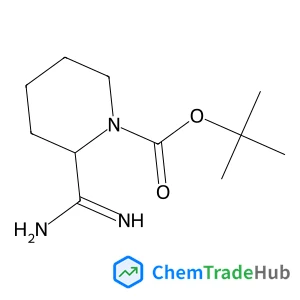
2-Methyl-2-propanyl 2-carbamimidoyl-1-piperidinecarboxylate
CAS Number:
1258640-98-0
Molecular Formula:
C11H21N3O2
Recommended Suppliers






Disclaimer
This page provides academic journal information for reference and research purposes only. We are not affiliated with any journal publishers and do not handle publication submissions. For publication-related inquiries, please contact the respective journal publishers directly.
If you notice any inaccuracies in the information displayed, please contact us at support@chemtradehub.com. We will promptly review and address your concerns.