












Proline-catalyzed synthesis of α-substituted (E)-α,β-unsaturated aldehydes from epoxides
Literature Information
Publication Date
2023-11-23
DOI
10.1039/D3OB01750H
Impact Factor
3.876
Authors
Ajay Sharma, Satyendra Kumar Pandey
View Original
Abstract
A novel, simple and metal-free tandem approach for synthesizing α-substituted (E)-α,β-unsaturated aldehyde derivatives through acid-catalyzed epoxide rearrangement and organocatalyzed aldol condensation processes has been described. This transformation has a broad substrate scope under mild conditions, including epoxides and aldehydes containing diverse functional groups, resulting in moderate to high yields of the desired products. Eventually, large-scale reactions and the synthesis of some bioactive molecules are used to demonstrate the potential applicability of the developed method.
Related Literature
Long-term-stability continuous flow CO2 reduction electrolysers with high current efficiency
Yueyuan Gu, Jucai Wei, Jindong Li, Xu Wu
2020-12-08
Paper
DOI: 10.1039/D0SE01707H
Synthesis of amino alcohols, cyclic urea, urethanes, and cyclic carbonates and tandem one-pot conversion of an epoxide to urethanes using a Zn–Zr bimetallic oxide catalyst
Ganesh Sunil More, Rajendra Srivastava
2021-02-04
Paper
DOI: 10.1039/D0SE01912G
Alkaline membrane fuel cells: anion exchange membranes and fuels
Maša Hren, Mojca Božič, Darinka Fakin
2020-11-16
Review Article
DOI: 10.1039/D0SE01373K
CoOx electro-catalysts anchored on nitrogen-doped carbon nanotubes for the oxygen evolution reaction
Santosh K. Singh, Kotaro Takeyasu, Bappi Paul, Sachin K. Sharma, Junji Nakamura
2021-01-07
Paper
DOI: 10.1039/D0SE01285H
Alternate cycles of CO2 storage and in situ hydrogenation to CH4 on Ni–Na2CO3/Al2O3: influence of promoter addition and calcination temperature
Alejandro Bermejo-López, Beñat Pereda-Ayo, José A. González-Marcos, Juan R. González-Velasco
2021-01-18
Paper
DOI: 10.1039/D0SE01677B
Metal oxide supported Ni-impregnated bifunctional catalysts for controlling char formation and maximizing energy recovery during catalytic hydrothermal liquefaction of food waste
Feng Cheng, Geoffrey A. Tompsett, Daniela Valeska Fraga Alvarez, Carla I. Romo, Amy M. McKenna, Sydney F. Niles, Robert K. Nelson, Christopher M. Reddy, Sergio Granados-Fócil, Alex D. Paulsen, Ruihan Zhang, Michael T. Timko
2020-12-22
Paper
DOI: 10.1039/D0SE01662D
A green synthesis of PEI@nano-SiO2 adsorbent from coal fly ash: selective and efficient CO2 adsorption from biogas
Chunyan Li
2021-01-05
Paper
DOI: 10.1039/D0SE01780A
Revealing the contribution of singlet oxygen in the photoelectrochemical oxidation of benzyl alcohol
Ramón Arcas, Eduardo Peris, Elena Mas-Marzá, Francisco Fabregat-Santiago
2020-12-29
Paper
DOI: 10.1039/D0SE01322F
Mechanisms of photoredox catalysts: the role of optical spectroscopy
Noufal Kandoth, Javier Pérez Hernández
2021-01-20
Review Article
DOI: 10.1039/D0SE01454K
You might also like
Compound Q&A
What regulatory guidelines apply to 4-Amino-3-bromophenol (CAS: 74440-80-5)?
4-Amino-3-bromophenol (CAS: 74440-80-5) falls under the classification of a haza...
74440-80-54-Amino-3-bromopheno...
Compound Q&A
How should (17beta)-3-Oxoestr-4-en-17-yl acetate (CAS: 1425-10-1) be stored?
(17beta)-3-Oxoestr-4-en-17-yl acetate should be stored in a cool, dry place away...
1425-10-1(17beta)-3-Oxoestr-4...
Compound Q&A
What are the physical and chemical properties of 2-[(2,2-Diethoxyethyl)disulfanyl]-1,1-diethoxyethane (CAS: 76505-71-0)?
2-[(2,2-Diethoxyethyl)disulfanyl]-1,1-diethoxyethane (CAS: 76505-71-0) is a colo...
76505-71-02-[(2,2-Diethoxyethy...
Compound Q&A
What is the market or research trend for 1-(β-D-ribofuranosyl)-1H-imidazo[4,5-c]pyridin-4-amine?
The market and research for 1-(β-D-ribofuranosyl)-1H-imidazo[4,5-c]pyridin-4-ami...
6736-58-91-(beta-D-Ribofurano...
Compound Q&A
How should waste containing Conjugated Estrogen (CAS: 12126-59-9) be handled?
Waste containing Conjugated Estrogen (CAS: 12126-59-9) should be collected and d...
12126-59-9Conjugated Estrogen
Compound Q&A
What is the market or research trend for Bis(2,2,2-trifluoroethyl) (methoxycarbonylmethyl)phosphonate?
The market for Bis(2,2,2-trifluoroethyl) (methoxycarbonylmethyl)phosphonate (CAS...
88738-78-7Bis(2,2,2-trifluoroe...
Compound Q&A
Are there alternatives to 3,4'-Di-O-methylellagic acid (CAS: 57499-59-9) in synthesis?
There are several alternatives to 3,4'-Di-O-methylellagic acid (CAS: 57499-59-9)...
57499-59-93,4'-Di-O-methylella...
Compound Q&A
What regulatory guidelines apply to 2-Chloro-N,N-dimethylpyridin-4-amine (CAS: 59047-70-0)?
2-Chloro-N,N-dimethylpyridin-4-amine (CAS: 59047-70-0) is regulated under the Gl...
59047-70-02-Chloro-N,N-dimethy...
Compound Q&A
What is cerium(3+);oxygen(2-);vanadium(5+) (CAS: 13597-19-8)?
Cerium(3+);oxygen(2-);vanadium(5+) (CAS: 13597-19-8) is a complex inorganic comp...
13597-19-8cerium(3+);oxygen(2-...
Compound Q&A
Is 7-Chloro-1-iodoisoquinoline (CAS: 1203579-27-4) safe?
7-Chloro-1-iodoisoquinoline (CAS: 1203579-27-4) is generally considered safe whe...
1203579-27-47-Chloro-1-iodoisoqu...
Source Journal
Organic & Biomolecular Chemistry

CiteScore:
3.4
Self-citation Rate:
10.3%
Articles per Year:
1041
Organic & Biomolecular Chemistry (OBC) publishes original and high impact research and reviews in organic chemistry. We welcome research that shows new or significantly improved protocols or methodologies in total synthesis, synthetic methodology or physical and theoretical organic chemistry as well as research that shows a significant advance in the organic chemistry or molecular design aspects of chemical biology, catalysis, supramolecular and macromolecular chemistry, theoretical chemistry, mechanism-oriented physical organic chemistry, medicinal chemistry or natural products. Articles published in the journal should report new work which makes a highly-significant impact in the field. Routine and incremental work is generally not suitable for publication in the journal. More details about key areas of our scope are below. In all cases authors should include in their article clear rationale for why their research has been carried out.
Recommended Compounds
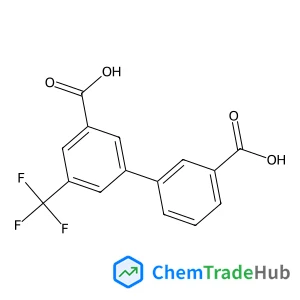
3-(3-Carboxyphenyl)-5-(trifluoromethyl)benzoic acid
CAS Number:
1261930-96-4
Molecular Formula:
C15H9F3O4
![4-{2-[(9H-Fluoren-9-ylmethoxy)carbonyl]hydrazino}benzoic acid structure](https://static.chemtradehub.com/structs/214/214475-53-3-bf36.webp "4-{2-[(9H-Fluoren-9-ylmethoxy)carbonyl]hydrazino}benzoic acid structure")
4-{2-[(9H-Fluoren-9-ylmethoxy)carbonyl]hydrazino}benzoic acid
CAS Number:
214475-53-3
Molecular Formula:
C22H18N2O4
Recommended Suppliers




Disclaimer
This page provides academic journal information for reference and research purposes only. We are not affiliated with any journal publishers and do not handle publication submissions. For publication-related inquiries, please contact the respective journal publishers directly.
If you notice any inaccuracies in the information displayed, please contact us at support@chemtradehub.com. We will promptly review and address your concerns.