












![4-{2-[(9H-Fluoren-9-ylmethoxy)carbonyl]hydrazino}benzoic acid structure](https://static.chemtradehub.com/structs/214/214475-53-3-bf36.webp "4-{2-[(9H-Fluoren-9-ylmethoxy)carbonyl]hydrazino}benzoic acid structure")
4-{2-[(9H-Fluoren-9-ylmethoxy)carbonyl]hydrazino}benzoic acid
CAS Number:
214475-53-3
Molecular Formula:
C22H18N2O4
Imines are a versatile class of chemicals with applications in pharmaceuticals and as synthetic intermediates. While imines are conventionally synthesized via aldehyde-amine condensation, their direct preparation from amines can avoid the need for the independent preparation of the aldehyde coupling partner and associated constraints with regard to aldehyde storage and purification. The direct preparation of imines from amines typically utilizes transition metal catalysis and is often well-aligned with green chemistry principles. This review provides a comprehensive overview of transition metal catalysed imine synthesis, with a particular focus on the copper-catalyzed oxidative coupling of amines. The emerging application of micellar catalysis for imine synthesis is also surveyed due to its potential to avoid the use of hazardous solvents and intensify these reactions through reduced catalyst loadings and locally increased reactant concentrations. Future directions relating to the confluence of these two areas are proposed towards the more sustainable preparation of imines.
Mengying Jia, Yue Li, Linlin Cui, Yingrui An, Canping Pan, Xiaojuan Jin
DOI: 10.1039/D0SE01424A
Alessio Zuliani, Manuel Cano, Federica Calsolaro, Alain R. Puente Santiago, Juan J. Giner-Casares, Enrique Rodríguez-Castellón, Gloria Berlier, Giancarlo Cravotto, Katia Martina
DOI: 10.1039/D0SE01505A
Jihye Lee, Daye Seo, Sunghwan Won, Taek Dong Chung
DOI: 10.1039/D0SE01500H
Yangping Li, Dongfang Niu, Xingyan Fu, Zhiliang Zhang, Xinsheng Zhang
DOI: 10.1039/D0SE01283A
Fengming Chu, Guozhen Xiao, Guoan Yang
DOI: 10.1039/D0SE01251C
Na Yu, Guang Jiang, Tong Liu, Xi Chen, Mengyu Miao, Yanxiang Zhang, Yao Wang
DOI: 10.1039/D0SE01280G
Bingshe Xu, Xueji Zhang
DOI: 10.1039/D0SE01575J
Lingling Gong, Mehran Abbaszadeh Amirdehi, Amine Miled
DOI: 10.1039/D0SE01406K
4-Amino-3-bromophenol (CAS: 74440-80-5) falls under the classification of a haza...
(17beta)-3-Oxoestr-4-en-17-yl acetate should be stored in a cool, dry place away...
2-[(2,2-Diethoxyethyl)disulfanyl]-1,1-diethoxyethane (CAS: 76505-71-0) is a colo...
The market and research for 1-(β-D-ribofuranosyl)-1H-imidazo[4,5-c]pyridin-4-ami...
Waste containing Conjugated Estrogen (CAS: 12126-59-9) should be collected and d...
The market for Bis(2,2,2-trifluoroethyl) (methoxycarbonylmethyl)phosphonate (CAS...
There are several alternatives to 3,4'-Di-O-methylellagic acid (CAS: 57499-59-9)...
2-Chloro-N,N-dimethylpyridin-4-amine (CAS: 59047-70-0) is regulated under the Gl...
Cerium(3+);oxygen(2-);vanadium(5+) (CAS: 13597-19-8) is a complex inorganic comp...
7-Chloro-1-iodoisoquinoline (CAS: 1203579-27-4) is generally considered safe whe...

Organic & Biomolecular Chemistry (OBC) publishes original and high impact research and reviews in organic chemistry. We welcome research that shows new or significantly improved protocols or methodologies in total synthesis, synthetic methodology or physical and theoretical organic chemistry as well as research that shows a significant advance in the organic chemistry or molecular design aspects of chemical biology, catalysis, supramolecular and macromolecular chemistry, theoretical chemistry, mechanism-oriented physical organic chemistry, medicinal chemistry or natural products. Articles published in the journal should report new work which makes a highly-significant impact in the field. Routine and incremental work is generally not suitable for publication in the journal. More details about key areas of our scope are below. In all cases authors should include in their article clear rationale for why their research has been carried out.
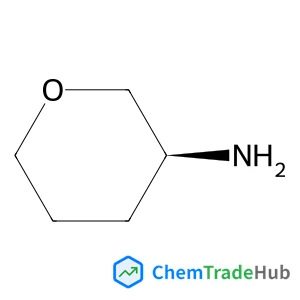
![Ethyl 5-[({[(2-methyl-2-propanyl)oxy]carbonyl}amino)methyl]-1,2-oxazole-3-carboxylate structure](https://static.chemtradehub.com/structs/253/253196-37-1-8450.webp "Ethyl 5-[({[(2-methyl-2-propanyl)oxy]carbonyl}amino)methyl]-1,2-oxazole-3-carboxylate structure")
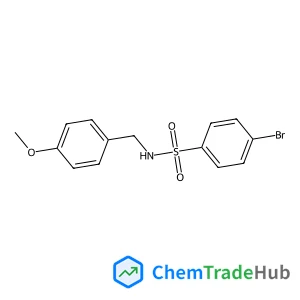
![9-Ethyl-3-{(E)-[ethyl(2-methylphenyl)hydrazono]methyl}-9H-carbazole structure](https://static.chemtradehub.com/structs/127/1274948-12-7-301f.webp "9-Ethyl-3-{(E)-[ethyl(2-methylphenyl)hydrazono]methyl}-9H-carbazole structure")




