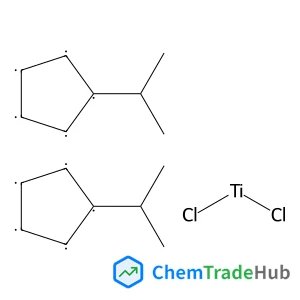
BIS(I-PROPYLCYCLOPENTADIENYL)TITANIUM DICHLORIDE
CAS Number:
12130-65-3
Molecular Formula:
C16H22Cl2Ti
Jie Luo, Yuan Gao, Rui Zhao, Jing Shi, Yi-Ming Li
A side-chain anchoring strategy has been developed as an effective method for the synthesis of C-terminal Cys-containing peptide acids. However, the application of this strategy to CCAs containing more than one disulfide bond is still hindered due to the trifluoroacetic acid (TFA) lability of the anchored side-chain groups. Herein, we report a photocleavable side-chain anchoring strategy using newly developed molecules having photocleavable side-chain protecting groups that are stable against TFA cleavage to assist in the formation of disulfide bonds. The utility of this new strategy was demonstrated by the synthesis of Riparin 1.1 and hCNP22 containing one disulfide bond and α-conotoxin Vc1.1 containing two disulfide bonds. This new strategy will provide new possibilities for the synthesis of disulfide-rich C-terminal Cys-containing peptide acids.
K. V. Belyaeva, L. P. Nikitina, A. V. Afonin, A. V. Vashchenko, V. M. Muzalevskiy, V. G. Nenajdenko, B. A. Trofimov
DOI: 10.1039/C8OB02379D
Xiaodong Yan, Yuri Lvov, Hai-Feng Ji, Alok Singh, Thomas Thundat
DOI: 10.1039/B209944F
Christophe Dardonville, Ian H. Gilbert
DOI: 10.1039/B210606J
DOI: 10.1039/C8OB02271B
Fang Ke, Peng Zhang, Chen Lin, Xiaoyan Lin, Jianhua Xu, Xiangge Zhou
DOI: 10.1039/C8OB02172D
Ashraf Brik, Chi-Huey Wong
DOI: 10.1039/B208248A
Joffrey Pijeat, Yannick J. Dappe, Pierre Thuéry, Stéphane Campidelli
DOI: 10.1039/C8OB02150C
Christian A. Christensen, Martin R. Bryce, Andrei S. Batsanov, Jan Becher
DOI: 10.1039/B211153P
Lucas E. Fabian
DOI: 10.1039/C8OB02310G
2-Methylbenzene-1,4-diamine dihydrochloride (CAS: 615-45-2) should be stored in ...
(1S,4S)-2,5-Diazabicyclo[2.2.1]heptane dihydrobromide is generally considered sa...
(6-Chloropyridazin-3-YL)methanamine finds applications in the pharmaceutical ind...
2-Fluoro-3-methylphenol is primarily used in the synthesis of pharmaceuticals, p...
When handling 3-Methoxy-4-nitrobenzonitrile, it is important to wear appropriate...
When handling 1,3-Oxazolo[4,5-b]pyridine-2(3H)-thione (CAS: 211949-57-4), it is ...
4-Ethynylbenzamide (CAS: 90347-86-7) falls under various regulatory guidelines i...
3-(2-Ethylphenyl)-2-thioxo-4-imidazolidinone is primarily used as an intermediat...
(2-Fluoro-6-methoxyphenyl)acetic acid, also known as 4-fluoro-3-methoxybenzoic a...
Market trends for 2-[4-(Hydroxymethyl)phenoxy]ethanol (CAS: 102196-18-9) indicat...

Organic & Biomolecular Chemistry (OBC) publishes original and high impact research and reviews in organic chemistry. We welcome research that shows new or significantly improved protocols or methodologies in total synthesis, synthetic methodology or physical and theoretical organic chemistry as well as research that shows a significant advance in the organic chemistry or molecular design aspects of chemical biology, catalysis, supramolecular and macromolecular chemistry, theoretical chemistry, mechanism-oriented physical organic chemistry, medicinal chemistry or natural products. Articles published in the journal should report new work which makes a highly-significant impact in the field. Routine and incremental work is generally not suitable for publication in the journal. More details about key areas of our scope are below. In all cases authors should include in their article clear rationale for why their research has been carried out.
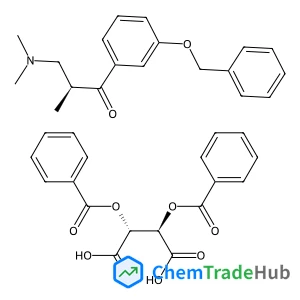
![1-Benzyl-1,7-diazaspiro[4.4]nonane dihydrochloride structure](https://static.chemtradehub.com/structs/115/1159822-71-5-0320.webp "1-Benzyl-1,7-diazaspiro[4.4]nonane dihydrochloride structure")