












Studies of 4-arylthiazolylhydrazones derived from 1-indanones as Trypanosoma cruzi squalene epoxidase inhibitors by molecular simulations
Literature Information
Publication Date
2018-10-18
DOI
10.1039/C8OB02310G
Impact Factor
3.876
Authors
Lucas E. Fabian
View Original
Abstract
Chagas disease or American trypanosomiasis is a parasitic disease caused by the protozoan Trypanosoma cruzi. Its squalene epoxidase (SE) is a target for drug design and development because it is a key enzyme in the biosynthetic pathway of ergosterol, which is essential for the life cycle of the parasite. Previously, we reported that some 4-arylthiazolylhydrazones derived from 1-indanones (TZHs) active against T. cruzi are able to accumulate squalene probably by SE inhibition. In this work, we performed a series of theoretical studies to verify that TZHs act as inhibitors of this enzyme. Since the crystal structure of SE is unknown for all species, we built a 3D enzyme model of T. cruzi SE by homology modeling. Based on this model, we carried out docking, molecular dynamics, and MM/PBSA calculations and the results were compared with those found for the reference inhibitor compound terbinafine (Tbf). The binding free energy values allowed the discrimination between accumulators and non-accumulators of squalene compounds, in agreement with the experimental findings. Pairwise residue free energy decomposition showed that the key amino acids involved in inhibitor binding for TZHs and Tbf were the same. Also, molecular superposition analysis between these compounds revealed high structural similarity. In addition, we proposed a pharmacophore model for T. cruzi SE inhibitors, which confirmed that TZHs and Tbf share chemical features with respect to their biochemical interaction characteristics at similar positions in 3D space. All theoretical calculations suggest that the experimentally observed squalene accumulation is produced by T. cruzi SE inhibition.
Related Literature
Molybdenum carbide nanoparticles within carbon nanotubes as superior catalysts for γ-valerolactone production via levulinic acid hydrogenation
Estevão F. Mai, Marta A. Machado, Thomas E. Davies, Jose A. Lopez-Sanchez, Victor Teixeira da Silva
2014-07-10
Communication
DOI: 10.1039/C4GC00920G
Solvent-free mechanochemical synthesis of alane, AlH3: effect of pressure on the reaction pathway
S. Gupta, T. Kobayashi
2014-07-22
Paper
DOI: 10.1039/C4GC00998C
Visible-light-induced photocatalytic formyloxylation reactions of 3-bromooxindoles with water and DMF: the scope and mechanism
You-Quan Zou, Wei Guo, Feng-Lei Liu, Liang-Qiu Lu, Jia-Rong Chen
2014-05-08
Paper
DOI: 10.1039/C4GC00647J
Lysinol: a renewably resourced alternative to petrochemical polyamines and aminoalcohols
Pranit S. Metkar, Mark A. Scialdone, Kenneth G. Moloy
2014-08-06
Paper
DOI: 10.1039/C4GC01167H
Tunable thermomorphism and applications of ionic liquid analogues of Girard's reagents
Marijana Blesic, H. Q. Nimal Gunaratne, Johan Jacquemin, Peter Nockemann, Sonia Olejarz, Kenneth R. Seddon, Christopher R. Strauss
2014-08-06
Communication
DOI: 10.1039/C4GC01159G
Cobalt catalysts: very efficient for hydrogenation of biomass-derived ethyl levulinate to gamma-valerolactone under mild conditions
Huacong Zhou, Jinliang Song, Honglei Fan, Binbin Zhang, Yingying Yang, Jiayin Hu, Qinggong Zhu, Buxing Han
2014-06-05
Paper
DOI: 10.1039/C4GC00482E
General and selective reductive amination of carbonyl compounds using a core–shell structured Co3O4/NGr@C catalyst
Tobias Stemmler, Felix A. Westerhaus, Annette-Enrica Surkus, Marga-Martina Pohl, Kathrin Junge, Matthias Beller
2014-07-29
Communication
DOI: 10.1039/C4GC00536H
Expanding the scope of enzymatic carboligation reactions in flow-mode: production of optically active tertiary alcohols with packed-bed micro-bioreactors
P. P. Giovannini, O. Bortolini, A. Cavazzini, R. Greco, G. Fantin, A. Massi
2014-06-09
Paper
DOI: 10.1039/C4GC00838C
An alternative method for the production of second-generation biofuels
Martin Trautmann, Yvonne Traa
2014-04-22
Communication
DOI: 10.1039/C4GC00649F
Fluoro-functionalized polymeric ionic liquids: highly efficient catalysts for CO2 cycloaddition to cyclic carbonates under mild conditions
Zhen-Zhen Yang, Yanfei Zhao, Guipeng Ji, Hongye Zhang, Bo Yu, Xiang Gao, Zhimin Liu
2014-06-06
Communication
DOI: 10.1039/C4GC00730A
You might also like
Compound Q&A
How should 2-Methylbenzene-1,4-diamine dihydrochloride (CAS: 615-45-2) be stored?
2-Methylbenzene-1,4-diamine dihydrochloride (CAS: 615-45-2) should be stored in ...
615-45-22-Methylbenzene-1,4-...
Compound Q&A
Is (1S,4S)-2,5-Diazabicyclo[2.2.1]heptane dihydrobromide (CAS: 132747-20-7) safe?
(1S,4S)-2,5-Diazabicyclo[2.2.1]heptane dihydrobromide is generally considered sa...
132747-20-7(1S,4S)-2,5-Diazabic...
Compound Q&A
What industries use (6-Chloropyridazin-3-YL)methanamine (CAS: 871826-15-2)?
(6-Chloropyridazin-3-YL)methanamine finds applications in the pharmaceutical ind...
871826-15-2(6-Chloropyridazin-3...
Compound Q&A
What are the main uses of 2-Fluoro-3-methylphenol (CAS: 77772-72-6)?
2-Fluoro-3-methylphenol is primarily used in the synthesis of pharmaceuticals, p...
77772-72-62-Fluoro-3-methylphe...
Compound Q&A
What precautions should be taken when handling 3-Methoxy-4-nitrobenzonitrile (CAS: 177476-75-4)?
When handling 3-Methoxy-4-nitrobenzonitrile, it is important to wear appropriate...
177476-75-43-Methoxy-4-nitroben...
Compound Q&A
What precautions should be taken when handling 1,3-Oxazolo[4,5-b]pyridine-2(3H)-thione (CAS: 211949-57-4)?
When handling 1,3-Oxazolo[4,5-b]pyridine-2(3H)-thione (CAS: 211949-57-4), it is ...
211949-57-4[1,3]Oxazolo[4,5-b]p...
Compound Q&A
What regulatory guidelines apply to 4-Ethynylbenzamide (CAS: 90347-86-7)?
4-Ethynylbenzamide (CAS: 90347-86-7) falls under various regulatory guidelines i...
90347-86-74-Ethynylbenzamide
Compound Q&A
What are the main uses of 3-(2-Ethylphenyl)-2-thioxo-4-imidazolidinone (CAS: 186822-57-1)?
3-(2-Ethylphenyl)-2-thioxo-4-imidazolidinone is primarily used as an intermediat...
186822-57-13-(2-Ethylphenyl)-2-...
Compound Q&A
What is (2-Fluoro-6-methoxyphenyl)acetic acid (CAS: 500912-19-6)?
(2-Fluoro-6-methoxyphenyl)acetic acid, also known as 4-fluoro-3-methoxybenzoic a...
500912-19-6(2-Fluoro-6-methoxyp...
Compound Q&A
What is the market or research trend for 2-[4-(Hydroxymethyl)phenoxy]ethanol (CAS: 102196-18-9)?
Market trends for 2-[4-(Hydroxymethyl)phenoxy]ethanol (CAS: 102196-18-9) indicat...
102196-18-92-[4-(Hydroxymethyl)...
Source Journal
Organic & Biomolecular Chemistry

CiteScore:
3.4
Self-citation Rate:
10.3%
Articles per Year:
1041
Organic & Biomolecular Chemistry (OBC) publishes original and high impact research and reviews in organic chemistry. We welcome research that shows new or significantly improved protocols or methodologies in total synthesis, synthetic methodology or physical and theoretical organic chemistry as well as research that shows a significant advance in the organic chemistry or molecular design aspects of chemical biology, catalysis, supramolecular and macromolecular chemistry, theoretical chemistry, mechanism-oriented physical organic chemistry, medicinal chemistry or natural products. Articles published in the journal should report new work which makes a highly-significant impact in the field. Routine and incremental work is generally not suitable for publication in the journal. More details about key areas of our scope are below. In all cases authors should include in their article clear rationale for why their research has been carried out.
Recommended Compounds
![5-Bromo-3-isopropyl-1H-pyrrolo[2,3-b]pyridine structure](https://static.chemtradehub.com/structs/125/1256819-54-1-8620.webp "5-Bromo-3-isopropyl-1H-pyrrolo[2,3-b]pyridine structure")
![3-[(3R,4R)-3-[(6-aminopyrimidin-4-yl)-methyl-amino]-4-methyl-1-piperidyl]-3-oxo-propanenitrile structure](https://static.chemtradehub.com/structs/164/1640971-60-3-83a4.webp "3-[(3R,4R)-3-[(6-aminopyrimidin-4-yl)-methyl-amino]-4-methyl-1-piperidyl]-3-oxo-propanenitrile structure")
3-[(3R,4R)-3-[(6-aminopyrimidin-4-yl)-methyl-amino]-4-methyl-1-piperidyl]-3-oxo-propanenitrile
CAS Number:
1640971-60-3
Molecular Formula:
C14H20N6O
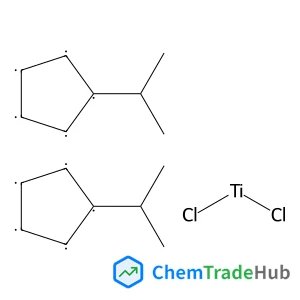
BIS(I-PROPYLCYCLOPENTADIENYL)TITANIUM DICHLORIDE
CAS Number:
12130-65-3
Molecular Formula:
C16H22Cl2Ti
Recommended Suppliers







Disclaimer
This page provides academic journal information for reference and research purposes only. We are not affiliated with any journal publishers and do not handle publication submissions. For publication-related inquiries, please contact the respective journal publishers directly.
If you notice any inaccuracies in the information displayed, please contact us at support@chemtradehub.com. We will promptly review and address your concerns.