


Simple phenylpropanoids: recent advances in biological activities, biosynthetic pathways, and microbial production
Literature Information
Publication Date
2023-10-09
DOI
10.1039/D3NP00012E
Impact Factor
13.423
Authors
Zhanpin Zhu, Ruibing Chen
View Original
Abstract
Covering: 2000 to 2023 Simple phenylpropanoids are a large group of natural products with primary C6–C3 skeletons. They are not only important biomolecules for plant growth but also crucial chemicals for high-value industries, including fragrances, nutraceuticals, biomaterials, and pharmaceuticals. However, with the growing global demand for simple phenylpropanoids, direct plant extraction or chemical synthesis often struggles to meet current needs in terms of yield, titre, cost, and environmental impact. Benefiting from the rapid development of metabolic engineering and synthetic biology, microbial production of natural products from inexpensive and renewable sources provides a feasible solution for sustainable supply. This review outlines the biological activities of simple phenylpropanoids, compares their biosynthetic pathways in different species (plants, bacteria, and fungi), and summarises key research on the microbial production of simple phenylpropanoids over the last decade, with a focus on engineering strategies that seem to hold most potential for further development. Moreover, constructive solutions to the current challenges and future perspectives for industrial production of phenylpropanoids are presented.
Recommended Journals

Main Group Chemistry

Herald of the Russian Academy of Sciences

Chinese Journal of Chemistry

Electroanalysis

Acta Metallurgica Sinica-English Letters

Bioorganic & Medicinal Chemistry Letters

Topics in Catalysis

Medicinal Chemistry Research

Atomization and Sprays

Critical Reviews in Solid State and Materials Sciences
Related Literature
Infrared spectra of protonated neurotransmitters: dopamine
Anita Lagutschenkov, Judith Langer, Giel Berden, Otto Dopfer
2010-12-13
Paper
DOI: 10.1039/C0CP02133D
Tip-enhanced Raman scattering (TERS) and high-resolution bio nano-analysis—a comparison
Tanja Deckert-Gaudig
2010-08-23
Perspective
DOI: 10.1039/C003316B
Physics of protein–DNA interactions: mechanisms of facilitated target search
2010-11-29
Perspective
DOI: 10.1039/C0CP01966F
Si–C-bound alkyl chains on oxide-free Si: towards versatile solution preparation of electronic transport quality monolayers
Avi Lavi, Hagai Cohen, Tatyana Bendikov, Ayelet Vilan, David Cahen
2010-12-03
Communication
DOI: 10.1039/C0CP01445A
Gas–surface energy exchange and thermal accommodation of CO2 and Ar in collisions with methyl, hydroxyl, and perfluorinated self-assembled monolayers
Jessica W. Lu, William A. Alexander, John R. Morris
2010-08-20
Paper
DOI: 10.1039/B921893A
Demystifying the solvatochromic reversal in Brooker’s merocyanine dye
N. Arul Murugan, Jacob Kongsted, Zilvinas Rinkevicius, Hans Ågren
2010-12-03
Communication
DOI: 10.1039/C0CP01014F
Hierarchical structures in AB/AC type diblock-copolymer blend particles
Kiwamu Motoyoshi, Takeshi Higuchi
2010-08-02
Paper
DOI: 10.1039/C0CP00011F
Structure–activity relationship (SAR) for the prediction of gas-phase ozonolysis rate coefficients: an extension towards heteroatomic unsaturated species
Max R. McGillen, Alex T. Archibald, Trevor Carey, Kimberley E. Leather, Dudley E. Shallcross, John C. Wenger, Carl J. Percival
2010-12-14
Paper
DOI: 10.1039/C0CP01732A
Enzyme activation and catalysis: characterisation of the vibrational modes of substrate and product in protochlorophyllide oxidoreductase
Olga A. Sytina, Maxime T. Alexandre, Derren J. Heyes, C. Neil Hunter, Bruno Robert, Rienk van Grondelle, Marie Louise Groot
2010-11-22
Paper
DOI: 10.1039/C0CP01686A
Interstitialcy diffusion of oxygen in tetragonal La2CoO4+δ
Akihiro Kushima, David Parfitt, Alexander Chroneos, Bilge Yildiz, John A. Kilner, Robin W. Grimes
2010-12-06
Paper
DOI: 10.1039/C0CP01603A
You might also like
Compound Q&A
What precautions should be taken when handling lithium chloride hydrate (1:1:1) (CAS: 16712-20-2)?
When handling lithium chloride hydrate (1:1:1) (CAS: 16712-20-2), it is importan...
16712-20-2Lithium chloride hyd...
Compound Q&A
Is 4-(4H-1,2,4-Triazol-4-yl)piperidine (CAS: 690261-92-8) safe?
4-(4H-1,2,4-Triazol-4-yl)piperidine is generally considered safe for use in phar...
690261-92-84-(4H-1,2,4-Triazol-...
Compound Q&A
How should waste containing 1,3-Thiazole-2-carboxamide (CAS: 16733-85-0) be handled?
Waste containing 1,3-Thiazole-2-carboxamide (CAS: 16733-85-0) should be collecte...
16733-85-01,3-Thiazole-2-carbo...
Compound Q&A
What regulatory guidelines apply to 5-(Difluoromethyl)-2-fluorobenzonitrile (CAS: 934175-58-3)?
5-(Difluoromethyl)-2-fluorobenzonitrile (CAS: 934175-58-3) is subject to regulat...
934175-58-35-(Difluoromethyl)-2...
Compound Q&A
How is Methyl 3-acetamido-2-thiophenecarboxylate (CAS: 22288-79-5) typically synthesized?
Methyl 3-acetamido-2-thiophenecarboxylate can be synthesized by the reaction of ...
22288-79-5Methyl 3-acetamido-2...
Compound Q&A
What is 4-Isoquinolinecarbonitrile (CAS: 34846-65-6)?
4-Isoquinolinecarbonitrile is a chemical compound with the CAS number 34846-65-6...
34846-65-64-Isoquinolinecarbon...
Compound Q&A
How should Methyl 1H-1,2,3-triazole-4-carboxylate (CAS: 877309-59-6) be stored?
Store Methyl 1H-1,2,3-triazole-4-carboxylate (CAS: 877309-59-6) in a cool, dry p...
877309-59-6Methyl 1H-1,2,3-tria...
Compound Q&A
What regulatory guidelines apply to 6-Bromo[1,3]thiazolo[5,4-b]pyridin-2-amine (CAS: 1160791-13-8)?
6-Bromo[1,3]thiazolo[5,4-b]pyridin-2-amine (CAS: 1160791-13-8) is subject to the...
1160791-13-86-Bromo[1,3]thiazolo...
Compound Q&A
Is (2S,3S)-2-Ammonio-3-(3,4-dihydroxyphenyl)-3-hydroxypropanoate (CAS: 23651-95-8) safe?
(2S,3S)-2-Ammonio-3-(3,4-dihydroxyphenyl)-3-hydroxypropanoate (CAS: 23651-95-8) ...
23651-95-8(2S,3S)-2-Ammonio-3-...
Compound Q&A
What are the physical and chemical properties of 7-bromo-3-methyl-3,4-dihydroquinazolin-4-one (CAS: 1293987-84-4)?
7-Bromo-3-methyl-3,4-dihydroquinazolin-4-one is a solid with a crystalline form....
1293987-84-47-bromo-3-methyl-3,4...
Source Journal
Natural Product Reports

CiteScore:
21.2
Self-citation Rate:
3.9%
Articles per Year:
64
Natural Product Reports (NPR) is a critical review journal that stimulates progress in all areas of natural products research, including isolation, structural and stereochemical determination, biosynthesis, biological activity and synthesis. The scope of the journal is very broad, and many reviews discuss the role of natural products in the wider bioinorganic, bioorganic and chemical biology communities. Areas covered include the following: Enzymology Nucleic acids Genetics Chemical ecology Carbohydrates Primary and secondary metabolism Analytical techniques NPR articles are designed to give an interesting insight into the topic, focusing on the key developments that have shaped a field. Authors are encouraged to include their own perspective on developments, trends and future directions. Articles providing a very comprehensive overview or exhaustive list of previous literature and lacking critical insight are generally not suitable for publication in NPR. Meta-analyses of previously published data using existing tools can be included, however NPR articles should not include any new methods or data.
Recommended Compounds
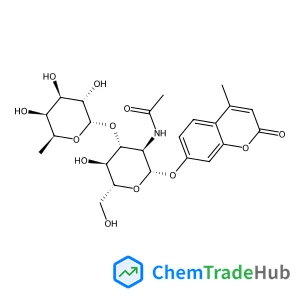
4-Methyl-2-oxo-2H-chromen-7-yl 2-acetamido-2-deoxy-3-O-(6-deoxy-alpha-L-galactopyranosyl)-beta-D-glucopyranoside
CAS Number:
383160-12-1
Molecular Formula:
C24H31NO12
![Ethyl 4-[8-chloro(5,5,6,6,7-~2~H_5_)-5,6-dihydro-11H-benzo[5,6]cyclohepta[1,2-b]pyridin-11-ylidene]-1-piperidinecarboxylate structure](https://static.chemtradehub.com/structs/102/1020719-57-6-37e2.webp "Ethyl 4-[8-chloro(5,5,6,6,7-~2~H_5_)-5,6-dihydro-11H-benzo[5,6]cyclohepta[1,2-b]pyridin-11-ylidene]-1-piperidinecarboxylate structure")
Ethyl 4-[8-chloro(5,5,6,6,7-~2~H_5_)-5,6-dihydro-11H-benzo[5,6]cyclohepta[1,2-b]pyridin-11-ylidene]-1-piperidinecarboxylate
CAS Number:
1020719-57-6
Molecular Formula:
C22H18D5ClN2O2
Recommended Suppliers



Disclaimer
This page provides academic journal information for reference and research purposes only. We are not affiliated with any journal publishers and do not handle publication submissions. For publication-related inquiries, please contact the respective journal publishers directly.
If you notice any inaccuracies in the information displayed, please contact us at support@chemtradehub.com. We will promptly review and address your concerns.