


Theoretical study of the electronic structure of the complexes of gold, silver, and copper mono- and bimetallic nanoclusters decorated on graphitic carbon nitride (g-C3N4): DFT and TD-DFT studies of photocatalytic activity
Literature Information
Publication Date
2023-11-29
DOI
10.1039/D3NJ04497A
Impact Factor
3.591
Authors
Hanieh Moradi, Hossein Farrokhpour, Sayyed Mahdi Hosseini, Mehran Ghiaci
View Original
Abstract
In this study, the structure and electronic properties of tetratomic metal clusters of Au, Ag, and Cu decorated on graphitized carbon nitride (g-C3N4) were investigated using the density functional theory (DFT) method. The most stable structures of the complexes of Au4, Ag4, Cu4, Au2–Ag2, Au2–Cu2, and Ag2–Cu2 clusters with g-C3N4 were calculated. The molecular orbitals, partial atomic charges, and density of states of the complexes were calculated. It was noted that the HOMO–LUMO energy gap of the complexes varied depending on the type of metal cluster on the g-C3N4. The absorption spectra of the complexes were calculated and compared with the absorption spectrum of the bare g-C3N4. The electronic configurations of the calculated absorption lines in the visible region of the absorption spectrum of each complex were investigated. The absorption lines that were related to the electron excitation from an occupied molecular orbital of the complex, localized on the metal cluster, to an unoccupied orbital of the complex, localized on g-C3N4, were selected for further comparison. The electron–hole recombination rate for this type of absorption line is lower than that of the absorption lines in which the initial and final molecular orbitals are related to the g-C3N4. The prolonged electron–hole lifetime can lead to higher photocatalytic activity.
Recommended Journals

Molecular Pharmacology

Planta Medica

Journal of Organometallic Chemistry

Proceedings of the National Academy of Sciences of the United States of America

Journal of Medicinal Chemistry

Russian Chemical Reviews

Journal of Heterocyclic Chemistry

Fibre Chemistry

Organic Preparations and Procedures International

Kinetics and Catalysis
Related Literature
Excitonic phenomena in perovskite quantum-dot supercrystals
Ilia A. Vovk, Nikita V. Tepliakov, Anvar S. Baimuratov, Mikhail Yu. Leonov, Alexander V. Baranov, Anatoly V. Fedorov, Ivan D. Rukhlenko
2018-09-17
Paper
DOI: 10.1039/C8CP04724C
Effective lead optimization targeting the displacement of bridging receptor–ligand water molecules
Deliang Chen, Yibao Li, Mingming Zhao, Wen Tan, Xun Li, Wei Guo, Xiaolin Fan
2018-08-31
Paper
DOI: 10.1039/C8CP04118K
Correction: Convective heat transfer in a measurement cell for scanning electrochemical microscopy
Javor K. Novev, Richard G. Compton
2018-09-28
Correction
DOI: 10.1039/C8CP91865A
Anharmonic contribution to the stabilization of Mg(OH)2 from first principles
P. Treviño, S. López-Moreno, A. Bautista-Hernández, E. Bobocioiu, B. Reynard, R. Caracas
2018-06-05
Paper
DOI: 10.1039/C8CP02490A
[(H2O)Zn(Imidazole)n]2+: the vital roles of coordination number and geometry in Zn–OH2 acidity and catalytic hydrolysis
Douglas P. Linder, Brett E. Baker, Kenton R. Rodgers
2018-09-17
Paper
DOI: 10.1039/C8CP03121E
Photophysics of indole upon X-ray absorption
Cédric Bomme, Denis Anielski, Benjamin Erk, Jens Viefhaus
2018-07-18
Paper
DOI: 10.1039/C8CP00936H
Photoinduced charge transfer by one and two-photon absorptions: physical mechanisms and applications
Huan Zong, Xinxin Wang, Jun Quan, Chunhua Tian, Mengtao Sun
2018-07-09
Perspective
DOI: 10.1039/C8CP03442G
The magnetic fingerprint of dithiazolyl-based molecule magnets
Jordi Ribas-Arino, Juan J. Novoa, Ria Broer, Mercè Deumal
2018-07-12
Paper
DOI: 10.1039/C8CP03173H
You might also like
Compound Q&A
What precautions should be taken when handling 4-(2-Furylmethyl)thiomorpholine 1,1-dioxide (CAS: 79206-94-3)?
When handling 4-(2-Furylmethyl)thiomorpholine 1,1-dioxide (CAS: 79206-94-3), it ...
79206-94-34-(2-Furylmethyl)thi...
Compound Q&A
What precautions should be taken when handling 4-Chloro-N-[2-(4-morpholinyl)ethyl]benzamide (CAS: 71320-77-9)?
When handling 4-Chloro-N-[2-(4-morpholinyl)ethyl]benzamide (CAS: 71320-77-9), it...
71320-77-94-Chloro-N-[2-(4-mor...
Compound Q&A
How should waste containing 2-[2-(2-Methoxyethoxy)ethoxy]ethyl 4-methylbenzenesulfonate (CAS: 62921-74-8) be handled?
Waste containing this compound (CAS: 62921-74-8) should be handled according to ...
62921-74-82-[2-(2-Methoxyethox...
Compound Q&A
How should waste containing (S)-Methyl 2-amino-3-cyclohexylpropanoate be handled?
Waste containing (S)-Methyl 2-amino-3-cyclohexylpropanoate should be collected i...
40056-18-6(S)-Methyl 2-amino-3...
Compound Q&A
How is 5-({4-[(2S,4R)-4-Hydroxy-2-methyltetrahydro-2H-pyran-4-yl]-2-thienyl}sulfanyl)-1-methyl-1,3-dihydro-2H-indol-2-one (CAS: 166882-70-8) typically synthesized?
This compound can be synthesized using a multi-step process involving the conjug...
166882-70-85-({4-[(2S,4R)-4-Hyd...
Compound Q&A
Are there alternatives to (2E)-3-(3,4-Dichlorophenyl)acrylic acid (CAS: 7312-27-8) in synthesis?
There are several alternatives to (2E)-3-(3,4-Dichlorophenyl)acrylic acid in syn...
7312-27-8(2E)-3-(3,4-Dichloro...
Compound Q&A
How should Ethyl 6-(2-nitrophenyl)imidazo[2,1-b][1,3]thiazole-3-carboxylate (CAS: 925437-84-9) be stored?
Ethyl 6-(2-nitrophenyl)imidazo[2,1-b][1,3]thiazole-3-carboxylate (CAS: 925437-84...
925437-84-9Ethyl 6-(2-nitrophen...
Compound Q&A
How should waste containing 2-(1,3-Thiazol-2-yl)ethanamine (CAS: 18453-07-1) be handled?
Waste containing 2-(1,3-Thiazol-2-yl)ethanamine (CAS: 18453-07-1) should be coll...
18453-07-12-(1,3-Thiazol-2-yl)...
Compound Q&A
How is Methyl 5-iodo-2-methylbenzoate (CAS: 103440-54-6) typically synthesized?
Methyl 5-iodo-2-methylbenzoate can be synthesized through the iodination of meth...
103440-54-6Methyl 5-iodo-2-meth...
Compound Q&A
How is 5-Chloro[1,2,4]triazolo[1,5-a]pyridine (CAS: 1427399-34-5) typically synthesized?
5-Chloro[1,2,4]triazolo[1,5-a]pyridine is commonly synthesized via the condensat...
1427399-34-55-Chloro[1,2,4]triaz...
Source Journal
New Journal of Chemistry

CiteScore:
5.3
Self-citation Rate:
3.7%
Articles per Year:
2153
NJC (New Journal of Chemistry) is a broad-based primary journal encompassing all branches of chemistry and its sub-disciplines. It contains full research articles, communications, perspectives and focus articles. This well-established journal, owned by the Centre National de la Recherche Scientifique (CNRS) of France, has been co-published with the Royal Society of Chemistry since January 1998. NJC is the forum for the publication of high-quality, original and significant work that opens new directions in chemistry or other scientific disciplines. In addition to having a significant chemical component, work published in NJC must demonstrate that it will have an impact on areas of research other than that of the reported work.
Recommended Compounds
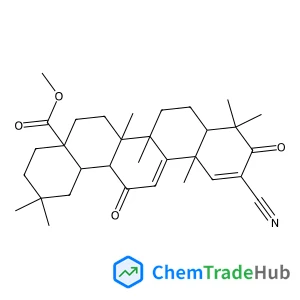
Methyl 2-cyano-3,12-dioxooleana-1,9(11)-dien-28-oate
CAS Number:
218600-53-4
Molecular Formula:
C32H43NO4
![5-Acetyl-2,3-dihydrobenzo[b]furan structure](https://static.chemtradehub.com/structs/908/90843-31-5-eea4.webp "5-Acetyl-2,3-dihydrobenzo[b]furan structure")
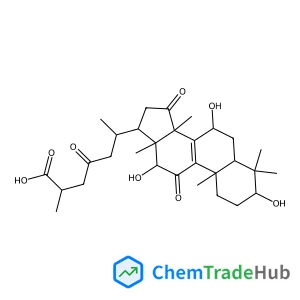
(3beta,7beta,12beta)-3,7,12-Trihydroxy-11,15,23-trioxolanost-8-en-26-oic acid
CAS Number:
98665-22-6
Molecular Formula:
C30H44O8
Recommended Suppliers






Disclaimer
This page provides academic journal information for reference and research purposes only. We are not affiliated with any journal publishers and do not handle publication submissions. For publication-related inquiries, please contact the respective journal publishers directly.
If you notice any inaccuracies in the information displayed, please contact us at support@chemtradehub.com. We will promptly review and address your concerns.