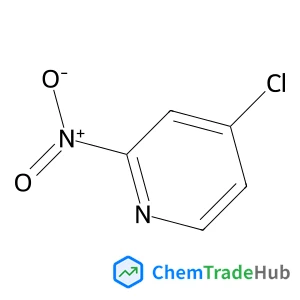
1-Methyl-3-(4,4,5,5-tetramethyl-1,3,2-dioxaborolan-2-yl)-1H-pyrazole
CAS Number:
1020174-04-2
Molecular Formula:
C10H17BN2O2
Karthikeyan Vijayan, Logu Thirumalaisamy, S. P. Vijayachamundeeswari, Kalainathan Sivaperuman, Nazmul Ahsan, Yoshitaka Okada
Framing effective mitigation steps to resolve the energy crisis directs to the research gap of existing solar cell technologies. The study utilizes the inherent physiochemical properties of vanadium-incorporated copper gallium sulfide telluride (CuGa1−xVx(S,Te)2) thin films deposited via a chemical spray pyrolysis route and evokes how the art of intermediate band structuring favours the solar cell efficiency. The research laid a strong basement with SCAPS theoretical modelling followed by thorough experimental validation and precise analysis. I–V curves showed the photoresponsivity (R) and Ohmic nature of the deposited thin films with a maximum photoresponsivity of 0.19 A W−1, observed for the V – 0.1-incorporated CGST film. The theoretical simulation of the fabricated solar cell was conducted using the SCAPS – 1D software, and the obtained efficiency displayed an increasing trend from 4.82% to 11.01%. This increase in efficiency can be attributed to the decrease in bandgap from 2.63 eV to 1.92 eV, as evidenced by UV-Vis spectroscopy. These findings suggest that V – 0.1-incorporated CGST is a promising candidate for use as a thin-film absorber layer in solar photovoltaic technology.
Cheng-Xing Cui, Ganglong Cui
DOI: 10.1039/C8CP02651C
L. Benatto, M. G. E. da Luz, M. Koehler
DOI: 10.1039/C8CP02622J
J. Espinosa-Garcia, J. C. Corchado, M. Garcia-Chamorro, C. Rangel
DOI: 10.1039/C8CP03103G
Yu Zhang, Tiejun Yang, Jinrui Zhang, Huafu Pei, Jinglin Zhang, Jinyang Jiang, Tao Li
DOI: 10.1039/C8CP03411G
Hengxin Tan, Yuanchang Li
DOI: 10.1039/C8CP00990B
Jose M. Ortiz-Roldan, Gustavo Esteban-Manzanares, Sofía Calero, A. Rabdel Ruiz-Salvador, Said Hamad
DOI: 10.1039/C8CP02591F
Alejandro J. Garza
DOI: 10.1039/C8CP01963K
Feng Pan, Yajie Ren, Binbin Yao, Chuanghua Yang, Meng Ye, Yangyang Wang, Jingzhen Li, Xiuying Zhang, Jiahuan Yan
DOI: 10.1039/C8CP04759F
Sehee Na, Sascha Jurkovic, Thorsten Friedrich, Thorsten Koslowski
DOI: 10.1039/C8CP02420K
When handling 4-(2-Furylmethyl)thiomorpholine 1,1-dioxide (CAS: 79206-94-3), it ...
When handling 4-Chloro-N-[2-(4-morpholinyl)ethyl]benzamide (CAS: 71320-77-9), it...
Waste containing this compound (CAS: 62921-74-8) should be handled according to ...
Waste containing (S)-Methyl 2-amino-3-cyclohexylpropanoate should be collected i...
This compound can be synthesized using a multi-step process involving the conjug...
There are several alternatives to (2E)-3-(3,4-Dichlorophenyl)acrylic acid in syn...
Ethyl 6-(2-nitrophenyl)imidazo[2,1-b][1,3]thiazole-3-carboxylate (CAS: 925437-84...
Waste containing 2-(1,3-Thiazol-2-yl)ethanamine (CAS: 18453-07-1) should be coll...
Methyl 5-iodo-2-methylbenzoate can be synthesized through the iodination of meth...
5-Chloro[1,2,4]triazolo[1,5-a]pyridine is commonly synthesized via the condensat...

NJC (New Journal of Chemistry) is a broad-based primary journal encompassing all branches of chemistry and its sub-disciplines. It contains full research articles, communications, perspectives and focus articles. This well-established journal, owned by the Centre National de la Recherche Scientifique (CNRS) of France, has been co-published with the Royal Society of Chemistry since January 1998. NJC is the forum for the publication of high-quality, original and significant work that opens new directions in chemistry or other scientific disciplines. In addition to having a significant chemical component, work published in NJC must demonstrate that it will have an impact on areas of research other than that of the reported work.
![4-{2-[4-(2-Methyl-2-propanyl)phenyl]ethoxy}quinazoline structure](https://static.chemtradehub.com/structs/120/120928-09-8-d3db.webp "4-{2-[4-(2-Methyl-2-propanyl)phenyl]ethoxy}quinazoline structure")