













Back cover
Literature Information
Publication Date
2023-11-07
DOI
10.1039/D3LC90099A
Impact Factor
6.799
Authors
View Original
Abstract
A graphical abstract is available for this content
Recommended Journals
Related Literature
Supramolecular self-assembly on a solid support: metal-directed complementarity
Edwin C. Constable, Catherine E. Housecroft
2005-06-10
Communication
DOI: 10.1039/B505968B
Fourteen-vertex homo- and heterobimetallic metallacarboranes
David Ellis, Maria Elena Lopez, Ruaraidh McIntosh, Georgina M. Rosair, Alan J. Welch
2005-02-15
Communication
DOI: 10.1039/B500236B
Solubilization of boron nitride nanotubes
Su-Yuan Xie, Wei Wang, K. A. Shiral Fernando, Xin Wang, Yi Lin, Ya-Ping Sun
2005-06-15
Communication
DOI: 10.1039/B505330G
Probing the mechanism of Prins cyclisations and application to the synthesis of 4-hydroxytetrahydropyrans
Conor S. Barry, Nick Bushby, John R. Harding, Rachael A. Hughes, Gregory D. Parker, Richard Roe, Christine L. Willis
2005-06-16
Communication
DOI: 10.1039/B504562B
Highly enantioselective iridium-catalysed allylic aminations with anionic N-nucleophiles
Robert Weihofen, Axel Dahnz, Olena Tverskoy, Günter Helmchen
2005-06-09
Communication
DOI: 10.1039/B505197E
Influencing the nuclearity and constitution of heterometallic rings via templates
Andrei S. Batsanov, Finn K. Larsen, Christopher A. Muryn, Jacob Overgaard, Simon J. Teat, Richard E. P. Winpenny
2005-06-23
Communication
DOI: 10.1039/B504912A
Template-directed synthesis of silica-coated J-aggregate nanotapes
Philippa J. Meadows, Erik Dujardin, Simon R. Hall, Stephen Mann
2005-06-09
Communication
DOI: 10.1039/B502436F
Anhydrous solution synthesis of germanium nanocrystals from the germanium(ii) precursor Ge[N(SiMe3)2]2
Henry Gerung, Scott D. Bunge, Timothy J. Boyle, Sang M. Han
2005-02-16
Communication
DOI: 10.1039/B416066E
Heck coupling of haloaromatics with octavinylsilsesquioxane: solution processable nanocomposites for application in electroluminescent devices
Alan Sellinger, Ryo Tamaki, Richard M. Laine, Kazunori Ueno, Hiroshi Tanabe, Evan Williams, Ghassan E. Jabbour
2005-06-10
Communication
DOI: 10.1039/B505048K
New generation ionic liquids: cations derived from amino acids
Guo-hong Tao, Ling He, Ning Sun, Yuan Kou
2005-06-09
Communication
DOI: 10.1039/B504256A
You might also like
Compound Q&A
What is Ethyl 3-cyclohexylpropanoate (CAS: 10094-36-7)?
Ethyl 3-cyclohexylpropanoate is a clear, colorless to light yellow liquid with a...
10094-36-7Ethyl 3-cyclohexylpr...
Compound Q&A
How should waste containing 2-(Hydroxymethyl)-5-(methoxycarbonyl)-6-methyl-4-(2-nitrophenyl)nicotinic acid (CAS: 34783-31-8) be handled?
Waste containing 2-(Hydroxymethyl)-5-(methoxycarbonyl)-6-methyl-4-(2-nitrophenyl...
34783-31-82-(Hydroxymethyl)-5-...
Compound Q&A
How should waste containing 2,4,6-Tris(pentafluoroethyl)-1,3,5-triazine (CAS: 858-46-8) be handled?
Waste containing 2,4,6-Tris(pentafluoroethyl)-1,3,5-triazine (CAS: 858-46-8) sho...
858-46-82,4,6-Tris(pentafluo...
Compound Q&A
What precautions should be taken when handling Chloroac-nle-oh (CAS: 56787-36-1)?
When handling Chloroac-nle-oh (CAS: 56787-36-1), it is essential to wear appropr...
56787-36-1Chloroac-nle-oh
Compound Q&A
What industries use Ethyl 6-phenylimidazo[2,1-b][1,3]thiazole-3-carboxylate (CAS: 752244-05-6)?
Ethyl 6-phenylimidazo[2,1-b][1,3]thiazole-3-carboxylate is primarily used in the...
752244-05-6Ethyl 6-phenylimidaz...
Compound Q&A
Are there alternatives to alpha-(2-Bromophenyl)benzylamine (CAS: 55095-15-3) in synthesis?
Alternatives to alpha-(2-Bromophenyl)benzylamine (CAS: 55095-15-3) in synthesis ...
55095-15-3alpha-(2-Bromophenyl...
Compound Q&A
How should waste containing 2-Chloro-5-methoxypyridine (CAS: 139585-48-1) be handled?
Waste containing 2-Chloro-5-methoxypyridine (CAS: 139585-48-1) should be managed...
139585-48-12-Chloro-5-methoxypy...
Compound Q&A
What industries use 1-(4-Methoxyphenyl)-2,5-dimethyl-1H-pyrrole (CAS: 5044-27-9)?
1-(4-Methoxyphenyl)-2,5-dimethyl-1H-pyrrole (CAS: 5044-27-9) is used in various ...
5044-27-91-(4-Methoxyphenyl)-...
Compound Q&A
Are there alternatives to 3-Bromo-5-(N-Boc)aminomethylisoxazole (CAS: 903131-45-3) in synthesis?
There are alternative reagents and compounds that can be used in the synthesis o...
903131-45-33-Bromo-5-(N-Boc)ami...
Compound Q&A
What is Tungsten(IV) oxide (CAS: 12036-22-5)?
Tungsten(IV) oxide, also known as tungsten dioxide, is a chemical compound with ...
12036-22-5Tungsten(IV) oxide
Source Journal
Lab on a Chip

CiteScore:
11.1
Self-citation Rate:
8.2%
Articles per Year:
389
Miniaturization, automation, and integration have a profound impact across diverse fields, including biology, medicine, materials science, analytical chemistry, environmental monitoring, energy, and more, from laboratory research to industrial applications and clinical settings. Lab on a Chip is the premiere journal that publishes cutting-edge research in the field of miniaturization. By their very nature, microfluidic/nanofluidic/miniaturized systems are at the intersection of disciplines, spanning fundamental research to high-end application, which is reflected by the broad readership of the journal.
Recommended Compounds
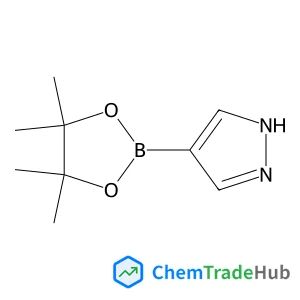

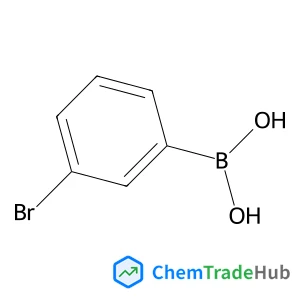

Recommended Suppliers






Disclaimer
This page provides academic journal information for reference and research purposes only. We are not affiliated with any journal publishers and do not handle publication submissions. For publication-related inquiries, please contact the respective journal publishers directly.
If you notice any inaccuracies in the information displayed, please contact us at support@chemtradehub.com. We will promptly review and address your concerns.