













Bromide-based nonflammable electrolyte for safe and long-life sodium metal batteries
Literature Information
Publication Date
2023-12-07
DOI
10.1039/D3EE03332E
Impact Factor
38.532
Authors
Changjian Zuo, Dejian Dong, Huwei Wang, Yue Sun, Yi-Chun Lu
View Original
Abstract
Sodium metal batteries (SMBs) are one of the most promising energy storage technologies owing to the rich abundance of sodium and its high gravimetric capacity. However, safe applications of SMBs are hindered by reactive sodium metal and the highly flammable electrolyte, which leads to dendritic growth, gassing and fire issues. Here we report a new class of bromide-based nonflammable electrolytes for sodium metal batteries using flame-retardant 2-bromo-1-(2-bromoethoxy)ethane (BBE) solvent. This solvent not only has higher fire retardancy than typical P, Cl, F-based nonflammable solvents owing to the lower energy barrier of radical scavenger dissociation, but also derives a solid electrolyte interphase (SEI) containing NaBr with a high ionic conductivity to suppress the dendrite and gassing issues. The BBE-based electrolyte prolongs the cycle life (80% capacity retention) of Na3V2(PO4)3//Na cells from 60 cycles in traditional electrolytes to 1500 cycles and produces a stable cycle life of 1400 h in the Na//Na symmetric cells. We further demonstrated a sodium metal pouch cell showing a capacity retention of 97.9% after 264 cycles at 1C. This work provides a rational design strategy for improving electrolyte flame retardancy and constructing a stable SEI for safe and long-life sodium metal battery applications.
Related Literature
Human serum albumin binding to silica nanoparticles – effect of protein fatty acid ligand
Joo Chuan Ang, Mark J. Henderson, Richard A. Campbell, Jhih-Min Lin, Peter N. Yaron, Andrew Nelson, Thomas Faunce, John W. White
2014-02-19
Paper
DOI: 10.1039/C4CP00293H
PICVib: an accurate, fast and simple procedure to investigate selected vibrational modes and evaluate infrared intensities
Marcus V. P. dos Santos, Yaicel G. Proenza, Ricardo L. Longo
2014-07-07
Paper
DOI: 10.1039/C4CP02279C
Ab initio and metadynamics studies on the role of essential functional groups in biomineralization of calcium carbonate and environmental situations
Moumita Saharay, R. James Kirkpatrick
2014-10-22
Paper
DOI: 10.1039/C4CP03904A
Structures and optical properties of two phases of SrMgF4
Alexander P. Yelisseyev, Lei Bai, Zheshuai Lin, Alina A. Goloshumova, Sergei I. Lobanov, Dmitry Y. Naumov
2014-11-04
Paper
DOI: 10.1039/C4CP04689G
Spectro-microscopic photoemission evidence of charge uncompensated areas in Pb(Zr,Ti)O3(001) layers
Dana Georgeta Popescu, Marius Adrian Huşanu, Lucian Trupinǎ, Luminiţa Hrib, Lucian Pintilie, Alexei Barinov, Silvano Lizzit, Paolo Lacovig, Cristian Mihail Teodorescu
2014-11-05
Paper
DOI: 10.1039/C4CP04546G
The energy transfer mechanism in Pr3+ and Yb3+ codoped β-NaLuF4 nanocrystals
Jiahua Zhang, Zhendong Hao, Xia Zhang, Guohui Pan, Yongshi Luo, Shaozhe Lü, Haifeng Zhao
2014-04-03
Paper
DOI: 10.1039/C4CP01184H
Effect of the electropositive elements A = Sc, La, and Ce on the microscopic dynamics of AV2Al20
Michael Marek Koza, Andreas Leithe-Jasper, Erik Sischka, Walter Schnelle, Horst Borrmann, Hannu Mutka, Yuri Grin
2014-10-22
Paper
DOI: 10.1039/C4CP04097J
High DNP efficiency of TEMPONE radicals in liquid toluene at low concentrations
Nikolay Enkin, Guoquan Liu, Igor Tkach, Marina Bennati
2014-03-20
Communication
DOI: 10.1039/C4CP00854E
Electronic structure investigation of the evanescent AtO+ ion
André Severo Pereira Gomes, Florent Réal, Nicolas Galland, Celestino Angeli, Renzo Cimiraglia, Valérie Vallet
2014-02-20
Paper
DOI: 10.1039/C3CP55294B
Unusual electroluminescence from n-ZnO@i-MgO core–shell nanowire color-tunable light-emitting diode at reverse bias
Xiaoming Mo, Guojia Fang, Hao Long, Songzhan Li, Haoning Wang, Zhao Chen, Huihui Huang, Wei Zeng, Yupeng Zhang, Chunxu Pan
2014-02-26
Paper
DOI: 10.1039/C3CP55505D
You might also like
Compound Q&A
What are the main uses of 1H-Indazole-6-carbonitrile (CAS: 141290-59-7)?
1H-Indazole-6-carbonitrile finds applications in pharmaceuticals, where it serve...
141290-59-71H-Indazole-6-carbon...
Compound Q&A
How should waste containing Dioctyl (2E)-2-butenedioate (CAS: 2997-85-5) be handled?
Waste containing Dioctyl (2E)-2-butenedioate (CAS: 2997-85-5) should be collecte...
2997-85-5Dioctyl (2E)-2-buten...
Compound Q&A
What industries use Sodium [(1,2-benzoxazol-3-ylmethyl)sulfonyl]azanide (CAS: 68291-98-5)?
Sodium [(1,2-benzoxazol-3-ylmethyl)sulfonyl]azanide is primarily used in pharmac...
68291-98-5Sodium [(1,2-benzoxa...
Compound Q&A
Are there alternatives to Dimethyl 4-(4,4,5,5-tetramethyl-1,3,2-dioxaborolan-2-yl)-2,6-pyridinedicarboxylate (CAS: 741709-66-0) in synthesis?
Dimethyl 4-(4,4,5,5-tetramethyl-1,3,2-dioxaborolan-2-yl)-2,6-pyridinedicarboxyla...
741709-66-0Dimethyl 4-(4,4,5,5-...
Compound Q&A
How should waste containing 2-Fluoro-6-hydrazinopyridine (CAS: 80714-39-2) be handled?
Waste containing 2-Fluoro-6-hydrazinopyridine (CAS: 80714-39-2) should be manage...
80714-39-22-Fluoro-6-hydrazino...
Compound Q&A
What is 6-Formyl-2-pyridinecarboxylic acid (CAS: 499214-11-8)?
6-Formyl-2-pyridinecarboxylic acid is an organic compound with the molecular for...
499214-11-86-Formyl-2-pyridinec...
Compound Q&A
What is the market or research trend for 3-(3,4-dimethoxyphenyl)-2,5-dimethyl-N-(2-morpholin-4-ylethyl)pyrazolo[1,5-a]pyrimidin-7-amine (CAS: 900874-91-1)?
Research trends for this compound indicate a focus on its potential applications...
900874-91-13-(3,4-dimethoxyphen...
Compound Q&A
How is 9H-Tribenzo[b,d,f]azepine (CAS: 29875-73-8) typically synthesized?
9H-Tribenzo[b,d,f]azepine is typically synthesized via a multi-step process invo...
29875-73-89H-Tribenzo[b,d,f]az...
Compound Q&A
How is 1-Cyclopropyl-7-ethoxy-6-fluoro-8-methoxy-4-oxo-1,4-dihydro-3-quinolinecarboxylic acid (CAS: 1797982-51-4) typically synthesized?
1-Cyclopropyl-7-ethoxy-6-fluoro-8-methoxy-4-oxo-1,4-dihydro-3-quinolinecarboxyli...
1797982-51-41-Cyclopropyl-7-etho...
Compound Q&A
How should waste containing Methyl 3-oxo-1,2,3,4-tetrahydro-6-quinoxalinecarboxylate (CAS: 671820-52-3) be handled?
Waste containing Methyl 3-oxo-1,2,3,4-tetrahydro-6-quinoxalinecarboxylate (CAS: ...
671820-52-3Methyl 3-oxo-1,2,3,4...
Source Journal
Energy & Environmental Science
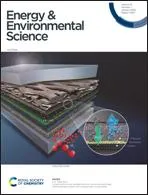
CiteScore:
32.34
Self-citation Rate:
3.4%
Articles per Year:
481
Energy & Environmental Science is an international journal dedicated to publishing exceptionally important and high quality, agenda-setting research tackling the key global and societal challenges of ensuring the provision of energy and protecting our environment for the future. The scope is intentionally broad and the journal recognises the complexity of issues and challenges relating to energy conversion and storage, alternative fuel technologies and environmental science. For work to be published it must be linked to the energy-environment nexus and be of significant general interest to our community-spanning readership. All scales of studies and analysis, from impactful fundamental advances, to interdisciplinary research across the (bio)chemical, (bio/geo)physical sciences and chemical engineering disciplines are welcomed. Topics include, but are not limited to, the following: Solar energy conversion and photovoltaics Solar fuels and artificial photosynthesis Fuel cells Hydrogen storage and (bio) hydrogen production Materials for energy systems Capture, storage and fate of CO2, including chemicals and fuels from CO2 Catalysis for a variety of feedstocks (for example, oil, gas, coal, biomass and synthesis gas) Biofuels and biorefineries Materials in extreme environments Environmental impacts of energy technologies Global atmospheric chemistry and climate change as related to energy systems Water-energy nexus Energy systems and networks Globally applicable principles of energy policy and techno-economics
Recommended Compounds


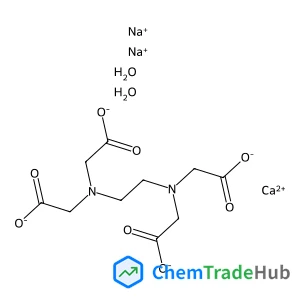
EthylenediaminetetraaceticacidcalciumDisodiumsalthydrate
CAS Number:
23411-34-9
Molecular Formula:
C10H16CaN2Na2O10

Recommended Suppliers




Disclaimer
This page provides academic journal information for reference and research purposes only. We are not affiliated with any journal publishers and do not handle publication submissions. For publication-related inquiries, please contact the respective journal publishers directly.
If you notice any inaccuracies in the information displayed, please contact us at support@chemtradehub.com. We will promptly review and address your concerns.