


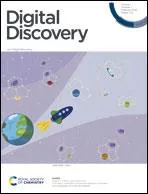
Accelerated chemical science with AI
Literature Information
Publication Date
2023-12-06
DOI
10.1039/D3DD00213F
Impact Factor
0
Authors
Seoin Back, Michele Ceriotti, Geun Ho Gu, Jason Hein, Rodrigo Hormázabal, Seonah Kim, Woo Youn Kim, Seyed Mohamad Moosavi, Juhwan Noh, Changyoung Park, Joshua Schrier, Philippe Schwaller, Tejs Vegge
View Original
Abstract
In light of the pressing need for practical materials and molecular solutions to renewable energy and health problems, to name just two examples, one wonders how to accelerate research and development in the chemical sciences, so as to address the time it takes to bring materials from initial discovery to commercialization. Artificial intelligence (AI)-based techniques, in particular, are having a transformative and accelerating impact on many if not most, technological domains. To shed light on these questions, the authors and participants gathered in person for the ASLLA Symposium on the theme of ‘Accelerated Chemical Science with AI’ at Gangneung, Republic of Korea. We present the findings, ideas, comments, and often contentious opinions expressed during four panel discussions related to the respective general topics: ‘Data’, ‘New applications’, ‘Machine learning algorithms’, and ‘Education’. All discussions were recorded, transcribed into text using Open AI's Whisper, and summarized using LG AI Research's EXAONE LLM, followed by revision by all authors. For the broader benefit of current researchers, educators in higher education, and academic bodies such as associations, publishers, librarians, and companies, we provide chemistry-specific recommendations and summarize the resulting conclusions.
Recommended Journals

Polycyclic Aromatic Compounds

Journal of the Indian Institute of Science

Topics in Catalysis

Journal of Asian Natural Products Research

Critical Reviews in Solid State and Materials Sciences

Journal of Chemical Sciences

Medicinal Chemistry Research

Heteroatom Chemistry

Bioorganic & Medicinal Chemistry Letters

Biocatalysis and Biotransformation
Related Literature
Selective functionalization of imidazolesvia an iodine–copper exchange reaction
Xiaoyin Yang, Paul Knochel
2006-04-20
Communication
DOI: 10.1039/B603419E
Non-catalytic and template-free growth of aligned CdS nanowires exhibiting high field emission current densities
Yi-Feng Lin, Yung-Jung Hsu, Shih-Yuan Lu, Sheng-Chin Kung
2006-05-02
Communication
DOI: 10.1039/B604309G
Regiochemical control of the catalytic asymmetric hydroboration of 1,2-diarylalkenes
Antonia Black, John M. Brown, Christophe Pichon
2005-10-05
Communication
DOI: 10.1039/B508292G
Sieving behaviour of nanoscopic pores by hydrated ions
Joohan Lee, Juhyoun Kwak
2006-04-20
Communication
DOI: 10.1039/B601613H
A novel mediatorless microbial fuel cell based on direct biocatalysis of Escherichia coli
Tian Zhang, Changzheng Cui, Shengli Chen, Xinping Ai, Hanxi Yang, Ping Shen, Zhenrong Peng
2006-04-25
Communication
DOI: 10.1039/B600876C
Organic solventnanofiltration in asymmetric hydrogenation: enhancement of enantioselectivity and catalyst stability by ionic liquids
Hau-To Wong, Yoong Hsiang See-Toh, Frederico Castelo Ferreira, Robert Crook, Andrew G. Livingston
2006-04-11
Communication
DOI: 10.1039/B602184K
PAMAM dendrimers for efficient siRNA delivery and potent gene silencing
Jiehua Zhou, Nadia Hafdi, Jean-Paul Behr, Patrick Erbacher
2006-05-10
Communication
DOI: 10.1039/B601381C
Bergman cyclopolymerization within the channels of functional hybrid nanocomposites formed by co-assembly of silica and polymerizable surfactant monomer
Chetan Jagdish Bhongale, Chung-He Yang, Chain-Shu Hsu
2006-04-26
Communication
DOI: 10.1039/B603195A
Intramolecular alkene hydroaminations catalyzed by a bis(thiophosphinic amidate) Zr(iv) complex
Hyunseok Kim, Phil Ho Lee, Tom Livinghouse
2005-09-20
Communication
DOI: 10.1039/B505738H
Towards large amounts of Janusnanoparticles through a protection–deprotection route
Stéphane Reculusa, Franck Pereira, Marie-Hélène Delville, Christophe Mingotaud, Etienne Duguet, Elodie Bourgeat-Lami, Serge Ravaine
2005-10-03
Communication
DOI: 10.1039/B507486J
You might also like
Compound Q&A
What are the main uses of 1H-Indazole-6-carbonitrile (CAS: 141290-59-7)?
1H-Indazole-6-carbonitrile finds applications in pharmaceuticals, where it serve...
141290-59-71H-Indazole-6-carbon...
Compound Q&A
How should waste containing Dioctyl (2E)-2-butenedioate (CAS: 2997-85-5) be handled?
Waste containing Dioctyl (2E)-2-butenedioate (CAS: 2997-85-5) should be collecte...
2997-85-5Dioctyl (2E)-2-buten...
Compound Q&A
What industries use Sodium [(1,2-benzoxazol-3-ylmethyl)sulfonyl]azanide (CAS: 68291-98-5)?
Sodium [(1,2-benzoxazol-3-ylmethyl)sulfonyl]azanide is primarily used in pharmac...
68291-98-5Sodium [(1,2-benzoxa...
Compound Q&A
Are there alternatives to Dimethyl 4-(4,4,5,5-tetramethyl-1,3,2-dioxaborolan-2-yl)-2,6-pyridinedicarboxylate (CAS: 741709-66-0) in synthesis?
Dimethyl 4-(4,4,5,5-tetramethyl-1,3,2-dioxaborolan-2-yl)-2,6-pyridinedicarboxyla...
741709-66-0Dimethyl 4-(4,4,5,5-...
Compound Q&A
How should waste containing 2-Fluoro-6-hydrazinopyridine (CAS: 80714-39-2) be handled?
Waste containing 2-Fluoro-6-hydrazinopyridine (CAS: 80714-39-2) should be manage...
80714-39-22-Fluoro-6-hydrazino...
Compound Q&A
What is 6-Formyl-2-pyridinecarboxylic acid (CAS: 499214-11-8)?
6-Formyl-2-pyridinecarboxylic acid is an organic compound with the molecular for...
499214-11-86-Formyl-2-pyridinec...
Compound Q&A
What is the market or research trend for 3-(3,4-dimethoxyphenyl)-2,5-dimethyl-N-(2-morpholin-4-ylethyl)pyrazolo[1,5-a]pyrimidin-7-amine (CAS: 900874-91-1)?
Research trends for this compound indicate a focus on its potential applications...
900874-91-13-(3,4-dimethoxyphen...
Compound Q&A
How is 9H-Tribenzo[b,d,f]azepine (CAS: 29875-73-8) typically synthesized?
9H-Tribenzo[b,d,f]azepine is typically synthesized via a multi-step process invo...
29875-73-89H-Tribenzo[b,d,f]az...
Compound Q&A
How is 1-Cyclopropyl-7-ethoxy-6-fluoro-8-methoxy-4-oxo-1,4-dihydro-3-quinolinecarboxylic acid (CAS: 1797982-51-4) typically synthesized?
1-Cyclopropyl-7-ethoxy-6-fluoro-8-methoxy-4-oxo-1,4-dihydro-3-quinolinecarboxyli...
1797982-51-41-Cyclopropyl-7-etho...
Compound Q&A
How should waste containing Methyl 3-oxo-1,2,3,4-tetrahydro-6-quinoxalinecarboxylate (CAS: 671820-52-3) be handled?
Waste containing Methyl 3-oxo-1,2,3,4-tetrahydro-6-quinoxalinecarboxylate (CAS: ...
671820-52-3Methyl 3-oxo-1,2,3,4...
Source Journal
Recommended Compounds
Recommended Suppliers




Disclaimer
This page provides academic journal information for reference and research purposes only. We are not affiliated with any journal publishers and do not handle publication submissions. For publication-related inquiries, please contact the respective journal publishers directly.
If you notice any inaccuracies in the information displayed, please contact us at support@chemtradehub.com. We will promptly review and address your concerns.