












First comparison of catalytic CO2 reduction to CO over molybdenum carbide, nitride and phosphide catalysts
Literature Information
Publication Date
2023-10-17
DOI
10.1039/D3CY00979C
Impact Factor
6.119
Authors
Wei Ding, Guogang Liu, Zhiqiang Zhang
View Original
Abstract
Carbonization, nitridation and phosphorization of Mo/CNT precursors can lead to the formation of β-Mo2C, a γ-Mo2N/β-Mo2C mixture and MoP, respectively, on the CNT support. It was proposed that the γ-Mo2N phase showed better reverse water gas shift (RWGS) performance than the β-Mo2C and MoP phases, which can be due to its higher oxophilicity and weaker affinity with CO. Noticeably, this nitrided Mo/CNT catalyst showed comparable RWGS performance to bimetallic Cu/β-Mo2C (recently known to be the most excellent non-noble metal catalyst for the RWGS).
Related Literature
Computational study of oxygen atom (3P and 1D) reactions with CF3CN
Jingyu Sun, Yizhen Tang, Xiujuan Jia, Fang Wang, Yunju Zhang, ShuWei Tang, Fengdi Wang, Yingfei Chang, Yongji Lu, Xiumei Pan, Jingping Zhang, Rongshun Wang
2010-07-26
Paper
DOI: 10.1039/C004284F
TiO2 doping by hydroxyurea at the nucleation stage: towards a new photocatalyst in the visible spectral range
R. Azouani, S. Tieng, K. Chhor, J.-F. Bocquet, P. Eloy, E. M. Gaigneaux, K. Klementiev, A. V. Kanaev
2010-08-16
Paper
DOI: 10.1039/B923548E
Effects of the alkyl-chain length on the mixing state of imidazolium-based ionic liquid–methanol solutions
Takuya Shimomura, Kenta Fujii, Toshiyuki Takamuku
2010-08-19
Paper
DOI: 10.1039/C0CP00614A
Mechanistic insight into light-driven molecular rotors: a conformational search in chiral overcrowded alkenes by a pseudo-random approach
Guillermo Pérez-Hernández, Leticia González
2010-08-16
Paper
DOI: 10.1039/C0CP00324G
Application of multinuclear magnetic resonance and gauge-including projector-augmented-wave calculations to the study of solid group 13 chlorides
Rebecca P. Chapman, David L. Bryce
2009-06-18
Paper
DOI: 10.1039/B906627F
The role of mass transport pathway in wormholelike mesoporous carbon for supercapacitors
Yeru Liang, Fengxue Liang, Zhenghui Li, Fangyu Yan, Siyu Li
2010-07-23
Paper
DOI: 10.1039/C003213A
Density functional triple jumping
Jia Deng, Andrew T. B. Gilbert, Peter M. W. Gill
2010-07-07
Paper
DOI: 10.1039/C0CP00242A
A spiro-configured ambipolar host material for impressively efficient single-layer green electrophosphorescent devices
Wen-Yi Hung, Ting-Chih Wang, Hao-Chih Chiu, Hsiao-Fan Chen, Ken-Tsung Wong
2010-08-16
Communication
DOI: 10.1039/C0CP00490A
Collisions of noble gases with supercooled sulfuric acid–water solutions
2009-06-11
Paper
DOI: 10.1039/B821751C
The effect of PAMAM G6 dendrimers on the structure of lipidvesicles
Anna Åkesson, Kristian Moss Bendtsen, Manja A. Beherens, Jan Skov Pedersen, Viveka Alfredsson, Marité Cárdenas Gómez
2010-08-16
Paper
DOI: 10.1039/C0CP00172D
You might also like
Compound Q&A
What precautions should be taken when handling 2-Chloro-1,2-bis(4-methylphenyl)ethanone (CAS: 71193-32-3)?
When handling 2-Chloro-1,2-bis(4-methylphenyl)ethanone (CAS: 71193-32-3), it is ...
71193-32-32-Chloro-1,2-bis(4-m...
Compound Q&A
What industries use 4-Ethoxy-3-(5-methyl-4-oxo-7-propyl-1,4-dihydroimidazo[5,1-f][1,2,4]triazin-2-yl)benzenesulfonyl chloride (CAS: 224789-26-8)?
4-Ethoxy-3-(5-methyl-4-oxo-7-propyl-1,4-dihydroimidazo[5,1-f][1,2,4]triazin-2-yl...
224789-26-84-Ethoxy-3-(5-methyl...
Compound Q&A
How should Methyl 3-Oxo-4-Androsten-17-Carboxylate (CAS: 2681-55-2) be stored?
Methyl 3-Oxo-4-Androsten-17-Carboxylate (CAS: 2681-55-2) should be stored in a c...
2681-55-2Methyl 3-Oxo-4-Andro...
Compound Q&A
What are the main uses of (R)-3-Amino-4-(3-hexylphenylamino)-4-oxobutylphosphonic acid (CAS: 909725-61-7)?
(R)-3-Amino-4-(3-hexylphenylamino)-4-oxobutylphosphonic acid is primarily used i...
909725-61-7(R)-3-Amino-4-(3-hex...
Compound Q&A
What regulatory guidelines apply to 2-Methyl-2-propanyl 3-amino-3-carbamoyl-1-azetidinecarboxylate (CAS: 1254120-14-3)?
2-Methyl-2-propanyl 3-amino-3-carbamoyl-1-azetidinecarboxylate (CAS: 1254120-14-...
1254120-14-32-Methyl-2-propanyl ...
Compound Q&A
Are there alternatives to (E)-4-(tert-Butoxy)-4-oxobut-2-enoic acid (CAS: 135355-96-3) in synthesis?
There are alternative reagents that can be used in synthesis instead of (E)-4-(t...
135355-96-3(E)-4-(tert-Butoxy)-...
Compound Q&A
What are the physical and chemical properties of [2-(3-Chlorophenyl)-1,3-thiazol-4-yl]methanol (CAS: 121202-20-8)?
[2-(3-Chlorophenyl)-1,3-thiazol-4-yl]methanol (CAS: 121202-20-8) is a crystallin...
121202-20-8[2-(3-Chlorophenyl)-...
Compound Q&A
What is the market or research trend for Methyl (2S)-[(4S)-2,2-dimethyl-1,3-dioxolan-4-yl]{[(4-methylphenyl)sulfonyl]oxy}acetate (CAS: 166249-17-8)?
The market and research trends for Methyl (2S)-[(4S)-2,2-dimethyl-1,3-dioxolan-4...
166249-17-8Methyl (2S)-[(4S)-2,...
Compound Q&A
What is the market or research trend for 1-Bromo-2-isocyanatoethane (CAS: 42865-19-0)?
The market for 1-Bromo-2-isocyanatoethane (CAS: 42865-19-0) is driven by its use...
42865-19-01-Bromo-2-isocyanato...
Compound Q&A
What are the main uses of 4-Nitro-D-phenylalanine hydrochloride (CAS: 147065-06-3)?
4-Nitro-D-phenylalanine hydrochloride (CAS: 147065-06-3) is primarily used in re...
147065-06-34-Nitro-D-phenylalan...
Source Journal
Catalysis Science & Technology

CiteScore:
5.91
Self-citation Rate:
4.5%
Articles per Year:
600
Catalysis Science & Technology is committed to publishing research reporting high-quality, cutting-edge developments across the catalysis community at large. The journal places equal focus on publications from the heterogeneous, homogeneous, thermo-, electro-, photo-, organo- and biocatalysis communities. Works published in the journal feature a balanced mix of fundamental, technology-oriented, experimental, computational, digital and data-driven original research, thus appealing to catalysis practitioners in both academic and industrial environments. Original research articles published in the journal must demonstrate new catalytic discoveries and/or methodological advances that represent a significant advance on previously published work, from the molecular to the process scales. We welcome rigorous research in a wide range of timely or emerging applications related to the environment, health, energy and materials. Catalysis Science & Technology publishes Communications, Articles, Reviews and Perspectives. More details regarding manuscript types may be found in the Information for Authors section.
Recommended Compounds


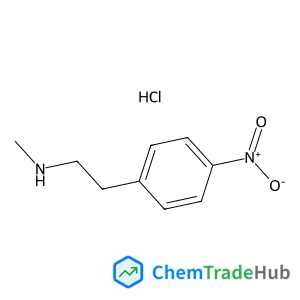
N-Methyl-2-(4-nitrophenyl)ethanamine hydrochloride (1:1)
CAS Number:
166943-39-1
Molecular Formula:
C9H13ClN2O2
![4-[2-(Trichlorosilyl)ethyl]benzenesulfonyl chloride structure](https://static.chemtradehub.com/structs/797/79793-00-3-de16.webp "4-[2-(Trichlorosilyl)ethyl]benzenesulfonyl chloride structure")
4-[2-(Trichlorosilyl)ethyl]benzenesulfonyl chloride
CAS Number:
79793-00-3
Molecular Formula:
C8H8Cl4O2SSi
Recommended Suppliers






Disclaimer
This page provides academic journal information for reference and research purposes only. We are not affiliated with any journal publishers and do not handle publication submissions. For publication-related inquiries, please contact the respective journal publishers directly.
If you notice any inaccuracies in the information displayed, please contact us at support@chemtradehub.com. We will promptly review and address your concerns.