












Cyclo[n]carbons and catenanes from different perspectives: disentangling the molecular thread‡
Literature Information
Publication Date
2023-10-17
DOI
10.1039/D3CP03887D
Impact Factor
3.676
Authors
Silvia Kozáková, Nissrin Alharzali, Ivan Černušák
View Original
Abstract
All-carbon atomic rings, cyclo[n]carbons, have recently attracted vivid attention of experimentalists and theoreticians. Among them, cyclo[18]carbon is the most studied system. In this paper, we summarize and review various properties of cyclo[n]carbons, emphasising the aspects of their aromaticity/antiaromaticity. In the first part, the trends in bonding patterns and selected aromaticity indices with the increasing size of the rings are discussed. In the second part we explore the properties of catenane models based on interlocked cyclo[18]carbon rings from different perspectives and investigate their behaviour under the action of external force using computational experiments.
Related Literature
Adsorption and dissociation of O2 on MoO2(11) surfaces: a DFT study
Quan Zhang, Minhua Zhang
2017-10-17
Paper
DOI: 10.1039/C7CP06456J
Freezing of supercooled n-decane nanodroplets: from surface driven to frustrated crystallization
Viraj P. Modak, Andrew J. Amaya
2017-10-31
Paper
DOI: 10.1039/C7CP05431A
Prediction of topological crystalline insulators and topological phase transitions in two-dimensional PbTe films
Yi-zhen Jia, Wei-xiao Ji, Chang-wen Zhang, Ping Li, Shu-feng Zhang, Pei-ji Wang, Sheng-shi Li, Shi-shen Yan
2017-10-23
Paper
DOI: 10.1039/C7CP04679K
Chemical surface exchange of oxygen on CeO2−δ in an O2/H2O atmosphere
Xin Xu
2017-10-09
Paper
DOI: 10.1039/C7CP05969H
Design of an efficient coherent multi-site single-molecule rectifier
Matthijs Doelman, Rienk Eelkema, Herre S. J. van der Zant
2017-10-18
Paper
DOI: 10.1039/C7CP04456A
Correction: Photodissociation dynamics of fulvenallene and the fulvenallenyl radical at 248 and 193 nm
Courtney Haibach-Morris
2017-11-07
Correction
DOI: 10.1039/C7CP90250F
Spectroscopic identification of the chemical interplay between defects and dopants in Al-doped ZnO
S. Benedetti, A. di Bona, G. Vinai, C. Castan-Guerrero, A. Catellani, P. Torelli, A. Calzolari
2017-10-09
Paper
DOI: 10.1039/C7CP05864K
Interplay between the folding mechanism and binding modes in folding coupled to binding processes
2017-10-18
Communication
DOI: 10.1039/C7CP04748G
Coherent diffractive imaging of graphite nanoparticles using a tabletop EUV source
Ilya Strashnov, Eric Whittaker, Xiang Li Zhong
2017-10-23
Paper
DOI: 10.1039/C7CP03145A
Quantitative DFT modeling of product concentration in organometallic reactions: Cu-mediated pentafluoroethylation of benzoic acid chlorides as a case study
2017-10-10
Paper
DOI: 10.1039/C7CP05709A
You might also like
Compound Q&A
What industries use (1R,3S)-1,3-Cyclopentanediol (CAS: 16326-97-9)?
(1R,3S)-1,3-Cyclopentanediol finds applications in various industries. In the ph...
16326-97-9(1R,3S)-1,3-Cyclopen...
Compound Q&A
What precautions should be taken when handling N'-[4-(Dimethylamino)phenyl]-N,N-dimethyl-1,4-benzenediamine (CAS: 637-31-0)?
When handling N'-[4-(Dimethylamino)phenyl]-N,N-dimethyl-1,4-benzenediamine, it i...
637-31-0N'-[4-(Dimethylamino...
Compound Q&A
Are there alternatives to 5-(2,4-Difluorophenyl)-2-methoxypyrimidine (CAS: 1352318-16-1) in synthesis?
There are several alternatives to 5-(2,4-Difluorophenyl)-2-methoxypyrimidine in ...
1352318-16-15-(2,4-Difluoropheny...
Compound Q&A
What regulatory guidelines apply to 1-(3-Methoxyphenoxy)propan-2-ol (CAS: 382141-68-6)?
1-(3-Methoxyphenoxy)propan-2-ol (CAS: 382141-68-6) must comply with the Globally...
382141-68-61-(3-Methoxyphenoxy)...
Compound Q&A
Is Tetrodotoxin Citrate (CAS: 18660-81-6) safe?
Tetrodotoxin Citrate is extremely dangerous and should be handled with extreme c...
18660-81-6Tetrodotoxin Citrate
Compound Q&A
What are the main uses of 2-Methyl-2-propanyl [(1R,3S)-3-hydroxycyclopentyl]carbamate (CAS: 225641-84-9)?
2-Methyl-2-propanyl [(1R,3S)-3-hydroxycyclopentyl]carbamate (CAS: 225641-84-9) i...
225641-84-92-Methyl-2-propanyl ...
Compound Q&A
How should waste containing 4-(2-Hydroxyhexafluoroisopropyl)Benzoic Acid (CAS: 16261-80-6) be handled?
Waste containing 4-(2-Hydroxyhexafluoroisopropyl)Benzoic Acid (CAS: 16261-80-6) ...
16261-80-64-(2-Hydroxyhexafluo...
Compound Q&A
How is 2-Methyl-2-proanyl {(2S)-1-[(benzyloxy)amino]-3-hydroxy-3-methyl-1-oxo-2-butanyl}carbamate (CAS: 102507-19-7) typically synthesized?
2-Methyl-2-proanyl {(2S)-1-[(benzyloxy)amino]-3-hydroxy-3-methyl-1-oxo-2-butanyl...
102507-19-72-Methyl-2-propanyl ...
Compound Q&A
What is Benzeneethanamine, α-ethyl-, hydrochloride (1:1) (CAS: 20735-15-3)?
Benzeneethanamine, α-ethyl-, hydrochloride (1:1) is an organic compound with the...
20735-15-3Benzeneethanamine, α...
Compound Q&A
Are there alternatives to 3-{(E)-[4-(Dimethylamino)phenyl]diazenyl}benzoic acid (CAS: 20691-84-3) in synthesis?
In the synthesis of compounds similar to 3-{(E)-[4-(Dimethylamino)phenyl]diazeny...
20691-84-33-{(E)-[4-(Dimethyla...
Source Journal
Physical Chemistry Chemical Physics

CiteScore:
5.5
Self-citation Rate:
10.3%
Articles per Year:
3036
Physical Chemistry Chemical Physics (PCCP) is an international journal co-owned by 19 physical chemistry and physics societies from around the world. This journal publishes original, cutting-edge research in physical chemistry, chemical physics and biophysical chemistry. To be suitable for publication in PCCP, articles must include significant innovation and/or insight into physical chemistry; this is the most important criterion that reviewers and Editors will judge against when evaluating submissions. The journal has a broad scope and welcomes contributions spanning experiment, theory, computation and data science. Topical coverage includes spectroscopy, dynamics, kinetics, statistical mechanics, thermodynamics, electrochemistry, catalysis, surface science, quantum mechanics, quantum computing and machine learning. Interdisciplinary research areas such as polymers and soft matter, materials, nanoscience, energy, surfaces/interfaces, and biophysical chemistry are welcomed if they demonstrate significant innovation and/or insight into physical chemistry. Joined experimental/theoretical studies are particularly appreciated when complementary and based on up-to-date approaches.
Recommended Compounds
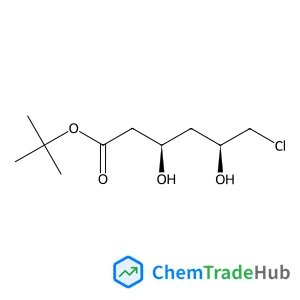
2-Methyl-2-propanyl (3R,5S)-6-chloro-3,5-dihydroxyhexanoate
CAS Number:
154026-93-4
Molecular Formula:
C10H19ClO4
![N-[(1S,2R,4S)-2-Amino-4-(dimethylcarbamoyl)cyclohexyl]-N'-(5-chloro-2-pyridinyl)ethanediamide structure](https://static.chemtradehub.com/structs/480/480452-37-7-0898.webp "N-[(1S,2R,4S)-2-Amino-4-(dimethylcarbamoyl)cyclohexyl]-N'-(5-chloro-2-pyridinyl)ethanediamide structure")
N-[(1S,2R,4S)-2-Amino-4-(dimethylcarbamoyl)cyclohexyl]-N'-(5-chloro-2-pyridinyl)ethanediamide
CAS Number:
480452-37-7
Molecular Formula:
C16H22ClN5O3
Recommended Suppliers





Disclaimer
This page provides academic journal information for reference and research purposes only. We are not affiliated with any journal publishers and do not handle publication submissions. For publication-related inquiries, please contact the respective journal publishers directly.
If you notice any inaccuracies in the information displayed, please contact us at support@chemtradehub.com. We will promptly review and address your concerns.