![3-[(3R,4R)-3-[(6-aminopyrimidin-4-yl)-methyl-amino]-4-methyl-1-piperidyl]-3-oxo-propanenitrile structure](https://static.chemtradehub.com/structs/164/1640971-60-3-83a4.webp "3-[(3R,4R)-3-[(6-aminopyrimidin-4-yl)-methyl-amino]-4-methyl-1-piperidyl]-3-oxo-propanenitrile structure")
3-[(3R,4R)-3-[(6-aminopyrimidin-4-yl)-methyl-amino]-4-methyl-1-piperidyl]-3-oxo-propanenitrile
CAS Number:
1640971-60-3
Molecular Formula:
C14H20N6O
Yuqing Shi, Juanjuan Li, Can Cui, Guanzhi Wu, Tao Cheng
To explore the dynamics of metal-to-ligand charge transfer (MLCT) excited states involving covalently bonded dimetal units, a series of quadruply bonded dimolybdenum (Mo2) complexes, namely, [Mo2]-ph, [Mo2]-naph, and [Mo2]-anth, were synthesized and characterized. Our investigations reveal a non-radiative process associated with the deactivation of the MLCT state into a low-lying dimetal-centered triplet state (3Mo2-δδ*), resulting in the populated MLCT states in these molecular systems exhibiting either extremely weak emission or being non-emissive. The influence of ligand variation on the dynamics of MLCT states was examined using femtosecond transient absorption spectroscopy, with deactivation time constants determined to be 1.9 ps for [Mo2]-ph, 6.5 ps for [Mo2]-naph, and 49 ps for [Mo2]-anth. This electron transfer behaviour follows an inverse energy-gap law, contrary to the general guideline that applies to the decay of the MLCT state back to the electronic ground state. This result offers valuable insights into understanding the photochemical and photophysical properties of covalently bonded dimetal complexes.
Yasufumi Kosaka, Koichiro Suekuni, Katsuaki Hashikuni, Yohan Bouyrie, Michihiro Ohta
DOI: 10.1039/C7CP00351J
M. Consuelo Cuquerella, Virginie Lhiaubet-Vallet, Miguel A. Miranda, Francisco Bosca
DOI: 10.1039/C6CP08485K
V. V. Medvedev, E. Gullikson, B. Padavala, J. H. Edgar, R. W. E. van de Kruijs, F. Bijkerk, D. Prendergast
DOI: 10.1039/C6CP06967C
Zhi-Xiang Zhang, Pi-Xia Wang, Fu-Quan Bai, Chui-Peng Kong, Hong-Xing Zhang
DOI: 10.1039/C7CP00262A
Volodymyr V. Maslyuk, Rafael Gutierrez
DOI: 10.1039/C7CP00059F
Zhen Liu, Vinh Son Nguyen, Jeremy Harvey, Jean-François Müller, Jozef Peeters
DOI: 10.1039/C7CP00288B
Xiao-Fei Li, Lingling Liu, Qing Yan, Qin-Kun Li, Yunxiang Wang, Mingsen Deng, Qi Qiu
DOI: 10.1039/C6CP08357A
Adree Khondker, Alexander Dhaliwal, Richard J. Alsop, Jennifer Tang, An-Chang Shi, Maikel C. Rheinstädter
DOI: 10.1039/C6CP08104E
Divya Singh, Srabanti Chaudhury
DOI: 10.1039/C6CP07895H
Niko Bärsch, René Streubel, Emine Gökce, Stephan Barcikowski, Bilal Gökce
DOI: 10.1039/C6CP07011F
2-Methylbenzene-1,4-diamine dihydrochloride (CAS: 615-45-2) should be stored in ...
(1S,4S)-2,5-Diazabicyclo[2.2.1]heptane dihydrobromide is generally considered sa...
(6-Chloropyridazin-3-YL)methanamine finds applications in the pharmaceutical ind...
2-Fluoro-3-methylphenol is primarily used in the synthesis of pharmaceuticals, p...
When handling 3-Methoxy-4-nitrobenzonitrile, it is important to wear appropriate...
When handling 1,3-Oxazolo[4,5-b]pyridine-2(3H)-thione (CAS: 211949-57-4), it is ...
4-Ethynylbenzamide (CAS: 90347-86-7) falls under various regulatory guidelines i...
3-(2-Ethylphenyl)-2-thioxo-4-imidazolidinone is primarily used as an intermediat...
(2-Fluoro-6-methoxyphenyl)acetic acid, also known as 4-fluoro-3-methoxybenzoic a...
Market trends for 2-[4-(Hydroxymethyl)phenoxy]ethanol (CAS: 102196-18-9) indicat...

Physical Chemistry Chemical Physics (PCCP) is an international journal co-owned by 19 physical chemistry and physics societies from around the world. This journal publishes original, cutting-edge research in physical chemistry, chemical physics and biophysical chemistry. To be suitable for publication in PCCP, articles must include significant innovation and/or insight into physical chemistry; this is the most important criterion that reviewers and Editors will judge against when evaluating submissions. The journal has a broad scope and welcomes contributions spanning experiment, theory, computation and data science. Topical coverage includes spectroscopy, dynamics, kinetics, statistical mechanics, thermodynamics, electrochemistry, catalysis, surface science, quantum mechanics, quantum computing and machine learning. Interdisciplinary research areas such as polymers and soft matter, materials, nanoscience, energy, surfaces/interfaces, and biophysical chemistry are welcomed if they demonstrate significant innovation and/or insight into physical chemistry. Joined experimental/theoretical studies are particularly appreciated when complementary and based on up-to-date approaches.
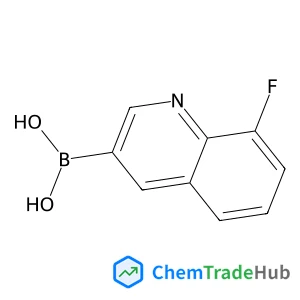
![(3R,4aR,7aS,9aR,10S,11R,13aR,13bS,15aS,15bR)-3,11-Dihydroxy-10-(hydroxymethyl)-4,4,7a,10,13a,15b-hexamethyl-1,2,3,4,4a,7,7a,8,9,9a,10,11,12,13,13a,13b,14,15,15a,15b-icosahydro-5H-naphtho[2',1':4,5]cyc
lohepta[1,2-a]naphthalen-5-one structure](https://static.chemtradehub.com/structs/538/53800-21-8-9f18.webp "(3R,4aR,7aS,9aR,10S,11R,13aR,13bS,15aS,15bR)-3,11-Dihydroxy-10-(hydroxymethyl)-4,4,7a,10,13a,15b-hexamethyl-1,2,3,4,4a,7,7a,8,9,9a,10,11,12,13,13a,13b,14,15,15a,15b-icosahydro-5H-naphtho[2',1':4,5]cyc
lohepta[1,2-a]naphthalen-5-one structure")