













The high resolution absorption spectrum of methane in the 10 800–14 000 cm−1 region: literature review, new results and perspectives
Literature Information
Publication Date
2023-11-14
DOI
10.1039/D3CP02385K
Impact Factor
3.676
Authors
A. Campargue, E. V. Karlovets, S. S. Vasilchenko, M. Turbet
View Original
Abstract
The recent development of high resolution spectrographs for exoplanetary research in the visible range makes suitable an improvement of our knowledge of the high resolution spectrum of methane. In this contribution, the weak and highly congested absorption spectrum of methane in the 10 800–14 000 cm−1 region (0.71–0.93 μm) is considered on the basis of (i) an exhaustive review of the literature over the lasts decades, (ii) the analysis of a spectrum recorded at Kitt Peak by Fourier transform spectroscopy at room temperature, (iii) a very high sensitivity spectrum recorded by cavity ring down spectroscopy near 760 nm. The line list retrieved from the Kitt Peak spectrum includes 12 800 lines between 10 802 and 13 922 cm−1. Together with the CRDS line list in the 13 060–13 300 cm−1 interval (about 2650 lines), the reported FTS dataset represents the first high resolution extensive intensity measurements of methane for wavenumbers above 11 502 cm−1. A very good agreement between our Kitt Peak line list and HITRAN list is found in the 10 800–11 502 cm−1 interval. The “quasi-continuum” absorption background underlying the congested spectrum around 11 200 cm−1 is quantitatively evaluated to about 42% of the absorption by CH4 lines. Previous laser-based investigations are critically reviewed by comparison to the FTS and CRDS experimental data retrieved in the present work. The review of the studies of the minor isotopologues (13CH4, CH3D, CH2D2, and CHD3) is also presented. Intensity comparison with band models used for planetary applications is discussed and confirms the importance of the “quasi-continuum” absorption in the methane spectrum at room temperature. The comparison to the TheoReTs line list obtained by ab initio calculations gives valuable hints for future assignments but the TheoReTS line positions are not sufficiently accurate for application to high resolution exoplanetary spectra in the region. From the various comparisons and results obtained in this work, we conclude that the high frequency absorption spectrum of methane deserves to be revisited by modern cavity-enhanced absorption techniques to fulfil needs both for future analysis of high resolution exoplanetary spectra and for theoretical analysis.
Related Literature
Determining crystal phase purity in c-BP through X-ray absorption spectroscopy
V. V. Medvedev, E. Gullikson, B. Padavala, J. H. Edgar, R. W. E. van de Kruijs, F. Bijkerk, D. Prendergast
2017-02-02
Paper
DOI: 10.1039/C6CP06967C
Dense ionization and subsequent non-homogeneous radical-mediated chemistry of femtosecond laser-induced low density plasma in aqueous solutions: synthesis of colloidal gold
Hakim Belmouaddine, Minghan Shi, Paul-Ludovic Karsenti, Ridthee Meesat, Léon Sanche, Daniel Houde
2017-02-15
Paper
DOI: 10.1039/C6CP08080D
Comparison of fast electron transfer kinetics at platinum, gold, glassy carbon and diamond electrodes using Fourier-transformed AC voltammetry and scanning electrochemical microscopy
Robert A. Lazenby, Kiran Bano, Jie Zhang, Alan M. Bond, Julie V. Macpherson, Patrick R. Unwin
2017-03-06
Paper
DOI: 10.1039/C7CP00968B
Capturing the multiscale dynamics of membrane protein complexes with all-atom, mixed-resolution, and coarse-grained models
Chenyi Liao, Xiaochuan Zhao, Jiyuan Liu, Severin T. Schneebeli, John C. Shelley, Jianing Li
2017-03-06
Paper
DOI: 10.1039/C7CP00200A
Dissipation of the excess energy of the adsorbate-thermalization via electron transfer
Pawel Strak, Konrad Sakowski, Stanislaw Krukowski
2017-03-10
Paper
DOI: 10.1039/C7CP00235A
How persistent microbubbles shield nanoparticle productivity in laser synthesis of colloids – quantification of their volume, dwell dynamics, and gas composition
Niko Bärsch, René Streubel, Emine Gökce, Stephan Barcikowski, Bilal Gökce
2017-02-07
Paper
DOI: 10.1039/C6CP07011F
Tracking areal lithium densities from neutron activation – quantitative Li determination in self-organized TiO2 nanotube anode materials for Li-ion batteries
E. Portenkirchner, G. Neri, J. Lichtinger, J. Brumbarov, R. Gernhäuser, J. Kunze-Liebhäuser
2017-03-02
Paper
DOI: 10.1039/C7CP00180K
Calculations of current densities for neutral and doubly charged persubstituted benzenes using effective core potentials
Markus Rauhalahti, Stefan Taubert, Dage Sundholm, Vincent Liégeois
2017-02-13
Paper
DOI: 10.1039/C7CP00194K
Dynamical descriptors of bioactivity: a correlation between chemical durability and ion migration in biodegradable glasses
2017-02-21
Communication
DOI: 10.1039/C6CP07203H
Mechanistic insights into biomimetic carbonic anhydrase action catalyzed by doped carbon nanotubes and graphene
Manju Verma, Parag A. Deshpande
2017-02-13
Paper
DOI: 10.1039/C7CP00556C
You might also like
Compound Q&A
How should 2-Methylbenzene-1,4-diamine dihydrochloride (CAS: 615-45-2) be stored?
2-Methylbenzene-1,4-diamine dihydrochloride (CAS: 615-45-2) should be stored in ...
615-45-22-Methylbenzene-1,4-...
Compound Q&A
Is (1S,4S)-2,5-Diazabicyclo[2.2.1]heptane dihydrobromide (CAS: 132747-20-7) safe?
(1S,4S)-2,5-Diazabicyclo[2.2.1]heptane dihydrobromide is generally considered sa...
132747-20-7(1S,4S)-2,5-Diazabic...
Compound Q&A
What industries use (6-Chloropyridazin-3-YL)methanamine (CAS: 871826-15-2)?
(6-Chloropyridazin-3-YL)methanamine finds applications in the pharmaceutical ind...
871826-15-2(6-Chloropyridazin-3...
Compound Q&A
What are the main uses of 2-Fluoro-3-methylphenol (CAS: 77772-72-6)?
2-Fluoro-3-methylphenol is primarily used in the synthesis of pharmaceuticals, p...
77772-72-62-Fluoro-3-methylphe...
Compound Q&A
What precautions should be taken when handling 3-Methoxy-4-nitrobenzonitrile (CAS: 177476-75-4)?
When handling 3-Methoxy-4-nitrobenzonitrile, it is important to wear appropriate...
177476-75-43-Methoxy-4-nitroben...
Compound Q&A
What precautions should be taken when handling 1,3-Oxazolo[4,5-b]pyridine-2(3H)-thione (CAS: 211949-57-4)?
When handling 1,3-Oxazolo[4,5-b]pyridine-2(3H)-thione (CAS: 211949-57-4), it is ...
211949-57-4[1,3]Oxazolo[4,5-b]p...
Compound Q&A
What regulatory guidelines apply to 4-Ethynylbenzamide (CAS: 90347-86-7)?
4-Ethynylbenzamide (CAS: 90347-86-7) falls under various regulatory guidelines i...
90347-86-74-Ethynylbenzamide
Compound Q&A
What are the main uses of 3-(2-Ethylphenyl)-2-thioxo-4-imidazolidinone (CAS: 186822-57-1)?
3-(2-Ethylphenyl)-2-thioxo-4-imidazolidinone is primarily used as an intermediat...
186822-57-13-(2-Ethylphenyl)-2-...
Compound Q&A
What is (2-Fluoro-6-methoxyphenyl)acetic acid (CAS: 500912-19-6)?
(2-Fluoro-6-methoxyphenyl)acetic acid, also known as 4-fluoro-3-methoxybenzoic a...
500912-19-6(2-Fluoro-6-methoxyp...
Compound Q&A
What is the market or research trend for 2-[4-(Hydroxymethyl)phenoxy]ethanol (CAS: 102196-18-9)?
Market trends for 2-[4-(Hydroxymethyl)phenoxy]ethanol (CAS: 102196-18-9) indicat...
102196-18-92-[4-(Hydroxymethyl)...
Source Journal
Physical Chemistry Chemical Physics

CiteScore:
5.5
Self-citation Rate:
10.3%
Articles per Year:
3036
Physical Chemistry Chemical Physics (PCCP) is an international journal co-owned by 19 physical chemistry and physics societies from around the world. This journal publishes original, cutting-edge research in physical chemistry, chemical physics and biophysical chemistry. To be suitable for publication in PCCP, articles must include significant innovation and/or insight into physical chemistry; this is the most important criterion that reviewers and Editors will judge against when evaluating submissions. The journal has a broad scope and welcomes contributions spanning experiment, theory, computation and data science. Topical coverage includes spectroscopy, dynamics, kinetics, statistical mechanics, thermodynamics, electrochemistry, catalysis, surface science, quantum mechanics, quantum computing and machine learning. Interdisciplinary research areas such as polymers and soft matter, materials, nanoscience, energy, surfaces/interfaces, and biophysical chemistry are welcomed if they demonstrate significant innovation and/or insight into physical chemistry. Joined experimental/theoretical studies are particularly appreciated when complementary and based on up-to-date approaches.
Recommended Compounds

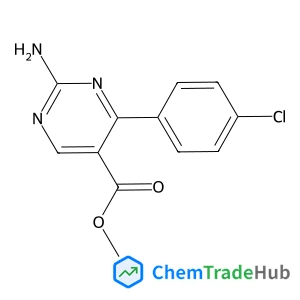
Methyl 2-amino-4-(4-chlorophenyl)-5-pyrimidinecarboxylate
CAS Number:
1133115-56-6
Molecular Formula:
C12H10ClN3O2
Recommended Suppliers





Disclaimer
This page provides academic journal information for reference and research purposes only. We are not affiliated with any journal publishers and do not handle publication submissions. For publication-related inquiries, please contact the respective journal publishers directly.
If you notice any inaccuracies in the information displayed, please contact us at support@chemtradehub.com. We will promptly review and address your concerns.