













Mechanistic insights into biomimetic carbonic anhydrase action catalyzed by doped carbon nanotubes and graphene
Literature Information
Publication Date
2017-02-13
DOI
10.1039/C7CP00556C
Impact Factor
3.676
Authors
Manju Verma, Parag A. Deshpande
View Original
Abstract
Electronic structural analyses of hydrogen terminated metal doped carbon nanotube/graphene (M-CNT/Gr, MN3-CNT/Gr, M = Ru/Rh) and ruthenium cluster decorated carbon nanotube/graphene (Ru4-CNT/Gr) were carried out for examining the biomimetic catalytic activity towards CO2 hydration reaction. The carbonic anhydrase action was followed for the reaction of CO2 with H2O resulting in a bicarbonate ion and a proton. All the catalysts were found to be active for CO2 hydration and the mechanism proved them to be biomimetic. Interconversion of CO2 to a HCO3− ion took place with five elementary steps viz. OH− formation by H2O dissociation, linear CO2 complexation, CO2 bending by nucleophilic attack of an OH− ion over CO2, HCO3− ion formation by intramolecular proton migration and HCO3− ion displacement by H2O addition. Free energy landscapes over the catalysts were developed for CO2 hydration reaction. The activation energies of H2O dissociation and CO2 bending were observed to be substantially smaller over Ru4-CNT when compared to those over the other catalysts. Ru4-CNT was found to be the best catalyst for CO2 hydration with the rate limiting step being HCO3− ion formation.
Related Literature
Energy storage properties of a two-dimensional TiB4 monolayer
Erdong Wu, Shi Liu
2019-05-25
Paper
DOI: 10.1039/C9CP01864F
Structure and dynamics of gold nanoparticles decorated with chitosan–gentamicin conjugates: ReaxFF molecular dynamics simulations to disclose drug delivery
Susanna Monti, Jiya Jose, Athira Sahajan, Nandakumar Kalarikkal, Sabu Thomas
2019-05-30
Paper
DOI: 10.1039/C9CP02357G
Lattice defect-formulated ferromagnetism and UV photo-response in pure and Nd, Sm substituted ZnO thin films
Navdeep Goyal, R. K. Kotnala
2019-05-16
Paper
DOI: 10.1039/C9CP02285F
Nanoscale PDA disassembly in ionic liquids: structure–property relationships underpinning redox tuning
Marianna Ambrico, Paola Manini, Paolo F. Ambrico, Teresa Ligonzo, Giuseppe Casamassima, Paola Franchi, Luca Valgimigli, Andrea Mezzetta, Cinzia Chiappe, Marco d'Ischia
2019-05-09
Paper
DOI: 10.1039/C9CP01545K
Study on the icosahedral fullerene structure with ultra-light and pressure resistance character
Yifan Zhao, Yin Lian, Huifeng Tan
2019-05-07
Paper
DOI: 10.1039/C8CP07787H
Correction: Sub-Doppler infrared spectroscopy of resonance-stabilized hydrocarbon intermediates: ν3/ν4 CH stretch modes and CH2 internal rotor dynamics of benzyl radical
A. Kortyna, A. J. Samin, T. A. Miller
2019-06-06
Correction
DOI: 10.1039/C9CP90148E
4He/3He separation using oxygen-functionalized nanoporous graphene
Maryam S. Motallebiour, Javad Karimi-Sabet, Ali Maghari
2019-05-21
Paper
DOI: 10.1039/C9CP01364D
Vibrational sum-frequency generation spectroscopy of electrode surfaces: studying the mechanisms of sustainable fuel generation and utilisation
Adrian M. Gardner, Khezar H. Saeed, Alexander J. Cowan
2019-05-23
Perspective
DOI: 10.1039/C9CP02225B
Structural and functional role of anions in electrochemical water oxidation probed by arsenate incorporation into cobalt-oxide materials
Javier Villalobos, Katharina Klingan, Petko Chernev, Paul Kubella, Roberto Urcuyo, Chiara Pasquini, Rodney D. L. Smith, Mavis L. Montero, Holger Dau
2019-05-10
Paper
DOI: 10.1039/C9CP01754B
You might also like
Compound Q&A
What are the main uses of 1H-Indazole-6-carbonitrile (CAS: 141290-59-7)?
1H-Indazole-6-carbonitrile finds applications in pharmaceuticals, where it serve...
141290-59-71H-Indazole-6-carbon...
Compound Q&A
How should waste containing Dioctyl (2E)-2-butenedioate (CAS: 2997-85-5) be handled?
Waste containing Dioctyl (2E)-2-butenedioate (CAS: 2997-85-5) should be collecte...
2997-85-5Dioctyl (2E)-2-buten...
Compound Q&A
What industries use Sodium [(1,2-benzoxazol-3-ylmethyl)sulfonyl]azanide (CAS: 68291-98-5)?
Sodium [(1,2-benzoxazol-3-ylmethyl)sulfonyl]azanide is primarily used in pharmac...
68291-98-5Sodium [(1,2-benzoxa...
Compound Q&A
Are there alternatives to Dimethyl 4-(4,4,5,5-tetramethyl-1,3,2-dioxaborolan-2-yl)-2,6-pyridinedicarboxylate (CAS: 741709-66-0) in synthesis?
Dimethyl 4-(4,4,5,5-tetramethyl-1,3,2-dioxaborolan-2-yl)-2,6-pyridinedicarboxyla...
741709-66-0Dimethyl 4-(4,4,5,5-...
Compound Q&A
How should waste containing 2-Fluoro-6-hydrazinopyridine (CAS: 80714-39-2) be handled?
Waste containing 2-Fluoro-6-hydrazinopyridine (CAS: 80714-39-2) should be manage...
80714-39-22-Fluoro-6-hydrazino...
Compound Q&A
What is 6-Formyl-2-pyridinecarboxylic acid (CAS: 499214-11-8)?
6-Formyl-2-pyridinecarboxylic acid is an organic compound with the molecular for...
499214-11-86-Formyl-2-pyridinec...
Compound Q&A
What is the market or research trend for 3-(3,4-dimethoxyphenyl)-2,5-dimethyl-N-(2-morpholin-4-ylethyl)pyrazolo[1,5-a]pyrimidin-7-amine (CAS: 900874-91-1)?
Research trends for this compound indicate a focus on its potential applications...
900874-91-13-(3,4-dimethoxyphen...
Compound Q&A
How is 9H-Tribenzo[b,d,f]azepine (CAS: 29875-73-8) typically synthesized?
9H-Tribenzo[b,d,f]azepine is typically synthesized via a multi-step process invo...
29875-73-89H-Tribenzo[b,d,f]az...
Compound Q&A
How is 1-Cyclopropyl-7-ethoxy-6-fluoro-8-methoxy-4-oxo-1,4-dihydro-3-quinolinecarboxylic acid (CAS: 1797982-51-4) typically synthesized?
1-Cyclopropyl-7-ethoxy-6-fluoro-8-methoxy-4-oxo-1,4-dihydro-3-quinolinecarboxyli...
1797982-51-41-Cyclopropyl-7-etho...
Compound Q&A
How should waste containing Methyl 3-oxo-1,2,3,4-tetrahydro-6-quinoxalinecarboxylate (CAS: 671820-52-3) be handled?
Waste containing Methyl 3-oxo-1,2,3,4-tetrahydro-6-quinoxalinecarboxylate (CAS: ...
671820-52-3Methyl 3-oxo-1,2,3,4...
Source Journal
Physical Chemistry Chemical Physics

CiteScore:
5.5
Self-citation Rate:
10.3%
Articles per Year:
3036
Physical Chemistry Chemical Physics (PCCP) is an international journal co-owned by 19 physical chemistry and physics societies from around the world. This journal publishes original, cutting-edge research in physical chemistry, chemical physics and biophysical chemistry. To be suitable for publication in PCCP, articles must include significant innovation and/or insight into physical chemistry; this is the most important criterion that reviewers and Editors will judge against when evaluating submissions. The journal has a broad scope and welcomes contributions spanning experiment, theory, computation and data science. Topical coverage includes spectroscopy, dynamics, kinetics, statistical mechanics, thermodynamics, electrochemistry, catalysis, surface science, quantum mechanics, quantum computing and machine learning. Interdisciplinary research areas such as polymers and soft matter, materials, nanoscience, energy, surfaces/interfaces, and biophysical chemistry are welcomed if they demonstrate significant innovation and/or insight into physical chemistry. Joined experimental/theoretical studies are particularly appreciated when complementary and based on up-to-date approaches.
Recommended Compounds
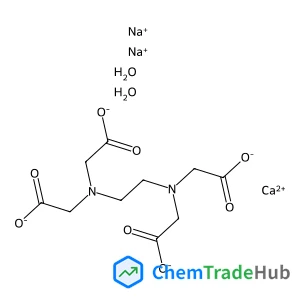
EthylenediaminetetraaceticacidcalciumDisodiumsalthydrate
CAS Number:
23411-34-9
Molecular Formula:
C10H16CaN2Na2O10



Recommended Suppliers





Disclaimer
This page provides academic journal information for reference and research purposes only. We are not affiliated with any journal publishers and do not handle publication submissions. For publication-related inquiries, please contact the respective journal publishers directly.
If you notice any inaccuracies in the information displayed, please contact us at support@chemtradehub.com. We will promptly review and address your concerns.