













Rainbows and glories in the angular scattering of the state-to-state F + H2 reaction at Etrans = 0.04088 eV
Literature Information
Publication Date
2011-06-22
DOI
10.1039/C1CP21044K
Impact Factor
3.676
Authors
Chengkui Xiahou, J. N. L. Connor, Dong H. Zhang
View Original
Abstract
State-of-the-art differential cross sections (DCSs) have been reported by Wang et al. [Proc. Nat. Acad. Sci. (U.S.), 2008, 105, 6227] for the state-to-state F + H2 → FH + H reaction using fully quantum-state-selected crossed molecular beams. We theoretically analyze the angular scattering of this reaction, in order to quantitatively understand the physical content of structure in the DCSs. Three transitions are studied, vi = 0, ji = 0, mi = 0 → vf = 3, jf = 0, 1, 2, mf = 0 at a translational energy of 0.04088 eV, where v, j, m are the vibrational, rotational and helicity quantum numbers respectively for the initial and final states. The input to our analyses consists of accurate quantum scattering (S) matrix elements computed for the Fu-Xu-Zhang potential energy surface, as used by Wang et al. in a computational simulation of their experimental DCSs. We prove that the pronounced peak at forward angles observed in the experimental and simulated DCSs for all three transitions is a glory. At larger angles, it is demonstrated that the 000 → 300 and 000 → 310 DCSs both possess a broad farside rainbow, which is accompanied by diffraction oscillations. We confirm the conjecture of Wang et al. that these diffraction oscillations arise from nearside–farside (NF) interference. We find that the reaction is N dominant for all three transitions. The theoretical techniques used to analyze the angular scattering include uniform semiclassical theories of glory and of rainbow scattering. We also make the first application of a semiclassical formula that is uniform for both glory + rainbow scattering. In addition, structure in the DCSs is analyzed using NF theory and local angular momentum theory, in both cases with three resummations of the partial wave series for the scattering amplitude. We make the first explicit application of the Thiele rational interpolation formula to extract the position and residue of the leading Regge pole from a set of S matrix elements, thereby making contact with complex angular momentum theories of DCSs, which interpret the angular scattering in terms of Regge resonances. Our calculations complement the exit-valley vibrationally-adiabatic analysis of Wang et al.
Related Literature
Photodesorption of water from rutile(110): ab initio calculation of five-dimensional potential energy surfaces of ground and excited electronic states and wave packet studies
Jan Mitschker, Thorsten Klüner
2014-11-14
Paper
DOI: 10.1039/C4CP04593A
Dye chemistry with time-dependent density functional theory
Adèle D. Laurent
2014-01-30
Perspective
DOI: 10.1039/C3CP55336A
Simultaneous SERS and surface-enhanced fluorescence from dye-embedded metal core–shell nanoparticles
Yan Zhou, Peng Zhang
2014-03-28
Communication
DOI: 10.1039/C4CP01199F
Electron small polarons and their transport in bismuth vanadate: a first principles study
Kyoung E. Kweon, Gyeong S. Hwang, Jinhan Kim, Sungjin Kim, SeongMin Kim
2014-11-03
Paper
DOI: 10.1039/C4CP03666B
Controlling the window size in mesoporous SBA-16
L. Qin, Y. Sakamoto, M. W. Anderson
2014-05-19
Paper
DOI: 10.1039/C4CP00343H
Designing patchy particles for optimum interfacial activity
Hossein Rezvantalab
2014-02-11
Paper
DOI: 10.1039/C3CP55512G
Atomic electron affinities and the role of symmetry between electron addition and subtraction in a corrected Koopmans approach
F. De Proft, P. Geerlings, D. J. Tozer
2014-01-02
Paper
DOI: 10.1039/C3CP54528H
Quantum dot-sensitized solar cells based on directly adsorbed zinc copper indium sulfide colloids
Néstor Guijarro, Elena Guillén, Teresa Lana-Villarreal, Roberto Gómez
2014-03-26
Paper
DOI: 10.1039/C4CP00294F
Theoretical study on molecular design and optical properties of organic sensitizers
Santhanamoorthi Nachimuthu, Kuan-Hwa Lai, Fadlilatul Taufany, Jyh-Chiang Jiang
2014-06-03
Paper
DOI: 10.1039/C4CP01653J
You might also like
Compound Q&A
What are the main uses of 1H-Indazole-6-carbonitrile (CAS: 141290-59-7)?
1H-Indazole-6-carbonitrile finds applications in pharmaceuticals, where it serve...
141290-59-71H-Indazole-6-carbon...
Compound Q&A
How should waste containing Dioctyl (2E)-2-butenedioate (CAS: 2997-85-5) be handled?
Waste containing Dioctyl (2E)-2-butenedioate (CAS: 2997-85-5) should be collecte...
2997-85-5Dioctyl (2E)-2-buten...
Compound Q&A
What industries use Sodium [(1,2-benzoxazol-3-ylmethyl)sulfonyl]azanide (CAS: 68291-98-5)?
Sodium [(1,2-benzoxazol-3-ylmethyl)sulfonyl]azanide is primarily used in pharmac...
68291-98-5Sodium [(1,2-benzoxa...
Compound Q&A
Are there alternatives to Dimethyl 4-(4,4,5,5-tetramethyl-1,3,2-dioxaborolan-2-yl)-2,6-pyridinedicarboxylate (CAS: 741709-66-0) in synthesis?
Dimethyl 4-(4,4,5,5-tetramethyl-1,3,2-dioxaborolan-2-yl)-2,6-pyridinedicarboxyla...
741709-66-0Dimethyl 4-(4,4,5,5-...
Compound Q&A
How should waste containing 2-Fluoro-6-hydrazinopyridine (CAS: 80714-39-2) be handled?
Waste containing 2-Fluoro-6-hydrazinopyridine (CAS: 80714-39-2) should be manage...
80714-39-22-Fluoro-6-hydrazino...
Compound Q&A
What is 6-Formyl-2-pyridinecarboxylic acid (CAS: 499214-11-8)?
6-Formyl-2-pyridinecarboxylic acid is an organic compound with the molecular for...
499214-11-86-Formyl-2-pyridinec...
Compound Q&A
What is the market or research trend for 3-(3,4-dimethoxyphenyl)-2,5-dimethyl-N-(2-morpholin-4-ylethyl)pyrazolo[1,5-a]pyrimidin-7-amine (CAS: 900874-91-1)?
Research trends for this compound indicate a focus on its potential applications...
900874-91-13-(3,4-dimethoxyphen...
Compound Q&A
How is 9H-Tribenzo[b,d,f]azepine (CAS: 29875-73-8) typically synthesized?
9H-Tribenzo[b,d,f]azepine is typically synthesized via a multi-step process invo...
29875-73-89H-Tribenzo[b,d,f]az...
Compound Q&A
How is 1-Cyclopropyl-7-ethoxy-6-fluoro-8-methoxy-4-oxo-1,4-dihydro-3-quinolinecarboxylic acid (CAS: 1797982-51-4) typically synthesized?
1-Cyclopropyl-7-ethoxy-6-fluoro-8-methoxy-4-oxo-1,4-dihydro-3-quinolinecarboxyli...
1797982-51-41-Cyclopropyl-7-etho...
Compound Q&A
How should waste containing Methyl 3-oxo-1,2,3,4-tetrahydro-6-quinoxalinecarboxylate (CAS: 671820-52-3) be handled?
Waste containing Methyl 3-oxo-1,2,3,4-tetrahydro-6-quinoxalinecarboxylate (CAS: ...
671820-52-3Methyl 3-oxo-1,2,3,4...
Source Journal
Physical Chemistry Chemical Physics

CiteScore:
5.5
Self-citation Rate:
10.3%
Articles per Year:
3036
Physical Chemistry Chemical Physics (PCCP) is an international journal co-owned by 19 physical chemistry and physics societies from around the world. This journal publishes original, cutting-edge research in physical chemistry, chemical physics and biophysical chemistry. To be suitable for publication in PCCP, articles must include significant innovation and/or insight into physical chemistry; this is the most important criterion that reviewers and Editors will judge against when evaluating submissions. The journal has a broad scope and welcomes contributions spanning experiment, theory, computation and data science. Topical coverage includes spectroscopy, dynamics, kinetics, statistical mechanics, thermodynamics, electrochemistry, catalysis, surface science, quantum mechanics, quantum computing and machine learning. Interdisciplinary research areas such as polymers and soft matter, materials, nanoscience, energy, surfaces/interfaces, and biophysical chemistry are welcomed if they demonstrate significant innovation and/or insight into physical chemistry. Joined experimental/theoretical studies are particularly appreciated when complementary and based on up-to-date approaches.
Recommended Compounds
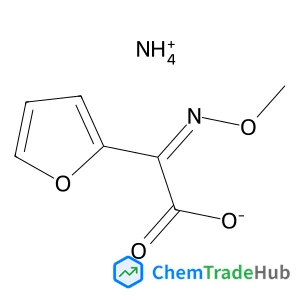
Ammonium (Z)-2-(furan-2-yl)-2-(methoxyimino)acetate
CAS Number:
97148-39-5
Molecular Formula:
C7H10N2O4

Trichloro(3,3,4,4,5,5,6,6,7,7,8,8,8-tridecafluorooctyl)silane
CAS Number:
78560-45-9
Molecular Formula:
C8H4Cl3F13Si
Recommended Suppliers




Disclaimer
This page provides academic journal information for reference and research purposes only. We are not affiliated with any journal publishers and do not handle publication submissions. For publication-related inquiries, please contact the respective journal publishers directly.
If you notice any inaccuracies in the information displayed, please contact us at support@chemtradehub.com. We will promptly review and address your concerns.