



Tunable cyclic operation of dissipative molecular switches based on anion recognition
Literature Information
Publication Date
2023-12-29
DOI
10.1039/D3CC05912J
Impact Factor
6.222
Authors
Xin Zhang, Lijun Mao, Rongjing He, Yanting Shi, Lingyi Li, Shuo Li, Chenghao Zhu, Yanjing Zhang, Da Ma
View Original
Abstract
Artificial dissipative molecular switches based on anion recognition are of great importance to simulate biological functions and construct smart materials. Five activated carboxylic acids are used as chemical fuels for dissipative molecular switches, which consist of an imidazolium macrocyclic host and a carboxylate anionic guest. By choosing different types of chemical fuels and using varied fuel concentrations, the rates of cyclic operations are tunable. The operation is capable of undergoing at least three cycles.
Recommended Journals

Heteroatom Chemistry

Journal of Chemical Sciences

Medicinal Chemistry Research

Chinese Journal of Chemistry

Critical Reviews in Solid State and Materials Sciences

Bioorganic & Medicinal Chemistry

Herald of the Russian Academy of Sciences

Biocatalysis and Biotransformation

NDT & E International

Atomization and Sprays
Related Literature
Mechanistic insight into light-driven molecular rotors: a conformational search in chiral overcrowded alkenes by a pseudo-random approach
Guillermo Pérez-Hernández, Leticia González
2010-08-16
Paper
DOI: 10.1039/C0CP00324G
Photochemistry of carbon monoxide and methanol in water and nitric acid hydrate ices: A NEXAFS study
C. Laffon, J. Lasne, F. Bournel, K. Schulte, S. Lacombe, Ph. Parent
2010-07-26
Paper
DOI: 10.1039/C0CP00229A
Spin-dynamics of the spin-correlated radical pair in photosystem I. Pulsed time-resolved EPR at high magnetic field
O. G. Poluektov, S. V. Paschenko, L. M. Utschig
2009-06-23
Paper
DOI: 10.1039/B906521K
Link between the hydration enthalpy of lysozyme and the density of its hydration water: Electrostriction
Irena Danielewicz-Ferchmin, A. Ryszard Ferchmin
2010-07-30
Paper
DOI: 10.1039/C002897E
Dynamic nuclear polarization coupling factors calculated from molecular dynamics simulations of a nitroxide radical in water
Deniz Sezer, M. J. Prandolini, Thomas F. Prisner
2009-07-06
Paper
DOI: 10.1039/B905709A
Nitrogen oxide reaction with six-atom silver clusters supported on LTA zeolite
Amgalanbaatar Baldansuren, Rüdiger-A. Eichel, Emil Roduner
2009-06-23
Paper
DOI: 10.1039/B903870A
Structure and bonding of [VIVO(acac)2] on the surface of AlF3 as studied by pulsed electron nuclear double resonance and hyperfine sublevel correlation spectroscopy
Vijayasarathi Nagarajan, Barbara Müller, Oksana Storcheva, Klaus Köhler, Andreas Pöppl
2009-06-10
Paper
DOI: 10.1039/B903826B
Dynamic mixing processes in spin triads of “breathing crystals” Cu(hfac)2LR: a multifrequency EPR study at 34, 122 and 244 GHz
Matvey V. Fedin, Galina V. Romanenko, Victor I. Ovcharenko, Renad Z. Sagdeev, Gudrun Klihm, Edward Reijerse, Wolfgang Lubitz, Elena G. Bagryanskaya
2009-07-08
Paper
DOI: 10.1039/B906007C
Tuning structural forces between silica surfaces by temperature-induced micellization of responsive block copolymers
Esben Thormann, Per M. Claesson, Ole G. Mouritsen
2010-07-12
Paper
DOI: 10.1039/C004413J
Structure of the hydrated Ca2+ and Cl−: Combined X-ray absorption measurements and QM/MM MD simulations study
Anan Tongraar
2010-07-29
Paper
DOI: 10.1039/C0CP00136H
You might also like
Compound Q&A
What precautions should be taken when handling 2-Chloro-1,2-bis(4-methylphenyl)ethanone (CAS: 71193-32-3)?
When handling 2-Chloro-1,2-bis(4-methylphenyl)ethanone (CAS: 71193-32-3), it is ...
71193-32-32-Chloro-1,2-bis(4-m...
Compound Q&A
What industries use 4-Ethoxy-3-(5-methyl-4-oxo-7-propyl-1,4-dihydroimidazo[5,1-f][1,2,4]triazin-2-yl)benzenesulfonyl chloride (CAS: 224789-26-8)?
4-Ethoxy-3-(5-methyl-4-oxo-7-propyl-1,4-dihydroimidazo[5,1-f][1,2,4]triazin-2-yl...
224789-26-84-Ethoxy-3-(5-methyl...
Compound Q&A
How should Methyl 3-Oxo-4-Androsten-17-Carboxylate (CAS: 2681-55-2) be stored?
Methyl 3-Oxo-4-Androsten-17-Carboxylate (CAS: 2681-55-2) should be stored in a c...
2681-55-2Methyl 3-Oxo-4-Andro...
Compound Q&A
What are the main uses of (R)-3-Amino-4-(3-hexylphenylamino)-4-oxobutylphosphonic acid (CAS: 909725-61-7)?
(R)-3-Amino-4-(3-hexylphenylamino)-4-oxobutylphosphonic acid is primarily used i...
909725-61-7(R)-3-Amino-4-(3-hex...
Compound Q&A
What regulatory guidelines apply to 2-Methyl-2-propanyl 3-amino-3-carbamoyl-1-azetidinecarboxylate (CAS: 1254120-14-3)?
2-Methyl-2-propanyl 3-amino-3-carbamoyl-1-azetidinecarboxylate (CAS: 1254120-14-...
1254120-14-32-Methyl-2-propanyl ...
Compound Q&A
Are there alternatives to (E)-4-(tert-Butoxy)-4-oxobut-2-enoic acid (CAS: 135355-96-3) in synthesis?
There are alternative reagents that can be used in synthesis instead of (E)-4-(t...
135355-96-3(E)-4-(tert-Butoxy)-...
Compound Q&A
What are the physical and chemical properties of [2-(3-Chlorophenyl)-1,3-thiazol-4-yl]methanol (CAS: 121202-20-8)?
[2-(3-Chlorophenyl)-1,3-thiazol-4-yl]methanol (CAS: 121202-20-8) is a crystallin...
121202-20-8[2-(3-Chlorophenyl)-...
Compound Q&A
What is the market or research trend for Methyl (2S)-[(4S)-2,2-dimethyl-1,3-dioxolan-4-yl]{[(4-methylphenyl)sulfonyl]oxy}acetate (CAS: 166249-17-8)?
The market and research trends for Methyl (2S)-[(4S)-2,2-dimethyl-1,3-dioxolan-4...
166249-17-8Methyl (2S)-[(4S)-2,...
Compound Q&A
What is the market or research trend for 1-Bromo-2-isocyanatoethane (CAS: 42865-19-0)?
The market for 1-Bromo-2-isocyanatoethane (CAS: 42865-19-0) is driven by its use...
42865-19-01-Bromo-2-isocyanato...
Compound Q&A
What are the main uses of 4-Nitro-D-phenylalanine hydrochloride (CAS: 147065-06-3)?
4-Nitro-D-phenylalanine hydrochloride (CAS: 147065-06-3) is primarily used in re...
147065-06-34-Nitro-D-phenylalan...
Source Journal
Chemical Communications

CiteScore:
8.6
Self-citation Rate:
4.7%
Articles per Year:
2458
ChemComm publishes urgent research which is of outstanding significance and interest to experts in the field, while also appealing to the journal’s broad chemistry readership. Our communication format is ideally suited to short, urgent studies that are of such importance that they require accelerated publication. Our scope covers all topics in chemistry, and research at the interface of chemistry and other disciplines (such as materials science, nanoscience, physics, engineering and biology) where there is a significant novelty in the chemistry aspects. Major topic areas covered include: Analytical Chemistry Catalysis Chemical Biology and medicinal chemistry Computational Chemistry and Machine Learning Energy and sustainable chemistry Environmental Chemistry Green Chemistry Inorganic Chemistry Materials Chemistry Nanoscience Organic Chemistry Physical Chemistry Polymer Chemistry Supramolecular Chemistry
Recommended Compounds
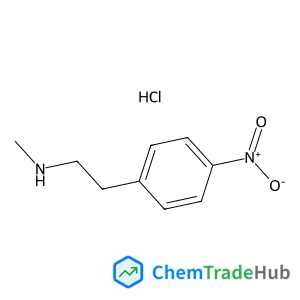
N-Methyl-2-(4-nitrophenyl)ethanamine hydrochloride (1:1)
CAS Number:
166943-39-1
Molecular Formula:
C9H13ClN2O2

Recommended Suppliers






Disclaimer
This page provides academic journal information for reference and research purposes only. We are not affiliated with any journal publishers and do not handle publication submissions. For publication-related inquiries, please contact the respective journal publishers directly.
If you notice any inaccuracies in the information displayed, please contact us at support@chemtradehub.com. We will promptly review and address your concerns.