


Excited state iminium form can explain the unexpected solvatochromic behavior of symmetric 1,5- and 1,8-diaminonaphthalenes
Literature Information
Publication Date
2023-12-23
DOI
10.1039/D3CC05643K
Impact Factor
6.222
Authors
Erika Kopcsik, Zoltán Mucsi, Bence Kontra, László Vanyorek, Rajmond Gál, Miklós Nagy
View Original
Abstract
A new model, based on the presence of the excited state iminium ion (Ar = NH2+), is proposed to interpret the solvatochromic behavior of symmetric 1,5- and 1,8-diaminonaphtahelenes (DANs) in aprotic to protic media. The importance of using explicit solvent models during DFT calculations in protic solvents to find the proper excited structure for symmetric molecules is also highlighted.
Recommended Journals

Journal of Chemical Sciences

Biocatalysis and Biotransformation

Herald of the Russian Academy of Sciences

Medicinal Chemistry Research

Main Group Chemistry

Colloid Journal

Journal of the Indian Institute of Science

Electroanalysis

Critical Reviews in Solid State and Materials Sciences

Acta Metallurgica Sinica-English Letters
Related Literature
Synthesis and biological evaluation of a monocyclic Fc-binding antibody-recruiting molecule for cancer immunotherapy
Koichi Sasaki, Kyohei Muguruma, Rento Osawa, Akane Fukuda, Atsuhiko Taniguchi, Yoshio Hayashi
2021-01-21
Research Article
DOI: 10.1039/D0MD00337A
A mimotope attached to an ITIM–SHP-1 interaction inhibitory peptide boosts immune response and efficacy
Koushik Roy, Syamal Roy, Siddhartha Roy
2021-05-19
Research Article
DOI: 10.1039/D1MD00099C
Mycobacterial drug discovery
Katherine A. Abrahams, Gurdyal S. Besra
2020-11-06
Review Article
DOI: 10.1039/D0MD00261E
Structural modifications that increase gut restriction of bile acid derivatives
Ali Nakhi, Henry L. Wong, Peter I. Dosa
2021-02-12
Research Article
DOI: 10.1039/D0MD00425A
Fragment-based drug discovery: opportunities for organic synthesis
Jeffrey D. St. Denis, Richard J. Hall, Christopher W. Murray, Tom D. Heightman, David C. Rees
2020-12-24
Review Article
DOI: 10.1039/D0MD00375A
Synthesis and evaluation of pyridine-derived bedaquiline analogues containing modifications at the A-ring subunit
Lisa Barbaro, Gayathri Nagalingam, James A. Triccas, Jonathan B. Baell, Daniel L. Priebbenow
2021-05-07
Research Article
DOI: 10.1039/D1MD00063B
Optimization of brain-penetrant picolinamide derived leucine-rich repeat kinase 2 (LRRK2) inhibitors
Anmol Gulati, Charles S. Yeung, Blair Lapointe, Solomon D. Kattar, Hakan Gunaydin, Jack D. Scott, Kaleen K. Childers, Joey L. Methot, Vladimir Simov, Ravi Kurukulasuriya, Barbara Pio, Greg J. Morriello, Ping Liu, Haiqun Tang, Santhosh Neelamkavil, Harold B. Wood, Vanessa L. Rada, Michael J. Ardolino, Xin Cindy Yan, Rachel Palte, Karin Otte, Robert Faltus, Janice Woodhouse, Laxminarayan G. Hegde, Paul Ciaccio, Ellen C. Minnihan, Erin F. DiMauro, Matthew J. Fell, Peter H. Fuller, J. Michael Ellis
2021-06-04
Research Article
DOI: 10.1039/D1MD00097G
Benzimidazole-1,2,3-triazole hybrid molecules: synthesis and study of their interaction with G-quadruplex DNA
Ushasri Chilakamarthi, Namita S. Mahadik, Bhamidipati Keerti, Santosh N. Mokale, Narayana Nagesh
2021-02-22
Research Article
DOI: 10.1039/D0MD00414F
Retraction: MicroRNA-451 blockade promotes osteoblastic differentiation and skeletal anabolic effects by promoting YWHAZ-mediated RUNX2 protein stabilization
2021-01-26
Retraction
DOI: 10.1039/D1MD90001C
You might also like
Compound Q&A
How should waste containing 6-Chloro-5-(2'-hydroxy-3'-methoxy-4-biphenylyl)-3-(3-methoxyphenyl)-1H-pyrrolo[3,2-d]pyrimidine-2,4(3H,5H)-dione (CAS: 1346607-05-3) be handled?
Waste containing 6-Chloro-5-(2'-hydroxy-3'-methoxy-4-biphenylyl)-3-(3-methoxyphe...
1346607-05-36-Chloro-5-(2'-hydro...
Compound Q&A
What are the main uses of (3alpha,5alpha)-3-Hydroxypregnane-11,20-dione (CAS: 23930-19-0)?
(3alpha,5alpha)-3-Hydroxypregnane-11,20-dione is primarily used in the pharmaceu...
23930-19-0(3alpha,5alpha)-3-Hy...
Compound Q&A
What is the market or research trend for 4-Amino-6-chloro-2-pyridinecarboxylic acid (CAS: 546141-56-4)?
The market for 4-Amino-6-chloro-2-pyridinecarboxylic acid (CAS: 546141-56-4) is ...
546141-56-44-Amino-6-chloro-2-p...
Compound Q&A
Are there alternatives to (2-Benzoylethyl)trimethylammonium chloride (CAS: 24472-88-6) in synthesis?
Alternatives to (2-Benzoylethyl)trimethylammonium chloride (CAS: 24472-88-6) in ...
24472-88-6(2-Benzoylethyl)trim...
Compound Q&A
Is N-[4-Nitro-3-(trifluoromethyl)phenyl]acetamide (CAS: 393-12-4) safe?
N-[4-Nitro-3-(trifluoromethyl)phenyl]acetamide (CAS: 393-12-4) is generally safe...
393-12-4N-[4-Nitro-3-(triflu...
Compound Q&A
Are there alternatives to [(4R,5R,6S)-5-hydroxy-10-imino-3,7-dioxa-1,9-diazatricyclo[6.4.0.02,6]dodeca-8,11-dien-4-yl]methyl dihydrogen phosphate (CAS: 39679-56-6) in synthesis?
Alternative reagents such as other phosphates or similar functional groups can b...
39679-56-6[(4R,5R,6S)-5-hydrox...
Compound Q&A
Are there alternatives to N,N'-Bis(3-aminopropyl)-1,3-propanediamine (CAS: 4605-14-5) in synthesis?
There are alternatives to N,N'-Bis(3-aminopropyl)-1,3-propanediamine (CAS: 4605-...
4605-14-5N,N'-Bis(3-aminoprop...
Compound Q&A
What precautions should be taken when handling Aluminium trihexadecanoate (CAS: 555-35-1)?
When handling Aluminium trihexadecanoate, it is important to use appropriate per...
555-35-1Aluminium trihexadec...
Compound Q&A
What is (1,1-Dioxido-3-oxo-1,2-benzothiazol-2(3H)-yl)acetic acid (CAS: 52188-11-1)?
(1,1-Dioxido-3-oxo-1,2-benzothiazol-2(3H)-yl)acetic acid is a chemical compound ...
52188-11-1(1,1-Dioxido-3-oxo-1...
Compound Q&A
Are there alternatives to 5,5-dimethyloxolan-2-one (CAS: 3123-97-5) in synthesis?
Several alternatives to 5,5-dimethyloxolan-2-one (CAS: 3123-97-5) can be used in...
3123-97-55,5-dimethyloxolan-2...
Source Journal
Chemical Communications

CiteScore:
8.6
Self-citation Rate:
4.7%
Articles per Year:
2458
ChemComm publishes urgent research which is of outstanding significance and interest to experts in the field, while also appealing to the journal’s broad chemistry readership. Our communication format is ideally suited to short, urgent studies that are of such importance that they require accelerated publication. Our scope covers all topics in chemistry, and research at the interface of chemistry and other disciplines (such as materials science, nanoscience, physics, engineering and biology) where there is a significant novelty in the chemistry aspects. Major topic areas covered include: Analytical Chemistry Catalysis Chemical Biology and medicinal chemistry Computational Chemistry and Machine Learning Energy and sustainable chemistry Environmental Chemistry Green Chemistry Inorganic Chemistry Materials Chemistry Nanoscience Organic Chemistry Physical Chemistry Polymer Chemistry Supramolecular Chemistry
Recommended Compounds
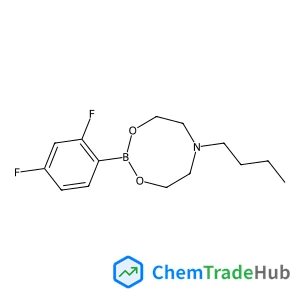
6-Butyl-2-(2,4-difluorophenyl)-1,3,6,2-dioxazaborocane
CAS Number:
1190988-98-7
Molecular Formula:
C14H20BF2NO2
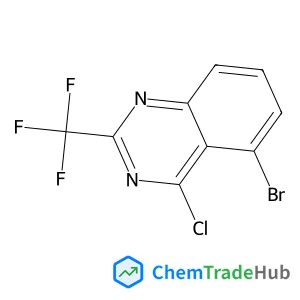
5-Bromo-4-chloro-2-(trifluoromethyl)quinazoline
CAS Number:
2089311-03-3
Molecular Formula:
C9H3BrClF3N2
Recommended Suppliers





Disclaimer
This page provides academic journal information for reference and research purposes only. We are not affiliated with any journal publishers and do not handle publication submissions. For publication-related inquiries, please contact the respective journal publishers directly.
If you notice any inaccuracies in the information displayed, please contact us at support@chemtradehub.com. We will promptly review and address your concerns.