












Photocatalytic C(sp3)–H thiolation by a double SH2 strategy using thiosulfonates
Literature Information
Publication Date
2023-11-23
DOI
10.1039/D3CC05149H
Impact Factor
6.222
Authors
Nobukazu Taniguchi, Mamoru Hyodo, Lin-Wei Pan
View Original
Abstract
Site-selective C(sp3)–H thiolation using thiosulfonates has been achieved using the decatungstate anion as a photocatalyst. Using the protocol, a variety of thiolated compounds were synthesized in good yields. The transformation consists of a cascade of double SH2 reactions, HAT and ArS group transfer, and PCET (proton-coupled electron transfer) of the leaving arylsulfonyl radical to arylsulfinic acid thus allowing the catalyst, W10O324−, to be recovered.
Related Literature
A review on photobioreactor design and modelling for microalgae production
Jack Legrand, Arnaud Artu, Jérémy Pruvost
2021-04-20
Review Article
DOI: 10.1039/D0RE00450B
Effect of metal nitrate on mechanochemical nitration of toluene
Ashvin Vasudevan, Mirko Schoenitz, Edward L. Dreizin
2021-09-13
Paper
DOI: 10.1039/D1RE00307K
Towards controlled bubble nucleation in microreactors for enhanced mass transport
Jeffery A. Wood, Stefan Schlautmann, Han J. G. E. Gardeniers, Séverine Le Gac
2021-07-16
Paper
DOI: 10.1039/D1RE00092F
Grafting of polymer brushes from nanopore surface via atom transfer radical polymerization with activators regenerated by electron transfer
Liang Cao, Michal Kruk
2009-12-22
Paper
DOI: 10.1039/B9PY00282K
Hydrodeoxygenation of sulfoxides into sulfides under mild conditions over a heterogeneous cobalt catalyst
Yanxin Wang, Kaiyue Yao, Duanjian Tao, Nian Xiang, Wei Wang, Zehui Zhang
2021-05-25
Paper
DOI: 10.1039/D1RE00082A
Colloidal sulphur production by electrochemical oxidation of sulphide in a swirling flow reactor
Camila C. Contigiani, Juan P. Fornés, Omar González Pérez, José M. Bisang
2021-10-26
Paper
DOI: 10.1039/D1RE00395J
Structured hydrophilic domains on silicone elastomers
Vinodh Rajendra, Yang Chen, Michael A. Brook
2009-12-21
Paper
DOI: 10.1039/B9PY00220K
Activation of β-diketones for CO2 capture and utilization
Khaleel I. Assaf, Abdussalam K. Qaroush, Ibrahim K. Okashah, Feda'a M. Al-Qaisi, Fatima Alsoubani, Ala'a F. Eftaiha
2021-09-08
Paper
DOI: 10.1039/D1RE00278C
Kinetics of furfural electrochemical hydrogenation and hydrogenolysis in acidic media on copper
Andrew S. May
2021-08-16
Paper
DOI: 10.1039/D1RE00216C
You might also like
Compound Q&A
What is the market or research trend for N-(4-Methoxybenzyl)-2-pyridinamine (CAS: 52818-63-0)?
N-(4-Methoxybenzyl)-2-pyridinamine (CAS: 52818-63-0) is increasingly being used ...
52818-63-0N-(4-Methoxybenzyl)-...
Compound Q&A
What precautions should be taken when handling Ethyl 4-(2-chlorophenyl)-1,3-thiazole-2-carboxylate (CAS: 1050507-06-6)?
When handling Ethyl 4-(2-chlorophenyl)-1,3-thiazole-2-carboxylate, appropriate p...
1050507-06-6Ethyl 4-(2-chlorophe...
Compound Q&A
What regulatory guidelines apply to diethyldiselane (CAS: 628-39-7)?
Diethyldiselane (CAS: 628-39-7) is classified under the Globally Harmonized Syst...
628-39-7Diethyldiselane
Compound Q&A
What is the market or research trend for oxocopper (CAS: 12053-18-8)?
The market for oxocopper (CAS: 12053-18-8) is primarily driven by its use in cat...
12053-18-8oxocopper; oxo-(oxoc...
Compound Q&A
What is the market or research trend for 5-{[(2-Methyl-2-propanyl)oxy]carbonyl}-5-azaspiro[2.4]heptane-7-carboxylic acid?
The market for 5-{[(2-Methyl-2-propanyl)oxy]carbonyl}-5-azaspiro[2.4]heptane-7-c...
1268519-54-55-{[(2-Methyl-2-prop...
Compound Q&A
What is 2-(1-Pyrrolidinyl)-4-pyridinamine (CAS: 35981-63-6)?
2-(1-Pyrrolidinyl)-4-pyridinamine is a chemical compound with the CAS number 359...
35981-63-62-(1-Pyrrolidinyl)-4...
Compound Q&A
What are the physical and chemical properties of 2-(3-Pyridinyl)-1-azabicyclo[2.2.2]octane (CAS: 91556-75-1)?
2-(3-Pyridinyl)-1-azabicyclo[2.2.2]octane (CAS: 91556-75-1) is a crystalline sol...
91556-75-12-(3-Pyridinyl)-1-az...
Compound Q&A
How is (S)-Alpha-allyl-proline hydrochloride (CAS: 129704-91-2) typically synthesized?
(S)-Alpha-allyl-proline hydrochloride is usually synthesized via a Wittig reacti...
129704-91-2(S)-Alpha-allyl-prol...
Compound Q&A
What is 3-Methyl-1,2-oxazole-5-carboxylic acid (CAS: 4857-42-5)?
3-Methyl-1,2-oxazole-5-carboxylic acid (CAS: 4857-42-5) is an organic compound w...
4857-42-53-Methyl-1,2-oxazole...
Compound Q&A
How is Lys-SMCC-DM1 (CAS: 1281816-04-3) typically synthesized?
Lys-SMCC-DM1 is synthesized via a multi-step process involving the coupling of S...
1281816-04-3Lys-SMCC-DM1
Source Journal
Chemical Communications

CiteScore:
8.6
Self-citation Rate:
4.7%
Articles per Year:
2458
ChemComm publishes urgent research which is of outstanding significance and interest to experts in the field, while also appealing to the journal’s broad chemistry readership. Our communication format is ideally suited to short, urgent studies that are of such importance that they require accelerated publication. Our scope covers all topics in chemistry, and research at the interface of chemistry and other disciplines (such as materials science, nanoscience, physics, engineering and biology) where there is a significant novelty in the chemistry aspects. Major topic areas covered include: Analytical Chemistry Catalysis Chemical Biology and medicinal chemistry Computational Chemistry and Machine Learning Energy and sustainable chemistry Environmental Chemistry Green Chemistry Inorganic Chemistry Materials Chemistry Nanoscience Organic Chemistry Physical Chemistry Polymer Chemistry Supramolecular Chemistry
Recommended Compounds
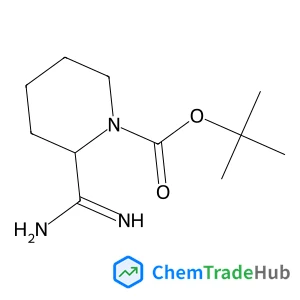
2-Methyl-2-propanyl 2-carbamimidoyl-1-piperidinecarboxylate
CAS Number:
1258640-98-0
Molecular Formula:
C11H21N3O2
Recommended Suppliers





Disclaimer
This page provides academic journal information for reference and research purposes only. We are not affiliated with any journal publishers and do not handle publication submissions. For publication-related inquiries, please contact the respective journal publishers directly.
If you notice any inaccuracies in the information displayed, please contact us at support@chemtradehub.com. We will promptly review and address your concerns.