












Synthesis of SiN/SiS-heterocycles via the reactions of a bis-silylene with isocyanate/isothiocyanate molecules
Literature Information
Publication Date
2024-01-01
DOI
10.1039/D3CC04950G
Impact Factor
6.222
Authors
Rui Liu, Kartik Chandra Mondal, Chenfeng Wang, Sonam Suthar, Zijie Fang, Darui Zuo
View Original
Abstract
Reactions of o-carborane-fused bis-silylene 1 with isocyanate/isothiocyanate molecules furnished a series of SiN/SiS-heterocycles, which show distinct styles of cyclization and were theoretically studied.
Related Literature
Unprecedented Barbier-type reactions catalysed by titanocene(iii)
Antonio Rosales, Juan L. Oller-López, José Justicia, Andreas Gansäuer, J. Enrique Oltra, Juan M. Cuerva
2004-10-05
Communication
DOI: 10.1039/B411173G
Cn microspheres as surrogate membranes in glycosidase-catalysed hydrolysis of glycolipids
José A. R. Martins, David H. G. Crout, Peter Critchley
2003-11-19
Communication
DOI: 10.1039/B309154F
A new approach to stereospecific synthesis of P-chiral phosphorothioates. Preparation of diastereomeric dithymidyl-(3′-5′) phosphorothioates
Helena Almer, Tomas Szabo
2003-12-19
Communication
DOI: 10.1039/B311912B
Selective synthesis of isomeric heterodinuclear complexes with switched metal arrangements viaproton-induced reversible metal migration
Christian Dubs, Akiko Inagaki, Munetaka Akita
2004-10-21
Communication
DOI: 10.1039/B409514F
Contrasting coordination behaviour of 22-membered chalcogenaaza (Se, Te) macrocylces towards Pd(ii) and Pt(ii): Isolation and structural characterization of the first metallamacrocyle with a C–Pt–Se linkage
Snigdha Panda, Harkesh B. Singh, Ray J. Butcher
2004-01-08
Communication
DOI: 10.1039/B312358H
Synthesis of long Poly(dG)·Poly(dC) DNA using enzymatic reaction
Shin-ichi Tanaka, Masateru Taniguchi, Susumu Uchiyama, Kiichi Fukui, Tomoji Kawai
2004-09-21
Communication
DOI: 10.1039/B410753E
Short and stereoselective synthesis of C-glycosylated glycine derivatives from glycals by radical addition and reduction
Thomas Sommermann, Boo Geun Kim, Karl Peters, Eva-Maria Peters, Torsten Linker
2004-10-05
Communication
DOI: 10.1039/B410120K
Aqueous hydrogenation of carbon dioxide catalysed by water-soluble ruthenium aqua complexes under acidic conditions
Hideki Hayashi, Seiji Ogo, Shunichi Fukuzumi
2004-10-14
Communication
DOI: 10.1039/B411633J
[Li(thf)3cyclo-(P4tBu4CH)] – synthesis, molecular structure and dynamic behaviour
Robert Wolf, Evamarie Hey-Hawkins
2004-10-05
Communication
DOI: 10.1039/B410617B
An Fe(iii) wheel with a zwitterionic ligand: the structure and magnetic properties of [Fe(OMe)2(proline)]12[ClO4]12
Abd-Alhakeem H. Abu-Nawwas, Joan Cano, Paul Christian, Talal Mallah, Gopalan Rajaraman, Simon J. Teat, Richard E. P. Winpenny, Yasuhiko Yukawa
2004-01-07
Communication
DOI: 10.1039/B312947K
You might also like
Compound Q&A
What precautions should be taken when handling 2-Chloro-1,2-bis(4-methylphenyl)ethanone (CAS: 71193-32-3)?
When handling 2-Chloro-1,2-bis(4-methylphenyl)ethanone (CAS: 71193-32-3), it is ...
71193-32-32-Chloro-1,2-bis(4-m...
Compound Q&A
What industries use 4-Ethoxy-3-(5-methyl-4-oxo-7-propyl-1,4-dihydroimidazo[5,1-f][1,2,4]triazin-2-yl)benzenesulfonyl chloride (CAS: 224789-26-8)?
4-Ethoxy-3-(5-methyl-4-oxo-7-propyl-1,4-dihydroimidazo[5,1-f][1,2,4]triazin-2-yl...
224789-26-84-Ethoxy-3-(5-methyl...
Compound Q&A
How should Methyl 3-Oxo-4-Androsten-17-Carboxylate (CAS: 2681-55-2) be stored?
Methyl 3-Oxo-4-Androsten-17-Carboxylate (CAS: 2681-55-2) should be stored in a c...
2681-55-2Methyl 3-Oxo-4-Andro...
Compound Q&A
What are the main uses of (R)-3-Amino-4-(3-hexylphenylamino)-4-oxobutylphosphonic acid (CAS: 909725-61-7)?
(R)-3-Amino-4-(3-hexylphenylamino)-4-oxobutylphosphonic acid is primarily used i...
909725-61-7(R)-3-Amino-4-(3-hex...
Compound Q&A
What regulatory guidelines apply to 2-Methyl-2-propanyl 3-amino-3-carbamoyl-1-azetidinecarboxylate (CAS: 1254120-14-3)?
2-Methyl-2-propanyl 3-amino-3-carbamoyl-1-azetidinecarboxylate (CAS: 1254120-14-...
1254120-14-32-Methyl-2-propanyl ...
Compound Q&A
Are there alternatives to (E)-4-(tert-Butoxy)-4-oxobut-2-enoic acid (CAS: 135355-96-3) in synthesis?
There are alternative reagents that can be used in synthesis instead of (E)-4-(t...
135355-96-3(E)-4-(tert-Butoxy)-...
Compound Q&A
What are the physical and chemical properties of [2-(3-Chlorophenyl)-1,3-thiazol-4-yl]methanol (CAS: 121202-20-8)?
[2-(3-Chlorophenyl)-1,3-thiazol-4-yl]methanol (CAS: 121202-20-8) is a crystallin...
121202-20-8[2-(3-Chlorophenyl)-...
Compound Q&A
What is the market or research trend for Methyl (2S)-[(4S)-2,2-dimethyl-1,3-dioxolan-4-yl]{[(4-methylphenyl)sulfonyl]oxy}acetate (CAS: 166249-17-8)?
The market and research trends for Methyl (2S)-[(4S)-2,2-dimethyl-1,3-dioxolan-4...
166249-17-8Methyl (2S)-[(4S)-2,...
Compound Q&A
What is the market or research trend for 1-Bromo-2-isocyanatoethane (CAS: 42865-19-0)?
The market for 1-Bromo-2-isocyanatoethane (CAS: 42865-19-0) is driven by its use...
42865-19-01-Bromo-2-isocyanato...
Compound Q&A
What are the main uses of 4-Nitro-D-phenylalanine hydrochloride (CAS: 147065-06-3)?
4-Nitro-D-phenylalanine hydrochloride (CAS: 147065-06-3) is primarily used in re...
147065-06-34-Nitro-D-phenylalan...
Source Journal
Chemical Communications

CiteScore:
8.6
Self-citation Rate:
4.7%
Articles per Year:
2458
ChemComm publishes urgent research which is of outstanding significance and interest to experts in the field, while also appealing to the journal’s broad chemistry readership. Our communication format is ideally suited to short, urgent studies that are of such importance that they require accelerated publication. Our scope covers all topics in chemistry, and research at the interface of chemistry and other disciplines (such as materials science, nanoscience, physics, engineering and biology) where there is a significant novelty in the chemistry aspects. Major topic areas covered include: Analytical Chemistry Catalysis Chemical Biology and medicinal chemistry Computational Chemistry and Machine Learning Energy and sustainable chemistry Environmental Chemistry Green Chemistry Inorganic Chemistry Materials Chemistry Nanoscience Organic Chemistry Physical Chemistry Polymer Chemistry Supramolecular Chemistry
Recommended Compounds
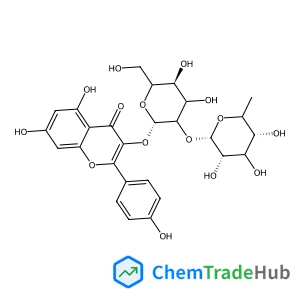
5,7-Dihydroxy-2-(4-hydroxyphenyl)-4-oxo-4H-chromen-3-yl 2-O-(6-deoxy-alpha-L-mannopyranosyl)-beta-D-glucopyranoside
CAS Number:
32602-81-6
Molecular Formula:
C27H30O15
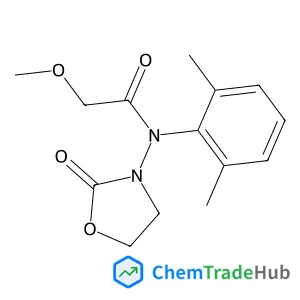
N-(2,6-Dimethylphenyl)-2-methoxy-N-(2-oxo-1,3-oxazolidin-3-yl)acetamide
CAS Number:
77732-09-3
Molecular Formula:
C14H18N2O4
Recommended Suppliers






Disclaimer
This page provides academic journal information for reference and research purposes only. We are not affiliated with any journal publishers and do not handle publication submissions. For publication-related inquiries, please contact the respective journal publishers directly.
If you notice any inaccuracies in the information displayed, please contact us at support@chemtradehub.com. We will promptly review and address your concerns.