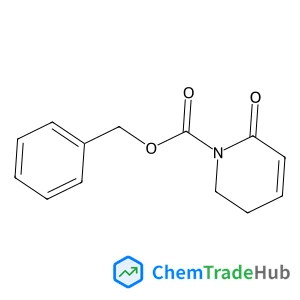
Benzyl 6-oxo-3,6-dihydro-1(2H)-pyridinecarboxylate
CAS Number:
725746-35-0
Molecular Formula:
C13H13NO3
Lauren E. Wenger, Timothy P. Hanusa
Solvents are so nearly omnipresent in synthetic chemistry that a classic question for their use has been: “What is the best solvent for this reaction?” The increasing use of mechanochemical approaches to synthesis—by grinding, milling, extrusion, or other means—and usually with no, or only limited, amounts of solvent, has raised an alternative question for the synthetic chemist: “What happens if there is no solvent?” This review focuses on a three-part answer to that question: when there is little change (“solvent-optional” reactions); when solvent needs to be present in some form, even if only in the amounts provided by liquid-assisted (LAG) or solvate-assisted grinding; and those cases in which mechanochemistry allows access to compounds that cannot be obtained from solution-based routes. The emphasis here is on inorganic and organometallic systems, including selected examples of mechanosynthesis and mechanocatalysis. Issues of mechanochemical depictions and the adequacy of LAG descriptions are also reviewed.
Pei Chen, Qian-Qian Zhang, Jia Guo, Lu-Lu Chen, Yan-Bo Wang, Xiao Zhang
DOI: 10.1039/C8OB01861H
Ronghao Xie, Shixiao Chen, Xianping Xiang, Xiangcong Yin, Lubin Xu, Shuai-Shuai Li, Liang Wang, Fengying Dong
DOI: 10.1039/D1QO01530C
Ivan S. Golovanov, Vladimir A. Tartakovsky, Alexey Yu. Sukhorukov, Sema L. Ioffe
DOI: 10.1039/C8OB01039K
Hideto Miyabe, Kayoko Fujii, Takeaki Naito
DOI: 10.1039/B208823A
Michal März, Michal Kohout, Tomáš Neveselý, Josef Chudoba, Dorota Prukała, Stanislaw Niziński, Marek Sikorski, Gotard Burdziński, Radek Cibulka
DOI: 10.1039/C8OB01822G
Mu Chen, Jia-Qing Cao, Song Ang, Ting-Ni Zeng, Ni-Ping Li, Tang-Jia Yang, Jun-Shan Liu, Yan Wu, Wen-Cai Ye, Lei Wang
DOI: 10.1039/D1QO01629F
Per Wiklund, Jan Bergman
DOI: 10.1039/B209505J
N-(4-Methoxybenzyl)-2-pyridinamine (CAS: 52818-63-0) is increasingly being used ...
When handling Ethyl 4-(2-chlorophenyl)-1,3-thiazole-2-carboxylate, appropriate p...
Diethyldiselane (CAS: 628-39-7) is classified under the Globally Harmonized Syst...
The market for oxocopper (CAS: 12053-18-8) is primarily driven by its use in cat...
The market for 5-{[(2-Methyl-2-propanyl)oxy]carbonyl}-5-azaspiro[2.4]heptane-7-c...
2-(1-Pyrrolidinyl)-4-pyridinamine is a chemical compound with the CAS number 359...
2-(3-Pyridinyl)-1-azabicyclo[2.2.2]octane (CAS: 91556-75-1) is a crystalline sol...
(S)-Alpha-allyl-proline hydrochloride is usually synthesized via a Wittig reacti...
3-Methyl-1,2-oxazole-5-carboxylic acid (CAS: 4857-42-5) is an organic compound w...
Lys-SMCC-DM1 is synthesized via a multi-step process involving the coupling of S...

ChemComm publishes urgent research which is of outstanding significance and interest to experts in the field, while also appealing to the journal’s broad chemistry readership. Our communication format is ideally suited to short, urgent studies that are of such importance that they require accelerated publication. Our scope covers all topics in chemistry, and research at the interface of chemistry and other disciplines (such as materials science, nanoscience, physics, engineering and biology) where there is a significant novelty in the chemistry aspects. Major topic areas covered include: Analytical Chemistry Catalysis Chemical Biology and medicinal chemistry Computational Chemistry and Machine Learning Energy and sustainable chemistry Environmental Chemistry Green Chemistry Inorganic Chemistry Materials Chemistry Nanoscience Organic Chemistry Physical Chemistry Polymer Chemistry Supramolecular Chemistry
![N-{[(2-Methyl-2-propanyl)oxy]carbonyl}-L-methionylglycine structure](https://static.chemtradehub.com/structs/234/23446-03-9-e1e5.webp "N-{[(2-Methyl-2-propanyl)oxy]carbonyl}-L-methionylglycine structure")
![1-{3-[4-Amino-3-(4-phenoxyphenyl)-1H-pyrazolo[3,4-d]pyrimidin-1-yl]-1-piperidinyl}-2,3-dihydroxy-1-propanone structure](https://static.chemtradehub.com/structs/122/1226872-27-0-e037.webp "1-{3-[4-Amino-3-(4-phenoxyphenyl)-1H-pyrazolo[3,4-d]pyrimidin-1-yl]-1-piperidinyl}-2,3-dihydroxy-1-propanone structure")