












Double axial stabilization of a carbenium ion via convergent PO → C+ tetrel bonding
Literature Information
Publication Date
2023-12-08
DOI
10.1039/D3CC04729F
Impact Factor
6.222
Authors
Elishua D. Litle, François P. Gabbaï
View Original
Abstract
Our efforts in carbocation chemistry have led us to target examples of such species stabilized intramolecularly by tetrel bonding. Described here is an example of such a compound in which a triaryl carbenium is stabilized intramolecularly by two convergent PO → Ccarbenium interactions, as confirmed by structural studies. The formation of this new motif favorably impacts the reversibility of the first and second reduction of the carbenium center. It also has profound influence on the Lewis acidity of the carbenium center which is lower than that of the unsubstituted parent carbenium by seven orders of magnitude.
Recommended Journals
Related Literature
Interplay between the hydrophobic effect and dipole interactions in peptide aggregation at interfaces
Sai J. Ganesan, Silvina Matysiak
2015-12-11
Paper
DOI: 10.1039/C5CP05867H
Unraveling the origins of conduction band valley degeneracies in Mg2Si1−xSnx thermoelectrics
Chang-Eun Kim, Aloysius Soon, Catherine Stampfl
2015-11-27
Paper
DOI: 10.1039/C5CP06163F
Hydrogen-bonded 4H-1-benzopyrane-4-thione–water complexes properties in the S2 excited state: the mechanism and dynamics of deactivation
E. Krystkowiak, R. A. Bachorz, A. Maciejewski
2015-11-13
Paper
DOI: 10.1039/C5CP05427C
Wall embedded electrodes to modify electroosmotic flow in silica nanoslits
Harvey A. Zambrano, Nicolás Vásquez, Enrique Wagemann
2015-11-30
Paper
DOI: 10.1039/C5CP05785J
Excited-state annihilation reduces power dependence of single-molecule FRET experiments
Daniel Nettels, Dominik Haenni, Sacha Maillot, Moussa Gueye, Anders Barth, Verena Hirschfeld, Christian G. Hübner, Jérémie Léonard, Benjamin Schuler
2015-11-05
Paper
DOI: 10.1039/C5CP05321H
The role of interparticle interaction and environmental coupling in a two-particle open quantum system
Robin P. Sagar, David G. Tempel, Alán Aspuru-Guzik
2015-11-23
Paper
DOI: 10.1039/C5CP05927E
Flexibility and conformation of the cocaine aptamer studied by PELDOR
C. M. Grytz, A. Marko, P. Cekan, S. Th. Sigurdsson, T. F. Prisner
2015-12-18
Paper
DOI: 10.1039/C5CP06158J
Unconventional CHδ+⋯N hydrogen bonding interactions in the stepwise solvation of the naphthalene radical cation by hydrogen cyanide and acetonitrile molecules
Sean P. Platt, Isaac K. Attah, M. S. El-Shall, Saadullah G. Aziz
2015-12-07
Paper
DOI: 10.1039/C5CP06502J
Molecular oxygen reduction catalyzed by a highly oxidative resistant complex of cobalt–hydrazone at the liquid/liquid interface
Mohammad Ali Kamyabi, Fatemeh Soleymani-Bonoti, Rahman Bikas, Hassan Hosseini-Monfared, Nematollah Arshadi, Milosz Siczek, Tadeusz Lis
2015-09-07
Paper
DOI: 10.1039/C5CP04695E
Simulations reveal the role of composition into the atomic-level flexibility of bioactive glass cements
Devis Di Tommaso
2015-11-17
Paper
DOI: 10.1039/C5CP05650K
You might also like
Compound Q&A
How should waste containing 6-Chloro-5-(2'-hydroxy-3'-methoxy-4-biphenylyl)-3-(3-methoxyphenyl)-1H-pyrrolo[3,2-d]pyrimidine-2,4(3H,5H)-dione (CAS: 1346607-05-3) be handled?
Waste containing 6-Chloro-5-(2'-hydroxy-3'-methoxy-4-biphenylyl)-3-(3-methoxyphe...
1346607-05-36-Chloro-5-(2'-hydro...
Compound Q&A
What are the main uses of (3alpha,5alpha)-3-Hydroxypregnane-11,20-dione (CAS: 23930-19-0)?
(3alpha,5alpha)-3-Hydroxypregnane-11,20-dione is primarily used in the pharmaceu...
23930-19-0(3alpha,5alpha)-3-Hy...
Compound Q&A
What is the market or research trend for 4-Amino-6-chloro-2-pyridinecarboxylic acid (CAS: 546141-56-4)?
The market for 4-Amino-6-chloro-2-pyridinecarboxylic acid (CAS: 546141-56-4) is ...
546141-56-44-Amino-6-chloro-2-p...
Compound Q&A
Are there alternatives to (2-Benzoylethyl)trimethylammonium chloride (CAS: 24472-88-6) in synthesis?
Alternatives to (2-Benzoylethyl)trimethylammonium chloride (CAS: 24472-88-6) in ...
24472-88-6(2-Benzoylethyl)trim...
Compound Q&A
Is N-[4-Nitro-3-(trifluoromethyl)phenyl]acetamide (CAS: 393-12-4) safe?
N-[4-Nitro-3-(trifluoromethyl)phenyl]acetamide (CAS: 393-12-4) is generally safe...
393-12-4N-[4-Nitro-3-(triflu...
Compound Q&A
Are there alternatives to [(4R,5R,6S)-5-hydroxy-10-imino-3,7-dioxa-1,9-diazatricyclo[6.4.0.02,6]dodeca-8,11-dien-4-yl]methyl dihydrogen phosphate (CAS: 39679-56-6) in synthesis?
Alternative reagents such as other phosphates or similar functional groups can b...
39679-56-6[(4R,5R,6S)-5-hydrox...
Compound Q&A
Are there alternatives to N,N'-Bis(3-aminopropyl)-1,3-propanediamine (CAS: 4605-14-5) in synthesis?
There are alternatives to N,N'-Bis(3-aminopropyl)-1,3-propanediamine (CAS: 4605-...
4605-14-5N,N'-Bis(3-aminoprop...
Compound Q&A
What precautions should be taken when handling Aluminium trihexadecanoate (CAS: 555-35-1)?
When handling Aluminium trihexadecanoate, it is important to use appropriate per...
555-35-1Aluminium trihexadec...
Compound Q&A
What is (1,1-Dioxido-3-oxo-1,2-benzothiazol-2(3H)-yl)acetic acid (CAS: 52188-11-1)?
(1,1-Dioxido-3-oxo-1,2-benzothiazol-2(3H)-yl)acetic acid is a chemical compound ...
52188-11-1(1,1-Dioxido-3-oxo-1...
Compound Q&A
Are there alternatives to 5,5-dimethyloxolan-2-one (CAS: 3123-97-5) in synthesis?
Several alternatives to 5,5-dimethyloxolan-2-one (CAS: 3123-97-5) can be used in...
3123-97-55,5-dimethyloxolan-2...
Source Journal
Chemical Communications

CiteScore:
8.6
Self-citation Rate:
4.7%
Articles per Year:
2458
ChemComm publishes urgent research which is of outstanding significance and interest to experts in the field, while also appealing to the journal’s broad chemistry readership. Our communication format is ideally suited to short, urgent studies that are of such importance that they require accelerated publication. Our scope covers all topics in chemistry, and research at the interface of chemistry and other disciplines (such as materials science, nanoscience, physics, engineering and biology) where there is a significant novelty in the chemistry aspects. Major topic areas covered include: Analytical Chemistry Catalysis Chemical Biology and medicinal chemistry Computational Chemistry and Machine Learning Energy and sustainable chemistry Environmental Chemistry Green Chemistry Inorganic Chemistry Materials Chemistry Nanoscience Organic Chemistry Physical Chemistry Polymer Chemistry Supramolecular Chemistry
Recommended Compounds
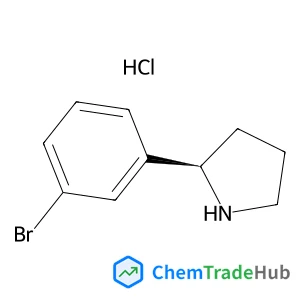
(2R)-2-(3-Bromophenyl)pyrrolidine hydrochloride (1:1)
CAS Number:
1391550-13-2
Molecular Formula:
C10H13BrClN
![1-{3-[4-Amino-3-(4-phenoxyphenyl)-1H-pyrazolo[3,4-d]pyrimidin-1-yl]-1-piperidinyl}-2,3-dihydroxy-1-propanone structure](https://static.chemtradehub.com/structs/122/1226872-27-0-e037.webp "1-{3-[4-Amino-3-(4-phenoxyphenyl)-1H-pyrazolo[3,4-d]pyrimidin-1-yl]-1-piperidinyl}-2,3-dihydroxy-1-propanone structure")
1-{3-[4-Amino-3-(4-phenoxyphenyl)-1H-pyrazolo[3,4-d]pyrimidin-1-yl]-1-piperidinyl}-2,3-dihydroxy-1-propanone
CAS Number:
1226872-27-0
Molecular Formula:
C25H26N6O4
![1-oxaspiro[4.4]nonan-6-one structure](https://static.chemtradehub.com/structs/134/134179-01-4-e051.webp "1-oxaspiro[4.4]nonan-6-one structure")
Recommended Suppliers






Disclaimer
This page provides academic journal information for reference and research purposes only. We are not affiliated with any journal publishers and do not handle publication submissions. For publication-related inquiries, please contact the respective journal publishers directly.
If you notice any inaccuracies in the information displayed, please contact us at support@chemtradehub.com. We will promptly review and address your concerns.