![trans,trans-4-n-Propyl-4-[4-(trifluoromethoxy)phenyl]bicyclohexyl structure](https://static.chemtradehub.com/structs/133/133937-72-1-25ef.webp "trans,trans-4-n-Propyl-4-[4-(trifluoromethoxy)phenyl]bicyclohexyl structure")
trans,trans-4-n-Propyl-4-[4-(trifluoromethoxy)phenyl]bicyclohexyl
CAS Number:
133937-72-1
Molecular Formula:
C22H31F3O
Arup Bhowmik, Koushik Naskar, Shantonu Roy, Sudip Karmakar, Writhabrata Sarkar, Imtiaj Mondal, Arindam Sana, Indubhusan Deb
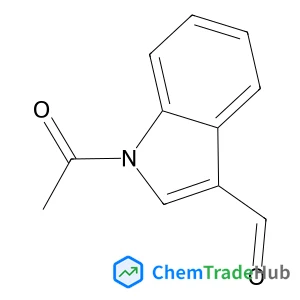
We describe a robust one-pot cascade method for the synthesis of indole-3-carboxylic acids using isatins and DMSO via a one-carbon translocation involving in situ generation of α,β-unsaturated methylvinylsulfoxide followed by amide bond cleavage and ring closure. The methodology has been extended to afford anthranilic acid derivatives by tuning the reaction conditions in the presence of molecular oxygen. Importantly, easy access to commercially available drugs, including tropisetron, is demonstrated.
DOI: 10.1039/A900640K
DOI: 10.1039/A904887A
DOI: 10.1039/A901767D
DOI: 10.1039/A809870K
DOI: 10.1039/A901742I
3-Fluoro-2-methylbenzylamine is an organic compound with the CAS number 771573-3...
Tert-butyl 2-(oxetan-3-ylidene)acetate is considered safe for its intended uses ...
Proper personal protective equipment (PPE) such as gloves, goggles, and a lab co...
2-Ethyl-4-methyl-1,3-thiazole is commonly synthesized via the reaction of thiour...
This compound should be stored in a cool, dry place away from direct sunlight an...
L-Lysine Acetate Salt (CAS: 52315-92-1) is subject to various regulatory guideli...
6-Fluoro-3-hydroxy-2-pyrazinecarboxamide (CAS: 259793-96-9) is generally conside...
1,1'-Sulfonylbis(1H-imidazole) is a crystalline solid with a molecular weight of...
4-Methyl-7-nitro-1H-indole-3-carbonitrile (CAS: 289483-82-5) is primarily used i...
Waste containing 5-Bromo-3-indolyl-beta-galactoside (CAS: 97753-82-7) should be ...

ChemComm publishes urgent research which is of outstanding significance and interest to experts in the field, while also appealing to the journal’s broad chemistry readership. Our communication format is ideally suited to short, urgent studies that are of such importance that they require accelerated publication. Our scope covers all topics in chemistry, and research at the interface of chemistry and other disciplines (such as materials science, nanoscience, physics, engineering and biology) where there is a significant novelty in the chemistry aspects. Major topic areas covered include: Analytical Chemistry Catalysis Chemical Biology and medicinal chemistry Computational Chemistry and Machine Learning Energy and sustainable chemistry Environmental Chemistry Green Chemistry Inorganic Chemistry Materials Chemistry Nanoscience Organic Chemistry Physical Chemistry Polymer Chemistry Supramolecular Chemistry
![(1R,3S,5R)-2-{[(2-Methyl-2-propanyl)oxy]carbonyl}-2-azabicyclo[3.1.0]hexane-3-carboxylic acid structure](https://static.chemtradehub.com/structs/197/197142-34-0-6a44.webp "(1R,3S,5R)-2-{[(2-Methyl-2-propanyl)oxy]carbonyl}-2-azabicyclo[3.1.0]hexane-3-carboxylic acid structure")