


![[4-(Hydroxymethyl)phenyl]acetic acid structure](https://static.chemtradehub.com/structs/734/73401-74-8-5a54.webp "[4-(Hydroxymethyl)phenyl]acetic acid structure")
A multi-channel collagen conduit with aligned Schwann cells and endothelial cells for enhanced neuronal regeneration in spinal cord injury
Literature Information
Publication Date
2023-10-19
DOI
10.1039/D3BM01152F
Impact Factor
6.843
Authors
Hye Yeong Lee, Seo Hyun Moon, Donggu Kang, Eunjeong Choi, Gi Hoon Yang, Keung Nyun Kim, Joo Yun Won, Seong Yi
View Original
Abstract
Traumatic spinal cord injury (SCI) leads to Wallerian degeneration and the accompanying disruption of vasculature leads to ischemia, which damages motor and sensory function. Therefore, understanding the biological environment during regeneration is essential to promote neuronal regeneration and overcome this phenomenon. The band of Büngner is a structure of an aligned Schwann cell (SC) band that guides axon elongation providing a natural recovery environment. During axon elongation, SCs promote axon elongation while migrating along neovessels (endothelial cells [ECs]). To model this, we used extrusion 3D bioprinting to develop a multi-channel conduit (MCC) using collagen for the matrix region and sacrificial alginate to make the channel. The MCC was fabricated with a structure in which SCs and ECs were longitudinally aligned to mimic the sophisticated recovering SCI conditions. Also, we produced an MCC with different numbers of channels. The aligned SCs and ECs in the 9-channel conduit (9MCC-SE) were more biocompatible and led to more proliferation than the 5-channel conduit (5MCC-SE) in vitro. Also, the 9MCC-SE resulted in a greater healing effect than the 5MCC-SE with respect to neuronal regeneration, remyelination, inflammation, and angiogenesis in vivo. The above tissue recovery results led to motor function repair. Our results show that our 9MCC-SE model represents a new therapeutic strategy for SCI.
Recommended Journals

Current Opinion in Colloid & Interface Science

Current Opinion in Solid State & Materials Science

Russian Chemical Bulletin

Chemical Communications

Organic Process Research & Development

Russian Journal of Organic Chemistry

Russian Journal of General Chemistry

Russian Journal of Applied Chemistry

Acta Materialia

Russian Journal of Bioorganic Chemistry
Related Literature
Correction: 2-Aroylquinoline-5,8-diones as potent anticancer agents displaying tubulin and heat shock protein 90 (HSP90) inhibition
Kunal Nepali, Sunil Kumar, Hsiang-Ling Huang, Fei-Chiao Kuo, Cheng-Hsin Lee, Ching-Chuan Kuo, Teng-Kuang Yeh, Yu-Hsuan Li, Jang-Yang Chang, Jing-Ping Liou, Hsueh-Yun Lee
2018-06-15
Correction
DOI: 10.1039/C8OB90080A
Multifunctional P-ligand-controlled “silicon-centered” selectivity in Rh/Cu-catalyzed Si–C bond cleavage of silacyclobutanes
Xu Wang, Shuai-Shuai Huang, Feng-Jiao Zhang, Jia-Le Xie, Zhao Li, Zheng Xu, Fei Ye
2021-10-05
Research Article
DOI: 10.1039/D1QO01386F
O-Phenylenediamine: a privileged pharmacophore of ferrostatins for radical-trapping reactivity in blocking ferroptosis
Xie-Huang Sheng, Cheng-Cheng Cui, Chao Shan, Yu-Zhen Li, Duo-Hong Sheng, Bin Sun, De-Zhan Chen
2018-05-03
Paper
DOI: 10.1039/C8OB00546J
Synthesis of δ-phosphorothiolated alcohols by photoredox/copper catalyzed remote C(sp3)–H phosphorothiolation of N-alkoxypyridinium salts
Zhipeng Zheng, Shanshan Shi, Qianru Ma, Yufei Yang, Yan Liu, Guo Tang
2021-10-02
Research Article
DOI: 10.1039/D1QO01178B
Preparation of π-extended fullerene derivatives through addition of phenylenediamine to open-cage fullerene derivatives
Zeyu Liu, Zhen Liu, Rui Gao, Jie Su, Yi Qiu, Liangbing Gan
2021-11-18
Research Article
DOI: 10.1039/D1QO01593A
Construction of polysubstituted spiro[2.3] or [3.3] cyclic frameworks fused with a tosylated pyrrolidine promoted by visible-light-induced photosensitization
Xintao Gu, Yin Wei
2021-11-04
Research Article
DOI: 10.1039/D1QO01373D
Elucidation of the catalytic mechanism of 6-hydroxymethyl-7,8-dihydropterin pyrophosphokinase using QM/MM calculations
Nathjanan Jongkon, Duangkamol Gleeson, M. Paul Gleeson
2018-08-03
Paper
DOI: 10.1039/C8OB01428K
Ruthenium-catalyzed C–H allylation of arenes with allylic amines
Rui Yan
2018-05-07
Paper
DOI: 10.1039/C8OB00723C
Asymmetric cycloisomerization/[3 + 2] cycloaddition for the synthesis of chiral spiroisobenzofuran-1,3′-pyrrolidine derivatives
Pei Dong, Long Chen, Zhendong Yang, Shunxi Dong, Xiaoming Feng
2021-10-08
Research Article
DOI: 10.1039/D1QO01194D
You might also like
Compound Q&A
How should waste containing 4-Bromo-3-methyl-2-thiophenecarboxylic acid (CAS: 265652-39-9) be handled?
Waste containing 4-Bromo-3-methyl-2-thiophenecarboxylic acid (CAS: 265652-39-9) ...
265652-39-94-Bromo-3-methyl-2-t...
Compound Q&A
What industries use (2S,5S,2'S,5'S)-1,1'-(1,2-Ethanediyl)bis(2,5-dimethylphospholane) (CAS: 136779-26-5)?
(2S,5S,2'S,5'S)-1,1'-(1,2-Ethanediyl)bis(2,5-dimethylphospholane) is primarily u...
136779-26-5(2S,5S,2'S,5'S)-1,1'...
Compound Q&A
What industries use Ethyl 2-(2-bromo-5-fluorophenyl)acetate (CAS: 1214910-61-8)?
Ethyl 2-(2-bromo-5-fluorophenyl)acetate (CAS: 1214910-61-8) is used in the pharm...
1214910-61-8Ethyl 2-(2-bromo-5-f...
Compound Q&A
How is 4-Methyl-2-benzofuran-1,3-dione (CAS: 4792-30-7) typically synthesized?
4-Methyl-2-benzofuran-1,3-dione (CAS: 4792-30-7) can be synthesized through seve...
4792-30-74-Methyl-2-benzofura...
Compound Q&A
What industries use 4,6-Dichloroquinoline-3-carbonitrile (CAS: 936498-04-3)?
4,6-Dichloroquinoline-3-carbonitrile (CAS: 936498-04-3) is used in the pharmaceu...
936498-04-34,6-Dichloroquinolin...
Compound Q&A
What are the main uses of Chloro[tris(para-trifluoromethylphenyl)phosphine]gold(I) (CAS: 385815-83-8)?
Chloro[tris(para-trifluoromethylphenyl)phosphine]gold(I) is primarily used in or...
385815-83-8Chloro[tris(para-tri...
Compound Q&A
Is 2-Bromo-5-nitrofuran (CAS: 823-73-4) safe?
2-Bromo-5-nitrofuran (CAS: 823-73-4) is generally considered safe when handled w...
823-73-42-Bromo-5-nitrofuran
Compound Q&A
How should 5-Bromo-2,3,4-trifluorobenzoic acid (CAS: 212631-85-1) be stored?
5-Bromo-2,3,4-trifluorobenzoic acid should be stored in a cool, dry place away f...
212631-85-15-Bromo-2,3,4-triflu...
Compound Q&A
What are the main uses of Zinc bis(aminoacetate) (CAS: 7214-08-6)?
Zinc bis(aminoacetate) (CAS: 7214-08-6) is primarily used in the pharmaceutical ...
7214-08-6Zinc bis(aminoacetat...
Compound Q&A
How should Adamantan-1-ylmethanol (CAS: 770-71-8) be stored?
Adamantan-1-ylmethanol should be stored in a cool, dry, and well-ventilated plac...
770-71-8Adamantan-1-ylmethan...
Source Journal
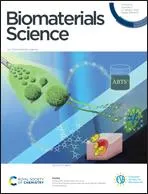
Biomaterials Science
CiteScore:
11.5
Self-citation Rate:
3.4%
Articles per Year:
492
Biomaterials Science is an international high impact journal exploring the science of biomaterials and their translation towards clinical use. Its scope encompasses new concepts in biomaterials design, studies into the interaction of biomaterials with the body, and the use of materials to answer fundamental biological questions. Papers do not necessarily need to report a new biomaterial but should provide novel insight into the biological applications of the biomaterial. Articles that primarily focus on demonstrating novel materials chemistry and bring a molecular picture to bear on a given material’s suitability as a biomaterial are more suited to our companion journal, Journal of Materials Chemistry B. Biomaterials Science publishes primary research and review-type articles in the following areas: molecular design of biomaterials, including translation of emerging chemistries to biomaterials science of cells and materials at the nanoscale and microscale materials as model systems for stem cell and human biology materials for tissue engineering and regenerative medicine (Nano)materials and (nano)systems for therapeutic delivery interactions at the biointerface biologically inspired and biomimetic materials, including bio-inspired self-assembly systems and cell-inspired synthetic tools next-generation biomaterials tools and methods
Recommended Compounds
![N-[(9Z)-9-Octadecen-1-yl]-1,3-propanediamine structure](https://static.chemtradehub.com/structs/717/7173-62-8-d43e.webp "N-[(9Z)-9-Octadecen-1-yl]-1,3-propanediamine structure")
![(2S)-{[(9H-Fluoren-9-ylmethoxy)carbonyl]amino}(phenyl)acetic acid structure](https://static.chemtradehub.com/structs/102/102410-65-1-4aa7.webp "(2S)-{[(9H-Fluoren-9-ylmethoxy)carbonyl]amino}(phenyl)acetic acid structure")
(2S)-{[(9H-Fluoren-9-ylmethoxy)carbonyl]amino}(phenyl)acetic acid
CAS Number:
102410-65-1
Molecular Formula:
C23H19NO4
Recommended Suppliers



Disclaimer
This page provides academic journal information for reference and research purposes only. We are not affiliated with any journal publishers and do not handle publication submissions. For publication-related inquiries, please contact the respective journal publishers directly.
If you notice any inaccuracies in the information displayed, please contact us at support@chemtradehub.com. We will promptly review and address your concerns.