













Development of a modular photoreactor for the upscaling of continuous flow photochemistry
Literature Information
Publication Date
2022-09-28
DOI
10.1039/D2RE00310D
Impact Factor
4.239
Authors
Johannes G. H. Hermens, Mathieu L. Lepage, Arjan Kloekhorst, Erik Keller, Robin Bloem, Maurice Meijer, Ben L. Feringa
View Original
Abstract
The upscaling of biphasic photochemical reactions is challenging because of the inherent constraints of liquid–gas mixing and light penetration. Using semi-permeable coaxial flow chemistry within a modular photoreactor, the photooxidation of the platform chemical furfural was scaled up to produce routinely 29 gram per day of biobased building block hydroxybutenolide, a precursor to acrylate alternatives.
Related Literature
Ligand-dependent blinking of zinc-blende CdSe/ZnS core/shell nanocrystals
Yongwook Kim, Hyunung Yu, Dae Won Moon, Sung Jun Lim, Wonjung Kim, Hye-Joo Yoon, Seung Koo Shin
2009-03-03
Paper
DOI: 10.1039/B822351C
Revealing the base pair stepping dynamics of nucleic acidmotorproteins with optical traps
Yann R. Chemla
2010-02-19
Perspective
DOI: 10.1039/B920234J
The photophysics of selectively metallated arrays of quinoxaline-fused tetraarylporphyrins
James A. Hutchison, Paul J. Sintic, Maxwell J. Crossley, Toshihiko Nagamura, Kenneth P. Ghiggino
2009-03-03
Paper
DOI: 10.1039/B820969C
DFT-MD and vibrational anharmonicities of a phosphorylated amino acid. Success and failure
Alvaro Cimas
2010-02-24
Paper
DOI: 10.1039/B924025J
Linear viscoelasticity and thermorheological simplicity of n-hexadecane fluids under oscillatory shear via non-equilibrium molecular dynamics simulations
Huan-Chang Tseng, Jiann-Shing Wu, Rong-Yeu Chang
2010-03-09
Paper
DOI: 10.1039/B919672B
Minimum electrophilicity principle: an analysis based upon the variation of both chemical potential and absolute hardness
Christophe Morell, Vanessa Labet, André Grand, Henry Chermette
2009-02-26
Paper
DOI: 10.1039/B818534D
DFT studies of the degradation mechanism of methyl mercury activated by a sulfur-rich ligand
Xichen Li, Rong-Zhen Liao, Wenchang Zhou, Guangju Chen
2010-01-28
Paper
DOI: 10.1039/B918402C
Oriented growth of the functionalized metal–organic framework CAU-1 on –OH- and –COOH-terminated self-assembled monolayers
Florian Hinterholzinger, Camilla Scherb, Tim Ahnfeldt, Norbert Stock, Thomas Bein
2010-04-13
Paper
DOI: 10.1039/B924657F
Structural diversity of dimers of the Alzheimer amyloid-β(25–35) peptide and polymorphism of the resulting fibrils
Guanghong Wei, Andrew I. Jewett, Joan-Emma Shea
2010-03-11
Paper
DOI: 10.1039/C000755M
A combinatorial approach toward fabrication of surface-adsorbed metal nanoparticles for investigation of an enzyme reaction
H. Takei, T. Yamaguchi
2010-03-25
Paper
DOI: 10.1039/B924233N
You might also like
Compound Q&A
How should waste containing 2-Ethyl-4-Methyl-1H-Imidazole-5-Carbaldehyde (CAS: 88634-80-4) be handled?
Waste containing 2-Ethyl-4-Methyl-1H-Imidazole-5-Carbaldehyde (CAS: 88634-80-4) ...
88634-80-42-Ethyl-4-Methyl-1H-...
Compound Q&A
What industries use Triethoxy(octyl)silane (CAS: 1385031-14-0)?
Triethoxy(octyl)silane (CAS: 1385031-14-0) is widely used in the pharmaceuticals...
1385031-14-0Triethoxy(octyl)sila...
Compound Q&A
Are there alternatives to 3-iodo-7-nitro-1H-indazole (CAS: 864724-64-1) in synthesis?
Several alternatives to 3-iodo-7-nitro-1H-indazole (CAS: 864724-64-1) exist in t...
864724-64-13-iodo-7-nitro-1H-in...
Compound Q&A
Are there alternatives to Benzene, bis[(trimethoxysilyl)ethyl] (CAS: 266317-71-9) in synthesis?
Yes, there are alternatives to Benzene, bis[(trimethoxysilyl)ethyl] (CAS: 266317...
266317-71-9Benzene, bis[(trimet...
Compound Q&A
Is Isothiazole-3-carbonitrile (CAS: 1452-17-1) safe?
Isothiazole-3-carbonitrile (CAS: 1452-17-1) is generally considered safe when us...
1452-17-1Isothiazole-3-carbon...
Compound Q&A
Is (3-Chlorophenyl)methanol (CAS: 873-63-2) safe?
(3-Chlorophenyl)methanol (CAS: 873-63-2) is considered low to moderately toxic. ...
873-63-2(3-Chlorophenyl)meth...
Compound Q&A
How is (2S,3S)-2-Hydroxy-3-({[(2-methyl-2-propanyl)oxy]carbonyl}amino)-3-(2-naphthyl)propanoic acid (CAS: 959583-98-3) typically synthesized?
(2S,3S)-2-Hydroxy-3-({[(2-methyl-2-propanyl)oxy]carbonyl}amino)-3-(2-naphthyl)pr...
959583-98-3(2S,3S)-2-Hydroxy-3-...
Compound Q&A
What precautions should be taken when handling Methyl 2-(bromomethyl)-5-methoxybenzoate (CAS: 788081-99-2)?
Proper handling of methyl 2-(bromomethyl)-5-methoxybenzoate requires the use of ...
788081-99-2Methyl 2-(bromomethy...
Compound Q&A
What is 6,8-Dibromoimidazo[1,2-a]pyridine-2-carboxylic acid (CAS: 904805-36-3)?
6,8-Dibromoimidazo[1,2-a]pyridine-2-carboxylic acid (CAS: 904805-36-3) is an aro...
904805-36-36,8-Dibromoimidazo[1...
Compound Q&A
Is 3-Amino-5-bromo-2-pyridinecarbonitrile (CAS: 573675-27-1) safe?
3-Amino-5-bromo-2-pyridinecarbonitrile is considered safe when handled under pro...
573675-27-13-Amino-5-bromo-2-py...
Source Journal
Reaction Chemistry & Engineering

CiteScore:
0
Self-citation Rate:
8.8%
Articles per Year:
284
Reaction Chemistry & Engineering is an interdisciplinary journal reporting cutting-edge research focused on enhancing the understanding and efficiency of reactions. Reaction engineering leverages the interface where fundamental molecular chemistry meets chemical engineering and technology. Challenges in chemistry can be overcome by the application of new technologies, while engineers may find improved solutions for process development from the latest developments in reaction chemistry. Reaction Chemistry & Engineering is a unique forum for researchers whose interests span the broad areas of chemical engineering and chemical sciences to come together in solving problems of importance to wider society. All papers should be written to be approachable by readers across the engineering and chemical sciences. Papers that consider multiple scales, from the laboratory up to and including plant scale, are particularly encouraged.
Recommended Compounds
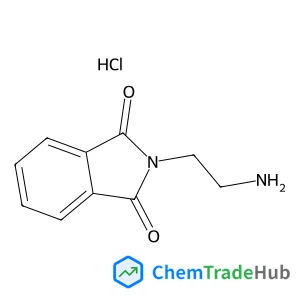
2-(2-Aminoethyl)-1H-isoindole-1,3(2H)-dione hydrochloride (1:1)
CAS Number:
30250-67-0
Molecular Formula:
C10H11ClN2O2



Recommended Suppliers







Disclaimer
This page provides academic journal information for reference and research purposes only. We are not affiliated with any journal publishers and do not handle publication submissions. For publication-related inquiries, please contact the respective journal publishers directly.
If you notice any inaccuracies in the information displayed, please contact us at support@chemtradehub.com. We will promptly review and address your concerns.