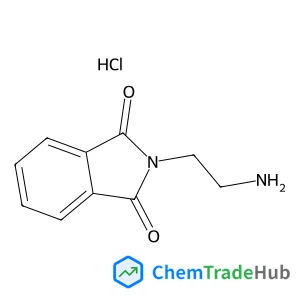
2-(2-Aminoethyl)-1H-isoindole-1,3(2H)-dione hydrochloride (1:1)
CAS Number:
30250-67-0
Molecular Formula:
C10H11ClN2O2
Huiwen Wang, Linlu Song, Ting Zhou, Chen Zeng, Ya Jia, Yunjie Zhao
HIV is a virus that attacks the T cells. HIV may either actively replicate or become latent within host cells for years. Since HIV uses its own protein Tat to hijack the host CDK9–Cyclin complex for transcription, Tat is implicated in transcription-dependent HIV latency. To quantify the impact of Tat binding, we propose a computational framework to probe the dynamics of the CDK9–Cyclin interface and the ATP pocket reorganization upon binding by different Tat mutants. Specifically, we focus on mutations at three Tat residues P10, W11, and N12 that are known to interact directly with CDK9 based on the crystal structure of the Tat–CDK9–Cyclin complex. Our molecular dynamics simulations show that the CDK9–Cyclin interface becomes slightly weaker for P10S and W11R mutants but tighter for the K12N mutant. Furthermore, the side chain orientation of residue K48 in the ATP pocket of CDK9 is similar to the inactive state in P10S and W11R simulations, but similar to the active state in K12N simulations. These are consistent with some existing but puzzling observations of latency for these mutants. This framework may hence help gain a better understanding of the role of Tat in the transcription-dependent HIV latency establishment.
Holger Fricke, Kirsten Schwing, Andreas Gerlach, Claus Unterberg, Markus Gerhards
DOI: 10.1039/C000424C
Daniel Irimia, Rob Kortekaas, Maurice H. M. Janssen
DOI: 10.1039/B822960K
Yongwook Kim, Hyunung Yu, Dae Won Moon, Sung Jun Lim, Wonjung Kim, Hye-Joo Yoon, Seung Koo Shin
DOI: 10.1039/B822351C
Chunjuan Zhang, Jessica Grandner, Ran Liu, Bryan W. Eichhorn
DOI: 10.1039/B918587A
Hidenori Nakayama, Tomoyuki Morita, Shunsaku Kimura
DOI: 10.1039/B817685J
Etienne Snoeck, Cinzia Giannini, Fabia Gozzo, Mar Garcia-Hernandez
DOI: 10.1039/B821964H
David A. Egger, Ferdinand Rissner, Gerold M. Rangger, Oliver T. Hofmann, Lukas Wittwer, Georg Heimel, Egbert Zojer
DOI: 10.1039/B924238B
Florian Evers, Christian Reichhart, Roland Steitz, Metin Tolan, Claus Czeslik
DOI: 10.1039/B925134K
Waste containing 2-Ethyl-4-Methyl-1H-Imidazole-5-Carbaldehyde (CAS: 88634-80-4) ...
Triethoxy(octyl)silane (CAS: 1385031-14-0) is widely used in the pharmaceuticals...
Several alternatives to 3-iodo-7-nitro-1H-indazole (CAS: 864724-64-1) exist in t...
Yes, there are alternatives to Benzene, bis[(trimethoxysilyl)ethyl] (CAS: 266317...
Isothiazole-3-carbonitrile (CAS: 1452-17-1) is generally considered safe when us...
(3-Chlorophenyl)methanol (CAS: 873-63-2) is considered low to moderately toxic. ...
(2S,3S)-2-Hydroxy-3-({[(2-methyl-2-propanyl)oxy]carbonyl}amino)-3-(2-naphthyl)pr...
Proper handling of methyl 2-(bromomethyl)-5-methoxybenzoate requires the use of ...
6,8-Dibromoimidazo[1,2-a]pyridine-2-carboxylic acid (CAS: 904805-36-3) is an aro...
3-Amino-5-bromo-2-pyridinecarbonitrile is considered safe when handled under pro...

Physical Chemistry Chemical Physics (PCCP) is an international journal co-owned by 19 physical chemistry and physics societies from around the world. This journal publishes original, cutting-edge research in physical chemistry, chemical physics and biophysical chemistry. To be suitable for publication in PCCP, articles must include significant innovation and/or insight into physical chemistry; this is the most important criterion that reviewers and Editors will judge against when evaluating submissions. The journal has a broad scope and welcomes contributions spanning experiment, theory, computation and data science. Topical coverage includes spectroscopy, dynamics, kinetics, statistical mechanics, thermodynamics, electrochemistry, catalysis, surface science, quantum mechanics, quantum computing and machine learning. Interdisciplinary research areas such as polymers and soft matter, materials, nanoscience, energy, surfaces/interfaces, and biophysical chemistry are welcomed if they demonstrate significant innovation and/or insight into physical chemistry. Joined experimental/theoretical studies are particularly appreciated when complementary and based on up-to-date approaches.
![Ethyl 3-((6-(4,5-dihydro-1H-benzo[d]azepin-3(2H)-yl)-2-(pyridin-2-yl)pyrimidin-4-yl)amino)propanoate structure](https://static.chemtradehub.com/structs/137/1373423-53-0-496a.webp "Ethyl 3-((6-(4,5-dihydro-1H-benzo[d]azepin-3(2H)-yl)-2-(pyridin-2-yl)pyrimidin-4-yl)amino)propanoate structure")