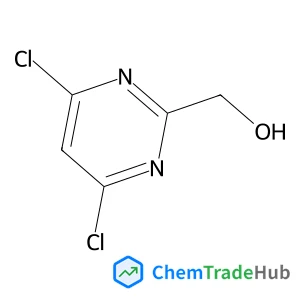
2-(4-Chlorophenyl)-4-(dimethylamino)-2-(2-(dimethylamino)ethyl)butanenitrile
CAS Number:
1246816-57-8
Molecular Formula:
C16H24ClN3
Jing Wan, Jiali Zhai, Nicholas Kai Shiang Teo, Andy Huynh
Polymer assemblies with photoluminescent properties are of increasing interest for biomedical applications, ranging from biosensing and bioimaging to biotracking. However, the preparation of these nano/micro-objects often requires multistep polymer synthesis and a tedious self-assembly process. Herein, we demonstrate the preparation of photoluminescent polymer assemblies with a wide range of morphologies, from simple spherical micelles, worm-like micelles, and vesicles, to rarely achieved microparticles with inverse mesophases such as spongosomes and cubosomes, via an efficient RAFT-mediated polymerization-induced self-assembly (RAFT-PISA) process. To access the polymer assemblies with photoluminescent properties, an aggregation-induced emission (AIE) active monomer (TPE) was copolymerized with 4-(4,4,5,5-tetramethyl-1,3,2-dioxaborolan-2-yl)benzyl acrylate (TBA) in a RAFT-PISA process with poly(N,N-dimethylacrylamide) (PDMA) as the stabilizer block. It was found that the conversion of TBA is highly dependent on the addition ratio of TPE. When the TPE ratio increased to 5 mol% of the total monomer, phase-separation induced by the incompatibility between different components of polymers led to the production of highly sought-after multiphase morphologies such as “colloidal polymers” and phase-separated vesicles, but the morphological evolution terminated at the stage of the spongosome. The reduction of the TPE ratio to 1–2 mol% allows the successful production of photoluminescent cubosomes and hexosomes, capable of emitting blue light upon illumination with light of wavelengths 365–405 nm as confirmed by fluorescence spectroscopy, confocal laser scanning microscopy (CLSM) and digital photographs taken under UV light. Overall, this study is expected to greatly expand the utility of RAFT-PISA by providing facile access to photoluminescent polymer assemblies with a diverse range of morphologies, especially those containing inverse mesophases.

Journal of Heterocyclic Chemistry

Science

Organic Preparations and Procedures International

Proceedings of the National Academy of Sciences of the United States of America

Journal of Medicinal Chemistry

Israel Journal of Chemistry

Molecular Pharmacology

Journal of Catalysis

Russian Chemical Reviews

Planta Medica
T. Gál, P. Geerlings, F. De Proft, M. Torrent-Sucarrat
DOI: 10.1039/C1CP21213C
N. Crivillers, A. Liscio, F. Di Stasio, C. Van Dyck, S. Osella, D. Cornil, S. Mian, G. M. Lazzerini, O. Fenwick, E. Orgiu, F. Reinders, S. Braun, M. Fahlman, J. Cornil, V. Palermo, F. Cacialli, P. Samorì
DOI: 10.1039/C1CP20851A
Rodrigo Galindo-Murillo, Joseelyne Hernandez-Lima, Mayra González-Rendón, Lena Ruíz-Azuara, Rafael Moreno-Esparza
DOI: 10.1039/C1CP20183B
Junki Nagakubo, Minoru Ashizawa, Tadashi Kawamoto, Akihiko Tanioka
DOI: 10.1039/C1CP21507H
Tina Ukmar, Miran Gaberšček, Franci Merzel, Aljaž Godec
DOI: 10.1039/C1CP20636B
Rajesh Kumar, Haijun Yan, Adam Johan Bergren
DOI: 10.1039/C1CP20755E
Stefan Zahn, Katharina Wendler, Luigi Delle Site, Barbara Kirchner
DOI: 10.1039/C1CP20288J
Anmin Zheng, Shing-Jong Huang, Feng Deng
DOI: 10.1039/C1CP20417C
Tomoya Uruga, Hajime Tanida, Yasuko Terada, Yasuhiro Iwasawa, Shin-ichi Ohkoshi
DOI: 10.1039/C1CP20895K
Jörg Meyer, Anja Wadewitz, Lokamani, Cormac Toher, Roland Gresser, Karl Leo, Moritz Riede, Francesca Moresco
DOI: 10.1039/C1CP20999J
This compound is mainly used as an intermediate in the synthesis of antipsychoti...
Waste containing 1-(D-Ribofuranosyl)-1,4-dihydro-3-pyridinecarboxamide (CAS: 191...
2-Methyl-2-propanyl 3-bromo-3-(hydroxymethyl)-1-azetidinecarboxylate (CAS: 20079...
N-(4-Chloro-2-pyridinyl)acetamide (CAS: 245056-66-0) is a chemical compound with...
5-Chloro-2-hydroxybenzoic acid, also known as 5-chlorosalicylic acid, is an arom...
When handling 1,1-Dichloro-1-fluoroethane (CAS: 1717-00-6), it is important to u...
Fmoc-(2S,3R)-3-phenylpyrrolidine-2-carboxylic acid is a white crystalline solid ...
4-Amino-5-bromo-2-pyridinecarboxylic acid is primarily used as a precursor in th...
Handling this compound should be done with personal protective equipment (PPE) i...
When handling 8-bromo-2,2-dimethyl-3,4-dihydro-2H-1,4-benzoxazin-3-one, use prop...

Polymer Chemistry welcomes submissions in all areas of polymer science that have a strong focus on macromolecular chemistry. Manuscripts may cover a broad range of fields, yet no direct application focus is required.
![1-[3-(4-Morpholinylsulfonyl)phenyl]methanamine structure](https://static.chemtradehub.com/structs/933/933989-32-3-51af.webp "1-[3-(4-Morpholinylsulfonyl)phenyl]methanamine structure")
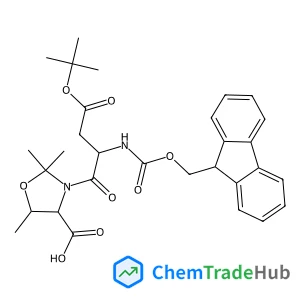
![2,6-Bis({(2R)-2-[hydroxy(diphenyl)methyl]-1-pyrrolidinyl}methyl)-4-methylphenol structure](https://static.chemtradehub.com/structs/877/877395-58-9-70bf.webp "2,6-Bis({(2R)-2-[hydroxy(diphenyl)methyl]-1-pyrrolidinyl}methyl)-4-methylphenol structure")