












Antimicrobial ‘inks’ for 3D printing: block copolymer-silver nanoparticle composites synthesised using supercritical CO2
Literature Information
Publication Date
2022-06-07
DOI
10.1039/D2PY00398H
Impact Factor
5.582
Authors
Ryan R. Larder, Philippa L. Jacob, Kristoffer Kortsen, Robert Cavanagh, Long Jiang, Claudia Vuotto, Iolanda Francolini, Christopher Tuck, Vincenzo Taresco, Steven M. Howdle
View Original
Abstract
Silver nanoparticles (AgNP) are widely exploited for their effective antimicrobial activity against a range of pathogens. Their high efficacy in this regard has seen the global demand for AgNP in consumer products steadily increase in recent years, necessitating research into novel low environmental impact synthesis approaches. Here we present a new synthetic methodology to produce polymer-AgNP composite microparticles using supercritical carbon dioxide (scCO2) and avoiding use of any petrochemically derived solvents. Poly(methyl methacrylate)-poly(4-vinylpyridine) (PMMA-b-P4VP) block copolymers were synthesised via RAFT-mediated dispersion polymerisation in scCO2, with in situ thermal degradation of various amounts of a CO2-soluble silver complex. Selective interaction of the silver with the pyridinyl moieties of the block copolymer allowed the formation of AgNP, dispersed within the block copolymer microparticles, leading to homogeneous composites. The by-products of the reaction were also removed by extracting with a flow of CO2 to yield a clean dry product in a single process. The composites were found to be non-cytotoxic and proved to have good antimicrobial activity against two bacterial strains. Though no significant activity was seen for at least the first 24 hours, inhibition of bacterial growth afterwards proved to be extremely persistent, with inhibition observed even after 15 days. Finally, the microparticulate nature of the synthesised composites was exploited and tested for compatibility in the Laser Sintering (LS) 3D printing process. Composite microparticles were fused to produce solid objects, without aggregation of the AgNP. With further optimisation, these composites could prove to be an incredibly versatile ‘ink’ that may be used within additive manufacturing and 3D printing to rapidly produce bespoke medical devices with inherent antimicrobial activity.
Recommended Journals
Related Literature
Voltammetry and in situscanning tunnelling spectroscopy of osmium, iron, and ruthenium complexes of 2,2′:6′,2′′-terpyridine covalently linked to Au(111)-electrodes
Princia Salvatore, Allan Glargaard Hansen, Thomas Bjørnholm, Richard John Nichols, Jens Ulstrup
2011-06-23
Paper
DOI: 10.1039/C1CP21197H
Structures, spectroscopic properties and redox potentials of quaterpyridyl Ru(ii) photosensitizer and its derivatives for solar energy cell: a density functional study
Qing-Jiang Pan, Yuan-Ru Guo, Li Li, Samuel O. Odoh, Hong-Gang Fu, Hong-Xing Zhang
2011-07-07
Paper
DOI: 10.1039/C1CP00030F
Preparation of polymer-supported gold nanoparticles based on resins containing ionic liquid-like fragments: easy control of size and stability
M. Isabel Burguete, Eduardo García-Verdugo, Santiago V. Luis, Julián A. Restrepo
2011-07-27
Paper
DOI: 10.1039/C1CP20970A
Questioning the photophysical model for the indolechromophore in the light of evidence obtained by controlling the non-specific effect of the medium with 1-chlorobutane as solvent
Juan Pablo Catalán
2011-07-14
Paper
DOI: 10.1039/C1CP21380F
Aromaticity in all-metal annular systems: the counter-ion effect
Arindam Chakraborty, Santanab Giri, Soma Duley, Anakuthil Anoop, Patrick Bultinck, Pratim K. Chattaraj
2011-07-26
Perspective
DOI: 10.1039/C1CP21430F
MnO2/TiN heterogeneous nanostructure design for electrochemical energy storage
Stefanie A. Sherrill, Jonathon Duay, Zhe Gui, Parag Banerjee, Gary W. Rubloff
2011-07-20
Paper
DOI: 10.1039/C1CP21815H
Graphical prediction of quantum interference-induced transmission nodes in functionalized organic molecules
Troels Markussen, Robert Stadler, Kristian S. Thygesen
2011-06-28
Paper
DOI: 10.1039/C1CP20924H
A study of the ethene-ozone reaction with photoelectron spectroscopy: measurement of product branching ratios and atmospheric implications
Grant Copeland, Mariana V. Ghosh, Dudley E. Shallcross, Carl J. Percival, John M. Dyke
2011-06-23
Paper
DOI: 10.1039/C0CP03004J
You might also like
Compound Q&A
What are the main uses of 1-(3-Aminophenyl)-3-[(3R)-1-(3,3-dimethyl-2-oxobutyl)-2-oxo-5-(2-pyridinyl)-2,3-dihydro-1H-1,4-benzodiazepin-3-yl]urea (CAS: 155412-88-7)?
This compound is mainly used as an intermediate in the synthesis of antipsychoti...
155412-88-71-(3-Aminophenyl)-3-...
Compound Q&A
How should waste containing 1-(D-Ribofuranosyl)-1,4-dihydro-3-pyridinecarboxamide (CAS: 19132-12-8) be handled?
Waste containing 1-(D-Ribofuranosyl)-1,4-dihydro-3-pyridinecarboxamide (CAS: 191...
19132-12-81-(D-Ribofuranosyl)-...
Compound Q&A
What regulatory guidelines apply to 2-Methyl-2-propanyl 3-bromo-3-(hydroxymethyl)-1-azetidinecarboxylate (CAS: 2007919-81-3)?
2-Methyl-2-propanyl 3-bromo-3-(hydroxymethyl)-1-azetidinecarboxylate (CAS: 20079...
2007919-81-32-Methyl-2-propanyl ...
Compound Q&A
What is N-(4-Chloro-2-pyridinyl)acetamide (CAS: 245056-66-0)?
N-(4-Chloro-2-pyridinyl)acetamide (CAS: 245056-66-0) is a chemical compound with...
245056-66-0N-(4-Chloro-2-pyridi...
Compound Q&A
What is 5-Chloro-2-hydroxybenzoic acid (CAS: 321-14-2)?
5-Chloro-2-hydroxybenzoic acid, also known as 5-chlorosalicylic acid, is an arom...
321-14-25-Chloro-2-hydroxybe...
Compound Q&A
What precautions should be taken when handling 1,1-Dichloro-1-fluoroethane (CAS: 1717-00-6)?
When handling 1,1-Dichloro-1-fluoroethane (CAS: 1717-00-6), it is important to u...
1717-00-61,1-Dichloro-1-fluor...
Compound Q&A
What are the physical and chemical properties of Fmoc-(2S,3R)-3-phenylpyrrolidine-2-carboxylic acid (CAS: 281655-32-1)?
Fmoc-(2S,3R)-3-phenylpyrrolidine-2-carboxylic acid is a white crystalline solid ...
281655-32-1Fmoc-(2S,3R)-3-pheny...
Compound Q&A
What are the main uses of 4-Amino-5-bromo-2-pyridinecarboxylic acid (CAS: 1363381-01-4)?
4-Amino-5-bromo-2-pyridinecarboxylic acid is primarily used as a precursor in th...
1363381-01-44-Amino-5-bromo-2-py...
Compound Q&A
What precautions should be taken when handling (S)-tert-butyl 2-((2-(4-bromophenyl)-2-oxoethyl)carbamoyl)pyrrolidine-1-carboxylate (CAS: 1007881-98-2)?
Handling this compound should be done with personal protective equipment (PPE) i...
1007881-98-2(S)-tert-butyl 2-((2...
Compound Q&A
What precautions should be taken when handling 8-bromo-2,2-dimethyl-3,4-dihydro-2H-1,4-benzoxazin-3-one (CAS: 688363-73-7)?
When handling 8-bromo-2,2-dimethyl-3,4-dihydro-2H-1,4-benzoxazin-3-one, use prop...
688363-73-78-bromo-2,2-dimethyl...
Source Journal
Polymer Chemistry

CiteScore:
8.6
Self-citation Rate:
7.3%
Articles per Year:
457
Polymer Chemistry welcomes submissions in all areas of polymer science that have a strong focus on macromolecular chemistry. Manuscripts may cover a broad range of fields, yet no direct application focus is required.
Recommended Compounds
![2,6-Bis({(2R)-2-[hydroxy(diphenyl)methyl]-1-pyrrolidinyl}methyl)-4-methylphenol structure](https://static.chemtradehub.com/structs/877/877395-58-9-70bf.webp "2,6-Bis({(2R)-2-[hydroxy(diphenyl)methyl]-1-pyrrolidinyl}methyl)-4-methylphenol structure")
2,6-Bis({(2R)-2-[hydroxy(diphenyl)methyl]-1-pyrrolidinyl}methyl)-4-methylphenol
CAS Number:
877395-58-9
Molecular Formula:
C43H46N2O3
![5-Methyl-4,5,6,7-tetrahydropyrazolo[1,5-a]pyrazin-2-amine structure](https://static.chemtradehub.com/structs/122/1227210-33-4-8d64.webp "5-Methyl-4,5,6,7-tetrahydropyrazolo[1,5-a]pyrazin-2-amine structure")
5-Methyl-4,5,6,7-tetrahydropyrazolo[1,5-a]pyrazin-2-amine
CAS Number:
1227210-33-4
Molecular Formula:
C7H12N4
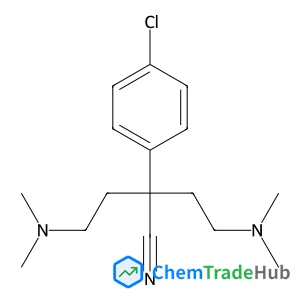
2-(4-Chlorophenyl)-4-(dimethylamino)-2-(2-(dimethylamino)ethyl)butanenitrile
CAS Number:
1246816-57-8
Molecular Formula:
C16H24ClN3
Recommended Suppliers




Disclaimer
This page provides academic journal information for reference and research purposes only. We are not affiliated with any journal publishers and do not handle publication submissions. For publication-related inquiries, please contact the respective journal publishers directly.
If you notice any inaccuracies in the information displayed, please contact us at support@chemtradehub.com. We will promptly review and address your concerns.