













Efficient photocatalytic hydrogen evolution and CO2 reduction by HfSe2/GaAs3 and ZrSe2/GaAs3 heterostructures with direct Z-schemes
Literature Information
Publication Date
2023-03-01
DOI
10.1039/D2CP05902A
Impact Factor
3.676
Authors
Xue-Qing Wan, Chuan-Lu Yang, Mei-Shan Wang, Xiao-Guang Ma
View Original
Abstract
The elaborate configuration of the heterostructure is crucial and challenging to achieve high solar-to-hydrogen efficiency or CO2 reduction efficiency . Here, we predict two heterostructures composed of HfSe2, ZrSe2, and GaAs3 monolayers. The maximum of 42.71%/35.12% with the heterostructures can be reached with the perfect match between the bandgap and band edges. The configurations of the heterostructures are discovered from 12 possible stacking types of the three monolayers. The formation energy, potentials of band edges, carrier mobilities, and optical absorption were used to identify the feasibility of the CO2 reduction reaction (CO2RR), the hydrogen evolution reaction (HER), and the oxygen evolution reaction (OER). The and based on overpotentials and bandgaps and the Gibbs free energies (ΔGs) are evaluated to quantificationally access the photocatalytic performance of the constructed heterostructures. The results demonstrate that high can be obtained for the solar photocatalytic Z-schemes with the HfSe2/GaAs3 and ZrSe2/GaAs3 heterostructures, and these values can be further enhanced through strain engineering. Moreover, small changes in ΔGs were observed for HER, OER, and CO2RR. Therefore, the two heterostructures have excellent performance in photocatalytic hydrogen evolution and CO2 reduction. The results of the electronic properties revealed that the delicate matching of the projected band edges of the monolayers in the heterostructures is responsible for the high photocatalytic performance.
Related Literature
Endohedral metallofullerenes, M@C60 (M = Ca, Na, Sr): selective adsorption and sensing of open-shell NOx gases
Sherif Abdulkader Tawfik, X. Y. Cui, S. P. Ringer, C. Stampfl
2016-07-11
Paper
DOI: 10.1039/C6CP02249A
New approaches for the calibration of exchange-energy densities in local hybrid functionals
Toni M. Maier, Matthias Haasler, Alexei V. Arbuznikov, Martin Kaupp
2016-04-05
Paper
DOI: 10.1039/C6CP00990E
Benchmark fragment-based 1H, 13C, 15N and 17O chemical shift predictions in molecular crystals
Joshua D. Hartman, Ryan A. Kudla, Graeme M. Day, Leonard J. Mueller, Gregory J. O. Beran
2016-07-19
Paper
DOI: 10.1039/C6CP01831A
From adsorption to condensation: the role of adsorbed molecular clusters
Sima Yaghoubian, Seyed Hadi Zandavi, C. A. Ward
2016-07-18
Paper
DOI: 10.1039/C6CP02713J
Time-dependent density functional theory beyond Kohn–Sham Slater determinants
Johanna I. Fuks, Neepa T. Maitra
2016-03-07
Paper
DOI: 10.1039/C6CP00722H
Reduced density matrix embedding. General formalism and inter-domain correlation functional
2016-03-11
Paper
DOI: 10.1039/C6CP00524A
Structural and dynamic evolution of the amphipathic N-terminus diversifies enzyme thermostability in the glycoside hydrolase family 12
Xukai Jiang, Guanjun Chen
2016-07-11
Paper
DOI: 10.1039/C6CP02998A
The cluster-assembled nanowires based on M12N12 (M = Al and Ga) clusters as potential gas sensors for CO, NO, and NO2 detection
Huai Jiang, Xiaohong Li, Shijie Lv, Jingxiao Cao
2016-07-05
Paper
DOI: 10.1039/C6CP02931K
Magnetic properties with multiwavelets and DFT: the complete basis set limit achieved
Stig Rune Jensen, Dan Jonsson, Rune Sørland Monstad, Kenneth Ruud, Luca Frediani
2016-04-11
Paper
DOI: 10.1039/C6CP01294A
You might also like
Compound Q&A
How should waste containing (6-Bromo-2-naphthyl)oxy](dimethyl)(2-methyl-2-propanyl)silane be handled?
Waste containing (6-Bromo-2-naphthyl)oxy](dimethyl)(2-methyl-2-propanyl)silane (...
100751-65-3[(6-Bromo-2-naphthyl...
Compound Q&A
How is 7-Fluoro-4-isoquinolinecarboxylic acid (CAS: 1841081-40-0) typically synthesized?
7-Fluoro-4-isoquinolinecarboxylic acid can be synthesized via a multi-step proce...
1841081-40-07-Fluoro-4-isoquinol...
Compound Q&A
What are the physical and chemical properties of 2,3,5,6-Tetrabromothieno[3,2-b]thiophene (CAS: 124638-53-5)?
2,3,5,6-Tetrabromothieno[3,2-b]thiophene is a crystalline compound with a high m...
124638-53-52,3,5,6-Tetrabromoth...
Compound Q&A
Is 1-[4-(Benzylamino)-7,8-dihydro-5H-pyrano[4,3-d]pyrimidin-2-yl]-2-methyl-1H-indole-4-carboxamide (CAS: 1542705-92-9) safe?
1-[4-(Benzylamino)-7,8-dihydro-5H-pyrano[4,3-d]pyrimidin-2-yl]-2-methyl-1H-indol...
1542705-92-91-[4-(Benzylamino)-7...
Compound Q&A
What is the market or research trend for imidazo[5,1-d]-1,2,3,5-tetrazine-8-carboxylic acid, 3,4-dihydro-3-methyl-4-oxo- (CAS: 113942-30-6)?
The market for imidazo[5,1-d]-1,2,3,5-tetrazine-8-carboxylic acid, 3,4-dihydro-3...
113942-30-6Imidazo[5,1-d]-1,2,3...
Compound Q&A
What is 3-(Triisopropylsilyl)propiolaldehyde (CAS: 163271-80-5)?
3-(Triisopropylsilyl)propiolaldehyde is a synthetic organic compound with the CA...
163271-80-53-(Triisopropylsilyl...
Compound Q&A
What regulatory guidelines apply to 6-Nitro-2H-1,4-benzoxazin-3(4H)-one (CAS: 81721-87-1)?
6-Nitro-2H-1,4-benzoxazin-3(4H)-one (CAS: 81721-87-1) is subject to various regu...
81721-87-16-Nitro-2H-1,4-benzo...
Compound Q&A
How should waste containing (3-Fluorophenyl)(4-{[(2-methyl-2-propanyl)oxy]carbonyl}-1-piperazinyl)acetic acid (CAS: 885272-91-3) be handled?
Waste containing (3-Fluorophenyl)(4-{[(2-methyl-2-propanyl)oxy]carbonyl}-1-piper...
885272-91-3(3-Fluorophenyl)(4-{...
Compound Q&A
What are the physical and chemical properties of N,N'-4,4'-Biphenyldiyldiisonicotinamide (CAS: 55119-40-9)?
N,N'-4,4'-Biphenyldiyldiisonicotinamide is a white crystalline solid with a mole...
55119-40-9N,N'-4,4'-Biphenyldi...
Compound Q&A
What industries use 6-Bromo-8-fluoro-2-quinazolinol (CAS: 1036756-15-6)?
6-Bromo-8-fluoro-2-quinazolinol is primarily used in the pharmaceutical industry...
1036756-15-66-Bromo-8-fluoro-2-q...
Source Journal
Physical Chemistry Chemical Physics

CiteScore:
5.5
Self-citation Rate:
10.3%
Articles per Year:
3036
Physical Chemistry Chemical Physics (PCCP) is an international journal co-owned by 19 physical chemistry and physics societies from around the world. This journal publishes original, cutting-edge research in physical chemistry, chemical physics and biophysical chemistry. To be suitable for publication in PCCP, articles must include significant innovation and/or insight into physical chemistry; this is the most important criterion that reviewers and Editors will judge against when evaluating submissions. The journal has a broad scope and welcomes contributions spanning experiment, theory, computation and data science. Topical coverage includes spectroscopy, dynamics, kinetics, statistical mechanics, thermodynamics, electrochemistry, catalysis, surface science, quantum mechanics, quantum computing and machine learning. Interdisciplinary research areas such as polymers and soft matter, materials, nanoscience, energy, surfaces/interfaces, and biophysical chemistry are welcomed if they demonstrate significant innovation and/or insight into physical chemistry. Joined experimental/theoretical studies are particularly appreciated when complementary and based on up-to-date approaches.
Recommended Compounds


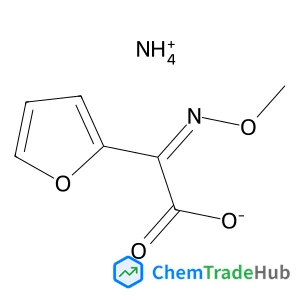
Ammonium (Z)-2-(furan-2-yl)-2-(methoxyimino)acetate
CAS Number:
97148-39-5
Molecular Formula:
C7H10N2O4

Trichloro(3,3,4,4,5,5,6,6,7,7,8,8,8-tridecafluorooctyl)silane
CAS Number:
78560-45-9
Molecular Formula:
C8H4Cl3F13Si
Recommended Suppliers




Disclaimer
This page provides academic journal information for reference and research purposes only. We are not affiliated with any journal publishers and do not handle publication submissions. For publication-related inquiries, please contact the respective journal publishers directly.
If you notice any inaccuracies in the information displayed, please contact us at support@chemtradehub.com. We will promptly review and address your concerns.